
The Best Bathroom Tiles
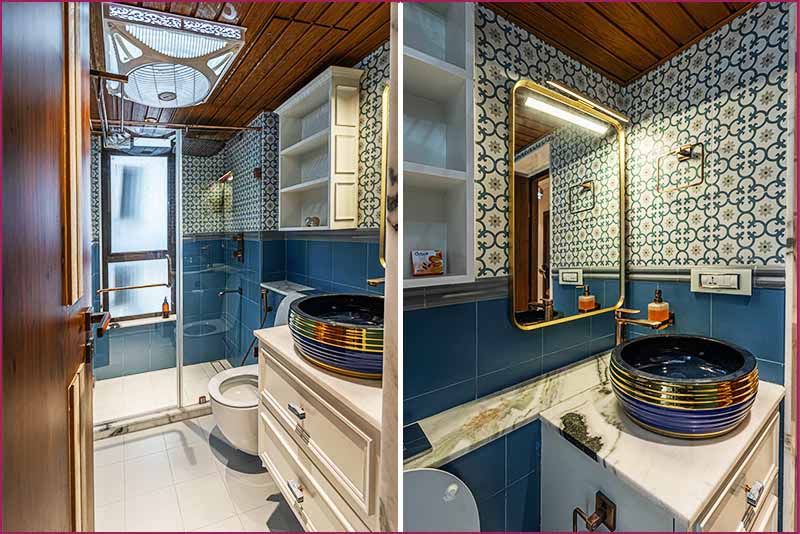
Table of Contents
ToggleConsider how often you enter your bathroom each day. You enter the room as soon as you wake up. You also most likely exit from the same room at night. It is the room where your day begins and ends. And yet, few consider the importance of the tiles adorning the bathroom’s walls and floor surfaces.
Time has changed now. No other element plays a more important role in a bathroom setting than the tiles. They bear all the wear and tear associated with exposure to water, heat, and usage. They define the colour scheme and tone of the entire bathroom. They dictate the mood of the room day after day, year after year.
As founder and CEO of Cee Bee Design Studio, Chitralekha Biswas has held fast to the belief that every element in a house must be intentional. It simply should not be an item from a catalogue or a design by default. Each element is carefully chosen to suit its inhabitants. Tile is just one example of where this comes into play.
Understanding Tile Materials
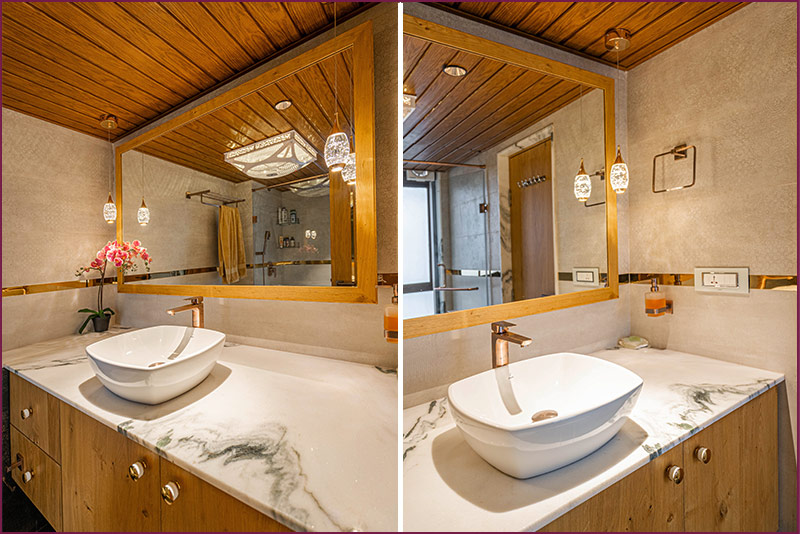
Before you think about colour or pattern, think about material. The material you choose decides how long your tiles last, how much care they need, and how safe they feel underfoot for years to come.
Porcelain: The One That Works Hardest
Porcelain is the most dependable bathroom tile available today. Makers fire it from refined clay and minerals at very high temperatures. This process gives it a water absorption rate below 0.5 per cent. In simple terms, moisture barely touches it.
Porcelain is harder and denser than standard ceramic. It resists stains, scratches, and daily usage far better. Indian bathrooms face hard water, high humidity, turmeric stains, and vigorous scrubbing. Porcelain handles all of this without complaint. It is the most practical choice for both floors and walls in Indian homes.
Rectified porcelain tiles come cut to exact dimensions. They allow for very thin grout joints. Thin grout lines look cleaner and stay cleaner in humid conditions. That matters a lot in a bathroom you use every day.
Porcelain has also grown into a genuinely versatile design material. Large-format porcelain panels can now cover from floor to ceiling in a single piece. They convincingly recreate the look of Calacatta marble, travertine, or teak wood. You get that beauty without the upkeep of the real materials.
Ceramic: A Practical and Beautiful Wall Tile
Ceramic tiles share the same basic ingredients as porcelain. But makers fire them at lower temperatures. This makes them slightly more porous. Ceramic suits bathroom walls and low-traffic dry areas well. For wet floors or shower zones, porcelain is the stronger choice.
Where ceramic wins is in design variety and price. Glazed ceramic wall tiles reflect light beautifully. They make smaller bathrooms feel brighter and more open. Subway tiles, one of the most enduring classics in bathroom history, are typically ceramic. They come in dozens of colours, sizes, and finishes, from quietly traditional to thoroughly modern.
Natural Stone: Beauty That Carries Time
Marble, granite, slate, travertine, and limestone bring something to a bathroom that no manufactured tile can copy: genuine singularity. Stone forms over millions of years inside the earth. No two tiles are ever the same. The veining in a marble slab, the grain of a granite floor, the fossil traces pressed into a travertine wall. These are not printed patterns. They are marks the earth made.
Chitralekha Biswas believes deeply that art lives in the hands of artisans and in old techniques passed through generations. Natural stone is perhaps the oldest building material in human history. It carries time in its surface. That is why, in the right context, it creates an emotional depth that even the most beautifully engineered porcelain cannot match.
Natural stone does ask something in return, though. You must seal it before installation. You must reseal it every one to two years in wet areas. Marble, in particular, stains and etches if you leave it unprotected. For families with young children, pets, or simply very busy lives, that commitment is real and worth considering. Stone-look porcelain tiles have become extraordinarily realistic alternatives. But for those who want the genuine article, nothing else comes close.
Zellige and Handmade Tiles: Art You Live With
Zellige tiles come from a traditional Moroccan ceramic tradition. Makers glaze each one by hand. Every tile is slightly different in thickness, colour, and surface. A zellige wall shimmers differently at different times of day. It responds to morning light one way and evening lamplight another. No two installations ever look quite the same.
Handmade tiles more broadly carry this same quality. Whether they draw from Portuguese azulejo traditions, Jaipur blue pottery, or the work of Indian craftspeople, they all share one thing: irreplicable individuality. They are imperfect. And that imperfection is precisely the point.
Chitralekha Biswas has spoken about how art does not only live in museums or frames. It lives in the hands of artisans and in old techniques passed through generations. A handmade tile brings that kind of art directly into your daily life. No digital print can replicate what a human hand has made.
Vitrified Tiles: Built for Indian Bathrooms
Vitrified tiles hold a very important place in the Indian market. A vitrification process makes them extremely dense and non-porous. Their performance sits close to porcelain. Their colour runs through the full body of the tile, so wear never exposes a different layer beneath. That makes them excellent for high-traffic bathroom floors.
Vitrified tiles are widely available across India. They come at competitive prices. They handle hard water, frequent mopping, and year-round humidity without faltering. For most Indian families, vitrified tiles are a sensible, reliable, and good-looking solution.
The Tile Trends Worth Paying Attention to in 2026
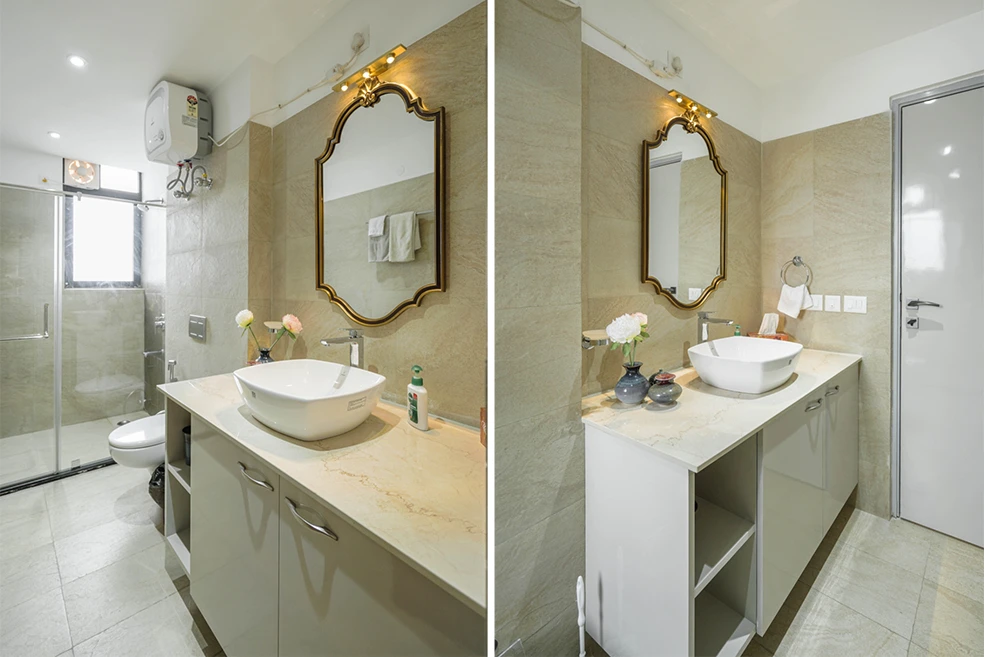
Trends matter, but not because every bathroom needs to chase them. They matter because the best trends reveal something true about how people feel about their homes. In 2026, bathroom tiling has moved clearly away from cold, uniform minimalism. Warmth, texture, personality, and individuality are driving every major shift.
Tile Drenching: One Surface, One Experience
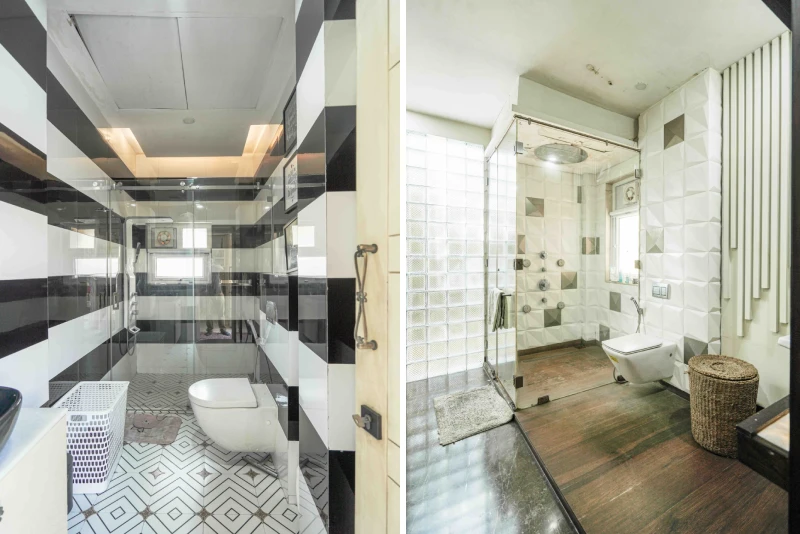
Tile drenching is the year’s most talked-about bathroom movement. It means using the same tile on the floor, the walls, and inside the shower. Large-format tiles with minimal grout lines create a seamless, unbroken environment. The bathroom stops feeling like a collection of surfaces. It starts feeling like a single, quiet experience.
Chitralekha Biswas holds a firm belief that homes should make you feel something, not just show you something. A drenched bathroom wraps around you. You feel it before you can explain it.
Texture and Three-Dimensional Surfaces
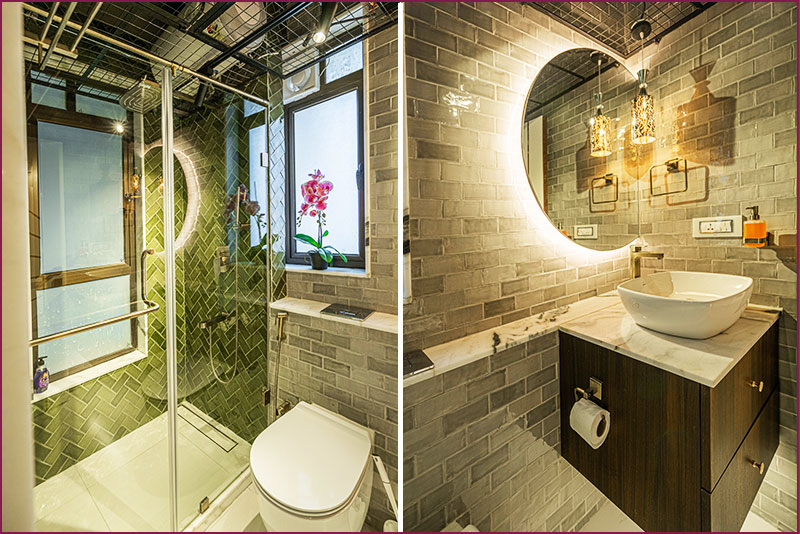
Flat, smooth tile finishes are giving way to surfaces with real physical depth. Fluted tiles carry raised parallel ridges that catch and shift light through the day. They bring an architectural quality to walls. Three-dimensional tiles with wave, basket weave, or sculptural relief patterns create surfaces you want to reach out and touch.
Think about the difference between walking into a room that looks beautiful and walking into one that feels beautiful. The texture underfoot, the surface your hand brushes along the shower wall. These are small details. But they build up over thousands of daily encounters. They either restore you or exhaust you.
Earthy, Warm Palettes
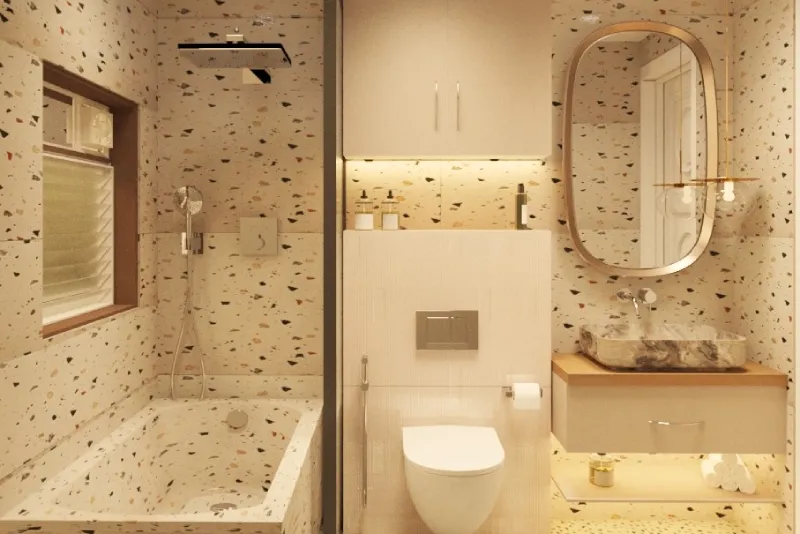
The cool grey-and-white bathroom has lost its grip as the default aspiration. In 2026, warm, earthy tones lead the way. Terracotta, ochre, burnt orange, dusky greens, honey-toned stone, and warm beige. These colours connect the bathroom to the natural world. This offers a sense of satisfaction for clients.
For Indian homeowners, this shift feels like a homecoming. Terracotta is not a Western trend borrowed for a season. It is a deeply familiar material. It runs through Indian craft traditions across centuries. Seeing it reclaimed in the contemporary bathroom is deeply satisfying.
Glazed and Hand-Finished Surfaces
Matte finishes ruled bathroom design for years. Now glazed tiles are returning. But not in the high-gloss, mirror-like way of earlier decades. Today’s glazed tiles carry hand-finished variation. The surface moves slightly. The glaze responds to light and water differently at different angles. The wall seems to breathe.
Designers now pair matte and glazed tiles together in the same space. The contrast between the two creates warmth and depth. The bathroom gains a quality that feels considered rather than co-ordinated.
Marble: Bolder and More Personal
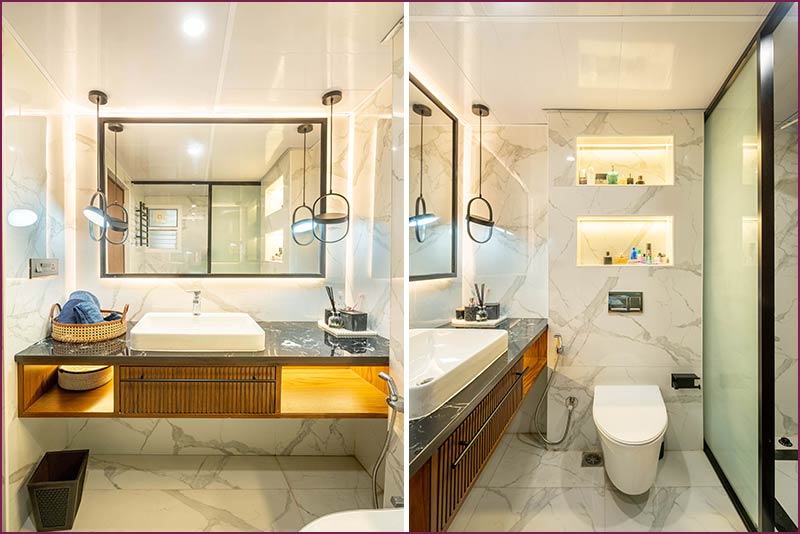
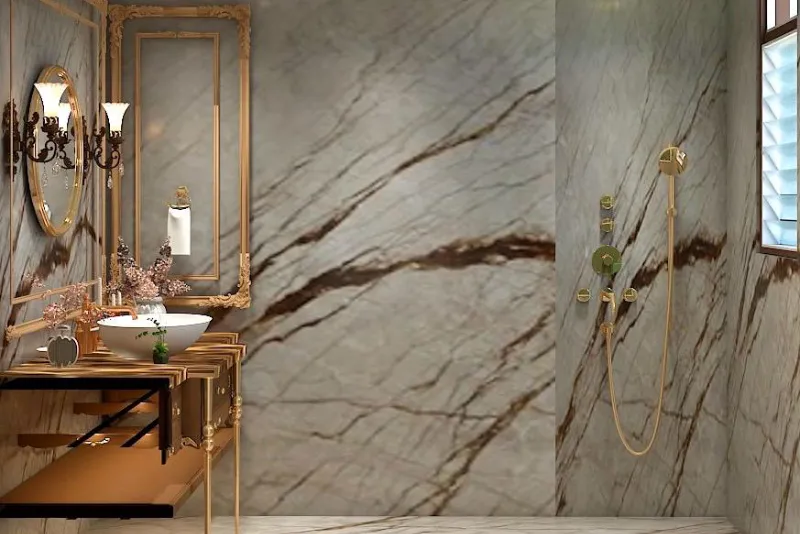
Marble has always belonged in the beautiful bathroom. In 2026, it moves away from cool pristine whites toward wider, more dramatically veined varieties. Deeply contrasting veins. Plum and gold tones. Real movement across the surface. Marble is no longer a safe default. Designers and homeowners now choose it as a deliberate statement. And since no two marble tiles are ever the same, choosing natural marble is an act of embracing individuality. That sits very close to the heart of Cee Bee Design Studio’s philosophy.
Pattern: Confident and Personal
Pattern is back in the bathroom, and it arrives with real confidence. Checkerboard floors in muted, sophisticated tones. Herringbone layouts in brick tiles. Geometric arrangements of hexagons and diamonds. Hand-painted tiles used as accent pieces in shower niches.
The important shift is that pattern now appears with restraint. A statement wall or a feature floor, not pattern on every surface. A single beautifully patterned niche in a shower can work almost as a piece of art. When you use pattern purposefully, it carries far more power than when you use it everywhere.
Large Format Tiles: More Space, Less Clutter
Large-format tiles, from 60 by 60 centimetre panels up to floor-to-ceiling slabs, continue to lead bathroom design in 2026. Fewer grout lines mean less cleaning and a cleaner visual surface. In a smaller bathroom, the reduction of grout lines makes the room feel noticeably more open. The eye reads the floor or wall as one continuous surface rather than a grid of individual pieces.
Choosing the Right Tile for Each Part of the Bathroom
Different surfaces in your bathroom need different things. What works brilliantly on a wall may not belong on a floor.
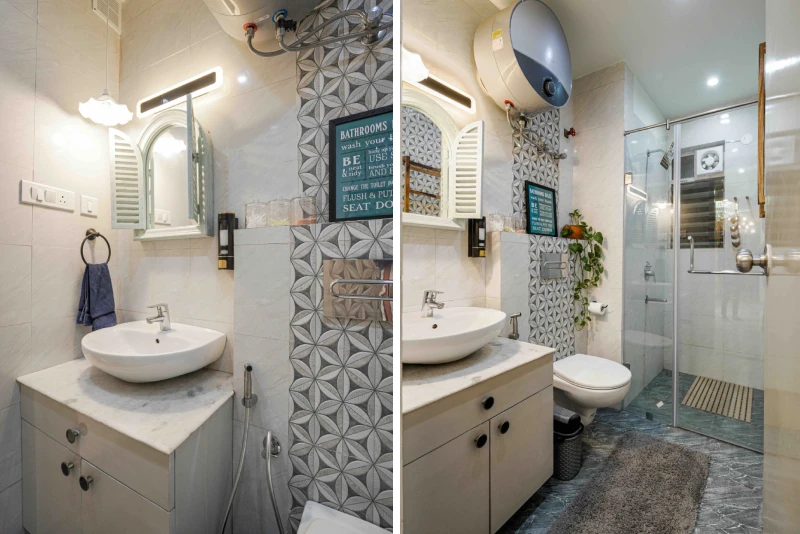
- For floors, slip resistance is the priority. Matte and textured finishes outperform glossy tiles in wet conditions. Porcelain and vitrified tiles with anti-slip ratings serve bathroom floors best. But they do not have to look boring. Textured stone-look porcelain, herringbone-laid brick tiles, and fluted floor tiles all provide excellent grip while looking quietly beautiful.
- For walls, your design options open up considerably. Ceramic, porcelain, natural stone, zellige, and glass tiles all work well on walls. Glossy and semi-gloss finishes suit walls far better than floors because you do not need to worry about slipping. The wall is where most of the expressive design work happens. A colour, a texture, or a pattern on the wall sets the character of the entire room.
- For the shower zone, water resistance and durability come first. Porcelain with minimal grout joints handles shower conditions better than most alternatives. Rectified tiles with ultra-thin grout lines serve the shower well for both hygiene and appearance.
- For niches and alcoves, small mosaic tiles, zellige, hand-painted tiles, or marble offcuts can transform a simple storage recess into a moment of real beauty. These small, jewel-like details separate a thoughtfully designed bathroom from one that is merely functional.
Case Study
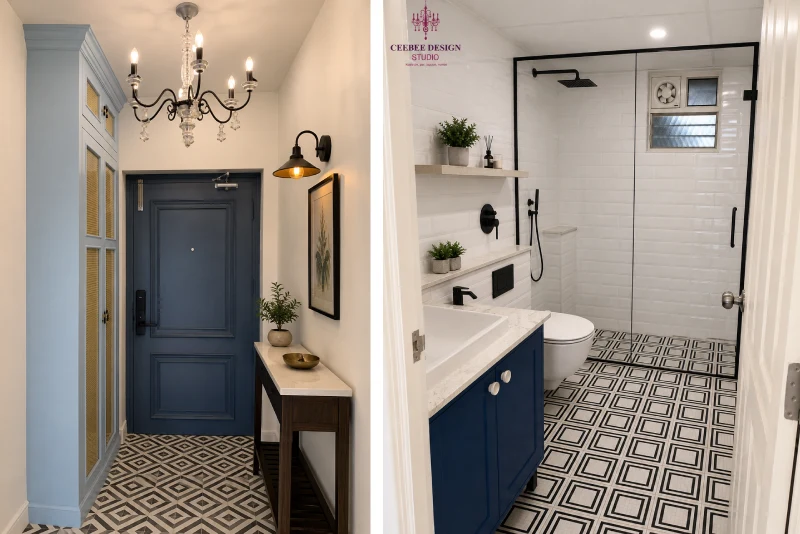
Let us pull back the curtain on a recent project we finished at CeeBee Design Studio. This story shows how the right mix of wall tiles can completely transform a tight space.
Client’s Need for Warmth, Character, and Clarity
The first need that was identified during the consultation with our client was very clear. The sterile, bright white finish of modern bathrooms did not appeal to them, while the old-world charm and classic patterns were. However, they were terrified that putting busy patterns in a narrow bathroom would make it feel like a dark cave.
They needed us to solve a few specific puzzles:
- Keep it cosy but bright: They wanted traditional character without losing the feeling of open space.
- Separate the Wet Zone from the Dry Zone: The client requested a sight screen to separate the shower zone from the basin zone.
- Different Materials and Textures Together: The client needed to add wood, stone, and metal elements into the bathroom while keeping it from looking untidy.
Solution: Splitting the Walls
To address the needs of our client, our design team at CeeBee Design Studio decided to break the rules that everyone followed. We decided to separate the walls vertically into 2 different sections rather than covering all of the walls with one tile pattern. This smart strategy changes how your eyes see the room.
1. Grounding the Bottom with Deep Blue
For the lower half of the walls, we used a solid, deep Mediterranean blue tile. We laid them in a simple brick pattern. Putting a dark, solid colour on the bottom acts like an anchor. It gives the room a sense of weight and structure. Even better, it is incredibly easy to wipe clean behind the sink and toilet where water splashes the most.
2. Adding Charm on Top with Moroccan Patterns
For the top half, we used a gorgeous ceramic tile with a Moroccan-inspired pattern. It features thin, looping lines of teal, cream, and charcoal grey. Because we placed this fun pattern on the upper half all the way to the ceiling, your eyes automatically look up when you walk in. This simple trick makes a short ceiling feel much higher than it actually is. We then joined the two tile styles together with a slim grey border tile to keep the transition looking crisp.
3. Details in Balance
After the wall tiles were installed, we used additional textures to make the bathroom more comfortable:
- Wooden Ceiling: Porcelain and tiles can be cold at times. We installed a beautiful, polished natural wood panelled ceiling. The warm wood instantly tones down the cool tile colours.
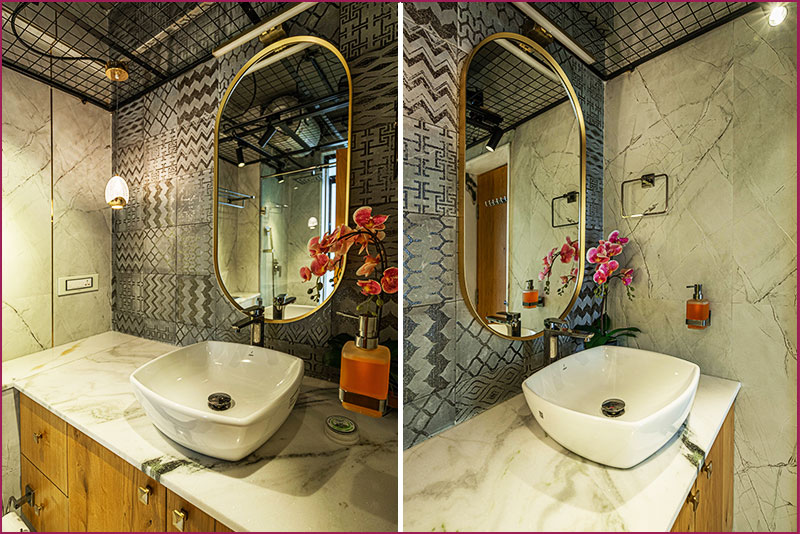
- A Statement Sink: There is the vanity area. We used a white marble counter with striking grey veins. On top sits a round ceramic bowl sink striped in deep blue and shiny gold.
- Golden Highlights: We added a rounded mirror frame with a brushed gold finish and matching gold faucets. They catch the warm light, making the daily routine feel like a stay at a boutique hotel.
A beautiful bathroom must work perfectly in real life. By mixing old-world charm on top with a clean modern layout on the bottom, we gave our client exactly what they wanted. A small, cosy bathroom that feels like a luxurious escape.
The Philosophy Behind Every Tile Choice
Step back from specifications and trend reports for a moment. Ask a simpler question: what should a bathroom tile actually do?
- It should last.
- It should keep you safe.
- It should tell the truth about the space.
It should not try to make a small bathroom pretend to be something it is not, but find the design that makes that particular bathroom feel most fully itself. And it should carry something of the person who chose it.
- Their relationship to warmth or coolness.
- Their feeling about simplicity or ornament.
- Their connection to tradition or their embrace of the new.
Chitralekha Biswas speaks about homes that move her most. They are the ones where every corner tells a story rather than displaying a catalogue number. A bathroom tiled with handmade zellige from an artisan workshop, or natural stone from a quarry that has supplied Indian craftspeople for generations, or porcelain tiles in a colour that recalls a grandmother’s house in Kerala. These bathrooms carry meaning.
- They feel inhabited.
- They feel honest.
- They feel alive.
Conclusion
The best bathroom tile is never simply the one on trend, or the one that photographs beautifully on Instagram, or the most expensive option in the showroom. It is the tile someone chose with real intention, installed with real craft, and lives with honesty, day after day, year after year.
Thinking of redesigning your bathroom? Contact CeeBee Design Studio to select tiles that combine aesthetics, toughness, safety, and your own design experience.
FAQs:
Q1. Which is the best material for tiles used in bathroom flooring in India?
There are porcelain and vitrified tiles which provide excellent resistance for use as bathroom flooring in India. These tiles are dense, non-porous, and water-resistant. This kind of material is able to withstand hard water, moisture, and continuous cleaning without getting damaged. The PEI (Porcelain Enamel Institute) level of the tile should be from III to IV. A non-glossy surface is needed for wet surfaces because while the glossy surface looks good, it becomes slippery in wet conditions.
Q2. Is natural stone practical for bathroom use?
Natural stone brings a beauty to a bathroom that no manufactured tile can match. But it does ask for consistent care. You must seal natural stone before installation. In wet areas, you need to reseal it every one to two years. Marble stains easily and etches if you leave spills sitting on it. For families with busy lives, stone-look porcelain tiles offer most of the visual beauty with far less upkeep. For those who want the real thing and are willing to care for it, natural stone is deeply rewarding.
Q3. How can I make my small bathroom appear spacious with tiles?
A few types of tiles can be considered to make the small bathroom look bigger. Tiles which are light in colour both on the floor and on the walls will create reflections and thus will brighten the room. The use of large-sized tiles with little space between them eliminates all distractions. Using tile drenching, where the same type of tile is used both on the floor and the wall, eliminates the horizontal division line, which makes the room smaller and shorter.
Q4. Is there any difference between ceramic and porcelain bathroom tiles?
Ceramic and porcelain tiles are both made using clay that has been burnt at high temperatures. Porcelain tiles, however, contain highly refined clay burnt at higher temperatures to make them dense, strong, and less porous. Porcelain bathroom tiles absorb only 0.5 per cent water and, thus, are suitable for wet floors and moisture-rich environments. Ceramic bathroom tiles absorb a little more moisture and are more suitable for bathroom walls and non-wet environments. Porcelain tiles will be better suited for a wet Indian bathroom floor.
Q5. Which finish of tiles would be best for a bathroom floor? Is it matte, textured, or glossy?
Matte or textured finishes of bathroom tiles are preferable for bathroom floors. Bathroom tiles with a glossy finish look amazing and provide excellent reflectivity. However, glossy bathroom tiles become extremely slippery when they get wet and get easily stained by watermarks and footprints. Matte tiles provide adequate traction and are better suited for wet areas. Textured tiles such as stone effect, wooden effect, and fluted porcelain tiles provide excellent slip resistance. They work particularly well inside shower areas.
Q6. How often does natural stone tile need sealing in a bathroom?
Seal natural stone before installation. In wet areas like showers and floors, reseal it every one to two years. In less exposed areas, resealing every three to five years may be enough. Use the water drop test to check. Drop a little water onto the tile surface. If it beads up, the seal is holding. If the stone absorbs the water, it is time to reseal. Use a penetrating sealer designed for the specific type of stone you have. Porosity levels for marble, granite, and travertine are also different. So are the products needed for these materials.
Q7. Can I mix different tile styles in one bathroom?
Yes, and when you do it thoughtfully, the results are some of the most personal and interesting bathrooms you will ever see. Build a coherent logic first. Choose a consistent colour palette. Decide which tile is the background and which is the feature. Show restraint in how many different elements you introduce. A simple approach is to use a neutral large-format tile across most surfaces, then save a smaller, more characterful tile for one feature wall, a niche, or the shower floor. The special tile stays special. It does not compete with everything around it.
Q8. What should I consider when choosing bathroom tiles for an Indian climate?
Indian bathrooms face specific pressures. Hard water leaves mineral deposits. Humidity runs high for much of the year. Turmeric and other staining agents appear regularly. Strong cleaning products are common. Prioritise water resistance first. Use tiles that are not porous. Porcelain and vitrified tiles are the least prone to staining. Keep grout lines as thin as possible by choosing rectified tiles. Consider dark or mid-tone grout rather than white in wet areas. White grout discolours quickly in humid Indian bathrooms and is very difficult to keep clean over time.
Follow us on:
About us
Welcome to CeeBeeDesignStudio, an Indian homegrown interior design brand where every home is a canvas and every design is a story.
We’ve proudly completed over 1000 residential and 400 commercial projects across 7 cities, earning a reputation for unmatched aesthetic acumen and client satisfaction. Our studio has also been recognized with multiple national awards, a reflection of our commitment to excellence, storytelling, and design innovation.
From thoughtfully styling modern apartments to restoring heritage homes, we bring soul, sustainability, and structure into every project.



Enter Your Details