
The Complete Guide to Designing a Luxury Villa in Goa
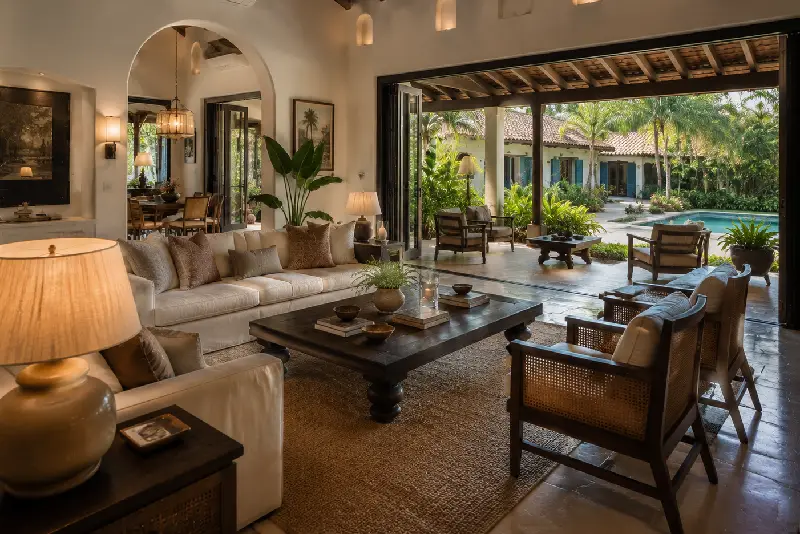
Table of Contents
ToggleIntroduction: Understanding Goa Beyond Beaches
What usually comes to mind when we talk about Goa is a place with beautiful beaches, lovely sunsets, lively streets, and a leisurely vacationing culture. But beyond its beaches and tourism is a place that has rich history, diverse culture, craftsmanship, and architecture. Goa is not just a travel destination; it is an experience. It embodies a different pace of life, where houses are made not just to live in but to live well.
At Cee Bee Design Studio, we believe that there is a design language to each region. Houses should not be alien to their environment. What makes truly beautiful spaces are those that take into account their geography, culture, climate, and people. For us, designing a luxurious villa in Goa is not about decorating a house with a tropical flavor and leisure holiday vibe. It is about understanding what is special about Goa and recreating that in a house.
The architectural character of Goa is shaped by the region’s past. The introduction of Portuguese architecture more than 450 years ago brought in new architectural ideas that eventually mixed with the Indian tradition to give birth to a unique Indo Portuguese architectural style that still influences many houses in Goa. Big windows, bright facades, wooden balconies, steep roofs, courtyards, verandahs, and detailing are some features that characterize Goa’s residential architecture.
The traditional Goan houses were made considering the environmental conditions of the area. The houses took into account the climatic conditions in order to make the interiors comfortable and ventilated. High ceilings, thick walls, shaded open spaces, and courtyards were some of the solutions born out of the architectural expertise gained over many years.
The culture of Goa has always celebrated togetherness. Homes were designed around family interactions, celebrations, meals, and conversations. The dining area was not just a place to eat; it was where stories were exchanged. The courtyard was not just an open space; it was where families gathered. The veranda was not just an entrance; it was a transition between the private world of the home and the natural surroundings outside.
Even today, this philosophy continues to influence luxury villa design in Goa. Modern homeowners are looking for spaces that offer privacy, comfort, and sophistication, but they also want warmth, character, and a connection with nature. A luxury villa in Goa is no longer defined only by its size or expensive finishes. It is defined by how effortlessly it blends indoor and outdoor living, how thoughtfully it responds to its environment, and how deeply it reflects the personality of the people living there.
The Goan culture is one that has always emphasized the importance of togetherness. In fact, the houses were built in such a way that all activities took place within the four walls of the house. The dining space was a place where stories could be told. The courtyard was a place where families got together. The veranda served as the transition space between the privacy of the house and the natural space around.
It is in this spirit that luxury villas continue to evolve in Goa. Today, homeowners look for luxury homes that provide privacy, comfort, and sophistication but at the same time have that feeling of warmth and character. Luxury villas in Goa are no longer defined by their size and costly materials. They are defined by the way they merge indoor and outdoor spaces, by the way they adapt to the surrounding environment, and by the way they reflect the personalities of the owners.
For us, the design of a luxury villa in Goa lies in this fine line. It is about honoring the past and yet building spaces for today’s lifestyle. It is about keeping alive the essence of Goa while bringing in elements of contemporary comfort.
The Definition of Luxury: What Does a Luxury Home Really Mean?
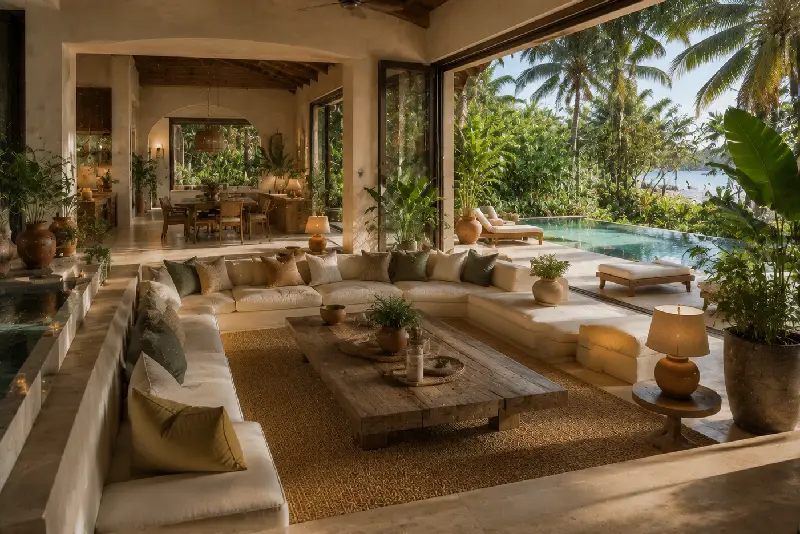
Luxury is among the most misunderstood terms in interior design. For many years, the term luxury was used to describe expensive finishes, grand furniture, spacious rooms, and impressive interior designs. However, the definition of luxury has changed dramatically.
The modern understanding of luxury is all about experiencing rather than displaying more and more things.
A luxury home is the one that knows its occupants well. It reflects their way of life, meets their needs, and makes the regular daily moments extraordinary. The luxury villa is no longer about the marble floors and designer pieces of furniture. Luxury villa is about the proper planning, details, craftsmanship, comfort, and emotion.
The process of luxury villa design in Goa involves asking a number of questions beyond the appearance.
What is the routine of the family in the morning time?
Where do they like to relax?
Do they like entertaining the guests?
How does the natural light travel throughout the home?
How can the architectural solutions create an interaction between the house and nature?
Luxury in Goa is quite distinct from luxury in metropolitan cities. In cities such as Mumbai, Bangalore, or Delhi, where people lead their lives in an urban setting, luxury is all about efficiency, technology, and high-end finishes. On the other hand, in Goa, luxury is more about experiencing it. It is about waking up with natural light filtering through large windows. It is about breakfast with nature around one. It is listening to the sound of the rains on monsoon evenings. It is about having a peaceful corner for reading or thinking.
This is precisely what makes many luxury villas in Goa attempt to create a feeling of peace.
The Climate: How Goa’s Weather Influences Home Design
A luxurious villa needs to consider the environmental factors of Goa, before embarking on the construction process.
Goa boasts of a tropical climate which is considered as one of the most outstanding features of this place. Environmental factors play an essential role when designing houses.
This area has warm weather, high humidity levels, heavy monsoons and strong coast effect.
All these factors affect the planning, designing and maintenance of houses in a particular way.
Traditionally, Goan architecture has incorporated all these factors in the best way.
Homes had very high ceilings to facilitate the rising of the hot air. Wide windows were there to facilitate cross ventilation. Verandahs acted as transitional zones, providing shade for protection from the hot sun yet offering access to the outside world. In addition, courtyards allowed air circulation and light.
The modern luxurious homes in Goa have much to learn from the old architectural designs.
A good house in Goa is that which works with nature rather than trying to conquer it.
Ventilation plays a great role. Wide openings and windows allow air circulation and hence the less need for artificial cooling.
Other considerations include lighting. Goa has amazing natural light all year round, which should be harnessed by good architecture. Luxury villas should utilize natural daylight rather than artificial lighting.
Consideration must also be made on material to use due to high humidity and coastal location.
Natural stone, treated wood, marine grade materials, moisture-resistant finishes are common choices. The materials should not only be aesthetically pleasing but also durable enough for the Goa environment.
For instance, the traditional use of teak wood was due to its toughness and durability. Laterite stones that occur locally connect homes with their surrounding environment, with added thermal value. The use of terracotta tiles adds warmth and aesthetics while maintaining cultural heritage of the region.
However, sustainability in Goan architecture is not a novel idea. Traditional houses were inherently sustainable as they were made according to climatic and material conditions.
Today’s luxury villas are rediscovering these principles through modern technology and design thinking.
A thoughtfully designed Goa villa combines comfort, beauty, and responsibility. It allows homeowners to enjoy luxury while remaining connected to the environment.
Because the true essence of Goa is not only in its beaches or landscapes.
It is in the harmony between nature, architecture, and the way people live.
The Cultural Significance: How Goa’s Past Shaped Its Homes
To comprehend the architecture of Goa, it is imperative to grasp its history. Not just a structure made of brick and mortar, the houses of Goa bear testimony to the rich cultural exchange and adaptation that has been seen through centuries past.
A little more than a century back, Goa was quite a different land altogether with a completely different lifestyle. Communities were strongly knit and the houses were built keeping in mind the social life of the people who inhabited them.
The entrance of a Goan home was always marked by the verandah. This semi-open area served as an intermediary between the outside world and the house proper. It was a place of congregation for the people.
The courtyard was another critical architectural element. It ensured that natural light and air were provided to the home while giving a place for family members to interact. The courtyards were not just the architectural elements but were the very soul of the house.
Influences from Portugal helped shape the residential architecture of Goa. In the past few centuries, elements of Portuguese architecture were beautifully blended with elements of local Indian culture to create the Indo Portuguese architecture, for which Goa is known today.
Wooden shutters, colorful facades, decorative balconies, arched openings, tile roofs, and other elements became distinctive features of houses in Goa. These features were not just decorative but were a statement of craftsmanship and pride in the beauty of living.
The material used for construction showed how architecture was linked with geography. Laterite stone, which was abundant in the area, was an essential building material. The thick laterite stones were used to control the temperature inside the building by making the house cooler in the summer season.
Wood was one of the important elements. Doors, ceiling structures, and furniture were all made from wood by the talented craftsmen of the area.
With time as Goa developed, its architectural styles changed too. With the arrival of tourism, lifestyle changes, and aspirations of modern times, the Goan style of architecture also got influenced by contemporary styles.Nowadays, many homeowners seek luxury villas that combine contemporary luxury with Goan architectural charm.
Key Things That Form the Soul of a Goa Theme House
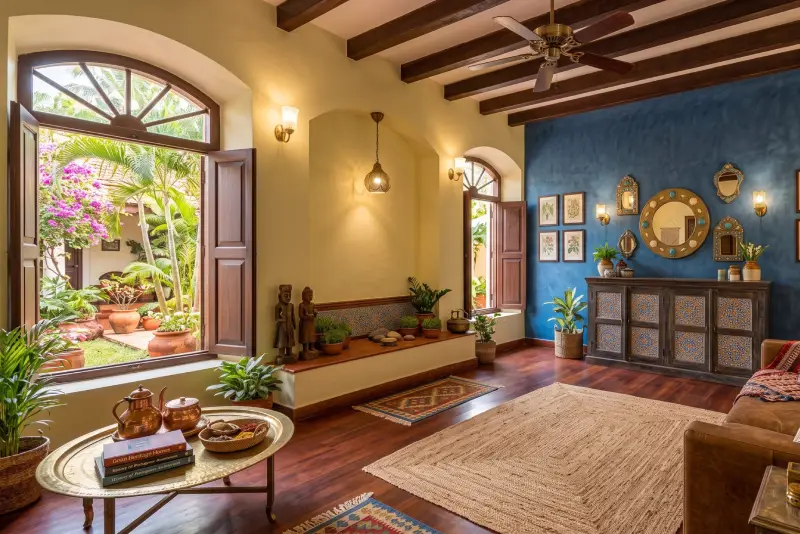
Building a luxury villa based on the theme of Goa is not just about incorporating some aspects of tropics and giving the house a themed look. The true spirit of Goa lies in the understanding of its lifestyle and connection with nature.
A good Goa home conveys the sense of being in Goa.
It provides comfortable yet sophisticated, traditional yet modern, luxurious yet easy-to-maintain spaces.
1. Indoor Outdoor Living
One of the most prominent features of Goan architecture is the perfect union between indoor and outdoor spaces.
Unlike apartments in urban cities, which separate interior spaces from the natural world, in Goa, the natural surroundings form a part of the house design.
A luxurious villa in Goa must ensure that its residents get to experience nature all day long.
A coffee nook at dawn looking out at the verdant outdoors.
An open living room that faces the garden.
A dining room with an outdoor dining option.
A bedroom in which sunlight and fresh air are essential parts of the environment.
2. Natural Materials
Materials dictate the personality of the Goan abode.
Materials like wood, stone, terracotta, cane, rattan, and laterite help achieve authenticity in design and give a warm connection with nature.
Some common materials that have been used are:
Laterite Stone
A distinctive material of Goa, laterite stone brings texture and a powerful connection to the land. It can be used for walls, walkways, landscape and architecture.
Wood
Wood brings warmth and classic charm. Whether it’s the teak wood furniture or the wooden ceiling and shutters, it gives the sense of craftsmanship.
Cane & Rattan
These materials bring a cool tropical charm along with elegance.
Terracotta
Terracotta tiles and decorative pieces bring earthiness and connect the house with traditional Indian craft.
Natural Stone
Stone flooring and surfaces bring durability along with luxury and natural beauty.
But the trick lies in the fact that we should not overload our designs with these materials.
3. Colours Inspired by Goa
Colour is a vital element that adds to the emotion of the identity of a Goa home.
Goan traditional houses had vibrant colour schemes in line with the joyfulness of the region.
The contemporary luxury villas reinterpret this palette in a more subtle manner.
Whites bring in freshness.
Browns bring warmth.
Blues bring serenity.
Greens bring the outdoors inside.
Terracottas bring heritage.
It is not about making a colourful home but about creating harmony in the colours and how they relate to the environment.
4. Traditional Architectural Details
Sometimes it is the smallest architectural features that have the most impact. Features such as:
Wood shutters
Arched doorways
Visible beams
Custom-designed doors
Tiling
Old-fashioned balconies
Hand-carved furniture
add personality and character to new constructions.
These features are significant because they speak of history and heritage, something other than functionality within the house.
5. Craftsmanship and Storytelling
True luxury homes in the spirit of Goa are an homage to human craftsmanship.
Handcrafted pieces, local artwork, handcrafted furniture, and artisan-made elements give character to the space.
In a world of manufacturing, craft is an emotional element.
A handcrafted table tells the story of the craftsman who made it.
A handcrafted tile has flaws that give it its own unique character.
An antique piece that has been restored holds memories of another era.
This makes a home unique.
As after all, what really makes the spirit of a Goa home is not the decor.
It is the stories within its walls.
Renovation Process: Transforming a Property into a Luxury Goa Villa
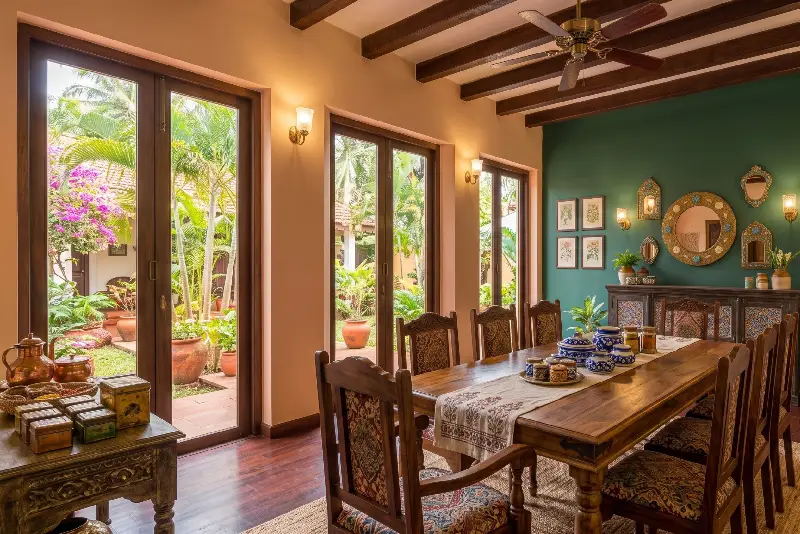
Renovation of a luxurious villa in Goa is not limited to aesthetic changes in the appearance of the house. It means to understand the essence of the house and shape it in such a way that it becomes timeless, cozy and in harmony with its environment.
Every renovation starts with listening.
Before starting working on the design solution, we research the property, its architecture, location and the way of life of the future inhabitants. A Goa villa is unlike an urban apartment as the interaction of architecture and environment is much more intense. The landscape, lighting, weather conditions and existing buildings affect the style of design solution.
The first stage of the renovation process is understanding which elements should stay as they are and which need transformation.
Most traditional Goan houses feature beautiful architectural features that need restoration rather than replacement. Wooden ceilings, windows, stonewalls, old floorings, and craftsmanship all come with incredible character. Rather than strip these features away, intelligent remodeling entails restoring them to their former glory alongside integrating contemporary comforts.
A good luxury villa renovation entails striking the balance between the past and present needs.
The first step in the renovation process is evaluating the existing configuration and finding ways to improve its performance by making better use of space and maximizing flow. In Goan renovations, this usually entails maximizing the link between interior and exterior spaces. The living room could open into the garden area, the balcony turned into a relaxing retreat, or the courtyard could become the focal point of your home.
Material selection is the next step.
Selection of the right materials is critical to give the Goa villa its own character. All decisions have to take into account the aesthetic and practical aspects. Since Goa is humid and experiences monsoon rains, all materials will have to be selected with longevity and endurance in mind.
Natural stones, weatherproof materials, sustainable materials, treated wood – all these will find their place in the renovation design. Not only will they be able to withstand the climate, but will lend authentic touches to the project.
Furniture and styling are also key elements.
An upscale villa shouldn’t be an empty showroom. Rather, it should be personal, individualized, and lived-in. Custom furniture, vintage items, handcrafted elements, and local art can be used to give the villa character and reflect the taste of the owners, rather than the newest design trends.
Lighting plays a crucial role in renovation.
In Goa, natural light becomes one of the most important design elements. With large openings, skylights, and strategic placement of windows, the natural light becomes a component of the interiors of the villa. The artificial light can be introduced to add warmth at nighttime.
The execution phase requires close collaboration between designers, craftsmen, contractors, and homeowners. Every detail, from carpentry joints to surface finishes, contributes to the final experience.
Materials That Define Luxury Goa Homes
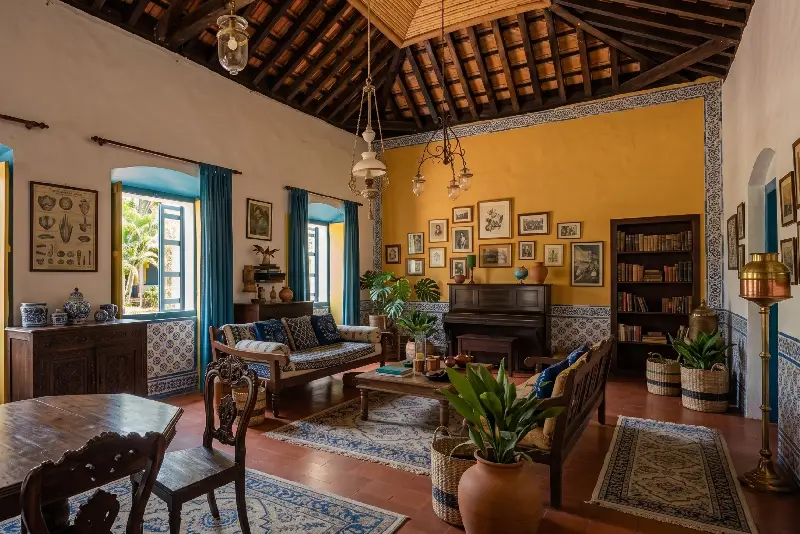
Material is the basic element that defines an interior. Materials determine the appearance, feel, aging process, and relation to the context of the place.
For an elite house in Goa, it is not enough for materials to be visually beautiful; it is also necessary for them to interact with their environment and mature through the course of time.
Laterite Stone: The Identity of Goa
Another distinct material which comes to mind when Goa is mentioned is Laterite Stone. This is a naturally available material in the region which has been traditionally used in Goan architecture for many years.
The rich color and texture of this stone makes it closely related to the local landscape. This material is finding contemporary usage in feature walls, pathways, landscaping, and other architectural elements in new villas.
Apart from being aesthetically pleasing, Laterite Stone also provides functional benefits as its properties help in regulating temperature in interiors.
The use of locally available materials in design is a part of sustainable design.
Teak Wood: Timeless Luxury
Wood has always been used for architecture and interior designing in India.
For the houses of Goa, teak is still a popular choice owing to its durability and elegance.
Whether it is the door and window frames, or ceilings, or even furniture, teak adds elegance and charm.
What makes teak wood a special choice is that it goes well with various styles.
Be it a Portuguese styled villa or a modern house or a luxury minimalist abode; teak wood works perfectly well in each of them.
With age, teak gains more and more beauty.
Reclaimed Wood: Giving Materials a Second Life
“Sustainability has become an essential component of luxury design.”
Use of reclaimed wood will contribute to the uniqueness of your interiors. Unlike the use of newly made materials, reclaimed wood means you will take advantage of already available materials to create beautiful architecture.
The wooden beams, the furniture, and panels from old structures will add a touch of history to your villa.
Each item will have some flaws that make it unique and personal.
Cane and Rattan: Tropical Elegance
The materials cane and rattan are those that are indigenous to a tropical environment.
These materials bring with them a feeling of lightness and craftsmanship. Cane can be used in everything from furnishings and lamps to dividers and decorative items. In Goa, the use of such materials suits the place well due to its connection with nature and craftsmanship.
Terracotta: Earthy Warmth
Terracotta is an integral part of the architectural scene in India.
The colors of terracotta and its handcrafted nature give it a feeling of authenticity.
Terracotta flooring and other accessories add natural beauty to luxurious villas.
The use of terracotta along with other materials such as glass, stones, and metal gives a perfect blend of tradition and modernity.
Natural Stone
Stone is known to create a sense of longevity and elegance.
Materials such as marble, sandstone, and granite may be used for flooring, counters, bathroom surfaces, and even outdoors.
In comparison to artificial material, natural stone has its unique characteristics.
Handmade Tiles and Artisan Details
One of the most powerful means to infuse personality into the design of a Goa villa is through hand-crafted touches.
Tiles, ceramic, furniture, and decor, all inspired by Portuguese style and hand-made, bring a certain emotional dimension to the villa.
In today’s world, luxury no longer entails mass production but craftmanship with meaning.
How a Luxury Villa in Goa Looks From Inside
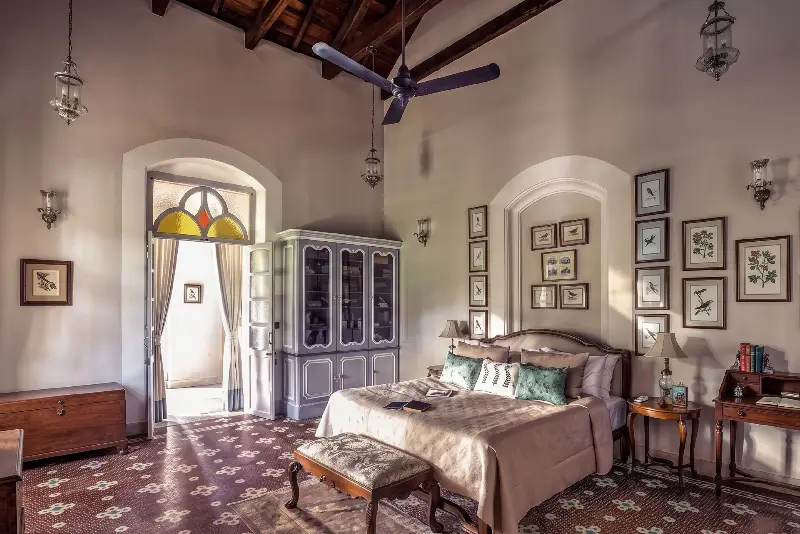
A luxurious villa in Goa must be a retreat, but most importantly, it must be a home.
The interiors must exude a sense of comfort, character, and the slow pace of life in Goa. Each room must have a distinct personality within the entire concept of the interiors.
The Bedroom: A Personal Sanctuary
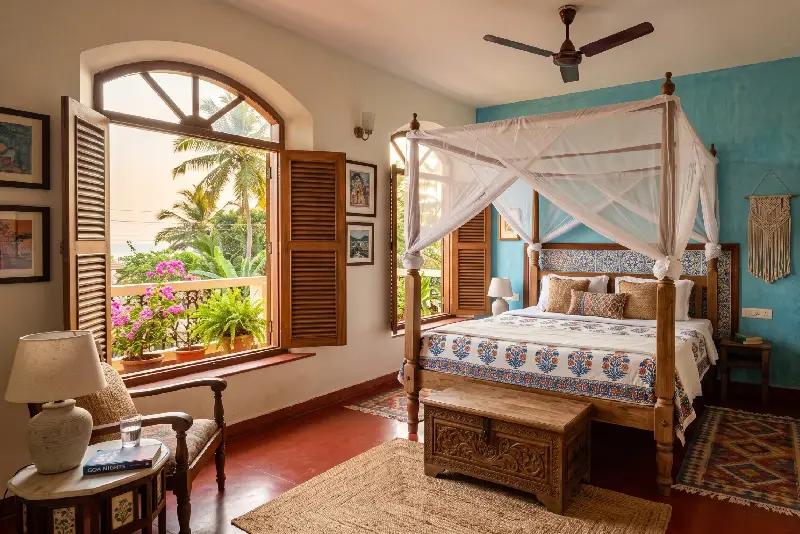
The bedroom in a Goa villa goes beyond being merely a sleeping zone. It is an oasis of relaxation and rejuvenation.
When designing such a bedroom, you have to concentrate on creating a feeling of calmness via the use of natural materials, comfortable textures, and proper lighting.
The bedroom will consist of wooden furniture, linen textiles, neutral colours and warm lighting. The large windows that overlook the garden or landscape make you feel the presence of nature within the room.
An expensive bedroom does not have to be too decorated. Comfort is what it is all about.
A bed that is handmade.
A wall that is textured.
Draperies swaying in the air.
A reading nook with a view of the greens.
Those little touches can make you feel the luxury.
Numerous Goa inspired bedrooms have cane furniture, woven textiles, vintage accessories, handcrafted decorations, etc.
The Kitchen: Where Function Meets Warmth
The kitchen has always been integral in the design of Goan houses since food forms the very core of the culture.
Luxury villas’ kitchen designs must blend practicality with charm.
Open kitchens are growing popular due to their ability to bring people together since they integrate the act of cooking into daily living rather than isolate it.
A combination of cabinets made of wood, stone countertop, modern appliances, and proper storage systems helps achieve this delicate balance.
Goa influenced kitchen might feature natural finishes, earthy color schemes, handmade tiles, or wood accents to bring warmth to the design.
Apart from being a great looking space, it must also suit people’s needs.
The Washroom: Creating a Private Spa Experience
Luxury bathrooms have transformed into wellness retreats beyond their basic functionality.
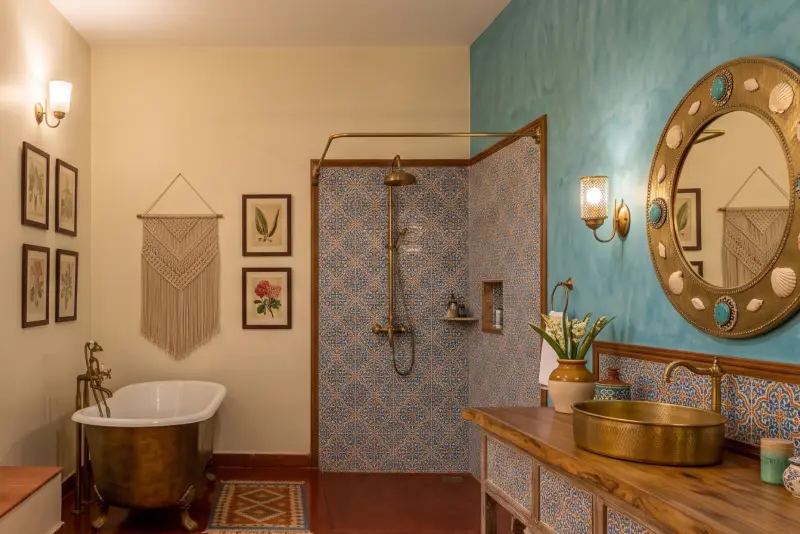
For bathrooms in Goa villas, resort-like designs which blend natural materials with comfort are common.
Natural stone surfaces, wood, indoor plants, rainfall showerheads, and ambient lighting may make the bathroom more spa-like.
Integration with nature may be achieved by incorporating a view of a garden, skylights, and open shower designs where applicable.
A well-designed bathroom is an escape within your own home.
The Living Room: The Heart of the Villa
The living room is where the personality of the house lives.
In Goa, this room often turns into a connection between inside coziness and outside beauty.
The high ceiling, big windows, the use of natural materials, and comfortable furniture make this room welcoming.
Luxury living room pays attention not to how beautiful it looks but to how it works.
This room should be the place where families unite, talk, and create memories.
Handmade furniture, art, books, plants, and other items make this room unique.
It should be elegant and never be intimidating.
The Dining Room: Designed for Togetherness
Spaces designated for dining in Goan houses hold emotional value since food holds great importance within the community and family context.
Luxury spaces designated for dining should facilitate engagement.
Long tables made of wood, comfortable seats, good lighting, and views of nature can make the dining experience quite unique and unforgettable.
The space itself can make a design statement through the use of handmade pieces of furniture, lighting, or other traditional elements.
Perfect dining spaces are not just spaces for food consumption.
Examples of Goa-Based Interior Styles
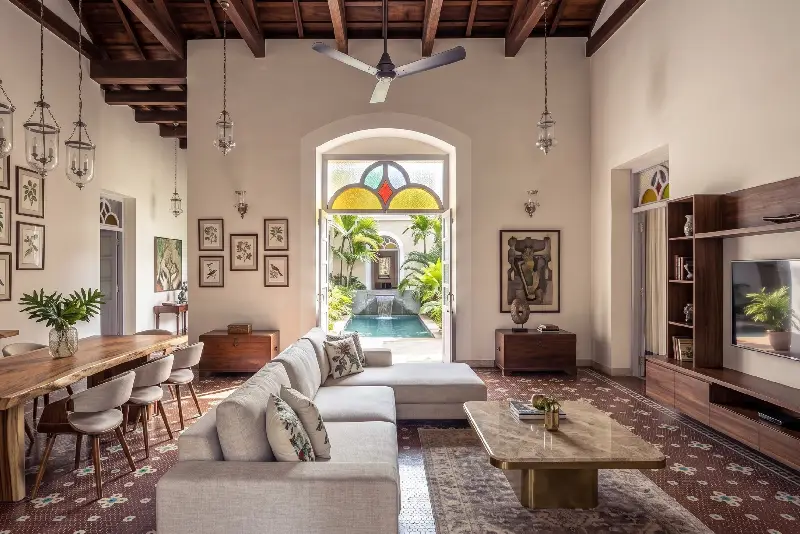
Goa has always been a melting pot of cultures. Its architecture and culture have grown out of a combination of several cultures throughout centuries of cultural interaction, forming a design approach which can be described as adaptable and classic.
Designing luxury villas in Goa does not necessarily imply one type of Goa-style homes. Each home owner can choose any interpretation of the style of Goa – some prefer classical old houses, some prefer modern houses which reflect the serenity of coastal life.
The most important thing is the understanding of emotions behind the style.
1. Country Charm: The Warmth of a Traditional Goan Home
The Country Charm style is based on the warmth and hospitality of traditional Goan homes. This style is characterized by its simplicity, coziness and affinity to nature.
Such houses are made using natural colors and materials, handmade furniture and rustic details that make them comfortable and cozy places to spend time in.
Wood is one of the key elements of this style, which is represented by such elements as wooden beams and shutters, wooden furniture, and other interior details that are used to add character to your house. Stone walls, terracotta flooring, furniture made of cane and handmade decor are some more natural details.
This style is about creating a home not only comfortable, but also gathered throughout many years.
Such items as:
- Rustic dining tables
- Furniture with antique design
- Stone finish
- Verandas
- Handmade accessories
Greenery inside of your house is usually included in a Country Charm Goa villa.
2. English Country Style Goa Home: A Blend of European Elegance and Coastal Living
The English Country style blends the elegance of European classic homes with the laid-backness of Goa.
English Country style is especially attractive because it combines the rich European heritage of Goa itself along with the addition of a more residential look.
The design language of this style emphasizes comfort, elegance, and details.
Common features of this style are as follows:
- Pastel colour schemes
- Florals
- Classical furniture shapes
- Wooden detailing
- Vintage inspired lights
- Fabrics
- Moldings
In contrast to a traditional European home which has a more formal feel, English Country Goa villa can be adapted to make it lighter and more tropical.
Large windows, natural fabrics, and open spaces ensure the continuity of the Goan environment in the house.
A bedroom with floral wallpaper looking at the greenery, a living room with soft upholstered furniture, or a dining area with classical wooden furniture will make for a wonderful blend of European elegance and Goan coziness.
This style is about sophisticated luxury without being too much.
3. Modern Contemporary Goa Villa: Luxury Through Simplicity
Contemporary Style is currently one of the most preferred styles for luxury villas in Goa.
Contemporary Style is characterized by clean architecture, spaciousness, quality materials, and open living space.
While the traditional homes use decoration to create visual appeal, contemporary Goa villas use proportion, scale, and material.
Some of the common characteristics of contemporary Goa villas include:
- Big glass windows
- Open floor plans
- Minimalist furniture
- Statement lighting fixtures
- Natural stones
- Wood accents
- Neutral color schemes
The outside environment plays a key role in the design of contemporary Goa villa.
A contemporary Goa villa can have a minimalist living room that leads to the swimming pool, a kitchen attached to an outdoor dining area, or bedrooms centered on garden scenery.
The philosophy of contemporary Goa villa design is to create luxury experience.
It is spacious because of architecture and nature working together.
4. Minimal Contemporary Goa Home: The Beauty of Less
Minimal Contemporary design is ideal for those looking for simplicity, clarity, and tranquility.
In Minimal design, unnecessary elements are eliminated and what is left is of importance.
However, minimal doesn’t mean bare.
Good minimal Goa home design has texture, material, and experience.
It may include the following:
- Neutral color schemes
- Clean lines in architecture
- Hiding the storage spaces
- Natural wood
- Texture in walls
- Soft light
- Selected pieces of furniture
Luxury lies in precision.
For instance, beautiful handcrafted wooden panel, perfect arrangement of the piece of art, or the lighting details have more effect than decorations.
Minimal Contemporary design suits Goa homes due to the natural environment included into the design story.
Nature beyond the window glass, change of lights, and sounds of nature are what complements the home interior.
5. Vintage Vibrant Goa Home: Celebrating Colour and Heritage
Colour has always been the key component of Goa.
Whether it be coloured Portuguese architecture or markets, colour has always been integral to the essence of Goa.
Vintage Vibrant style is one such style that pays homage to this vibrancy and makes the interiors sophisticated.
This style includes:
- Colourful accents
- Vintage furniture
- Traditional patterns
- Vintage accessories
- Handmade decoration
- Artistic components
The idea behind this style is derived from traditional Goan houses that were filled with unique design features.
Colourful tiles on the floor, antique cabinets, vintage mirrors, or accent walls in colour can become the feature of the house.
The key aspect of this style is harmony.
It is necessary to create a visually pleasing environment without overwhelming it with excessive details.
This style is ideal for those owners who want their villa to showcase individuality and creative approach.
Practical Advice Before Designing a Luxury Villa in Goa
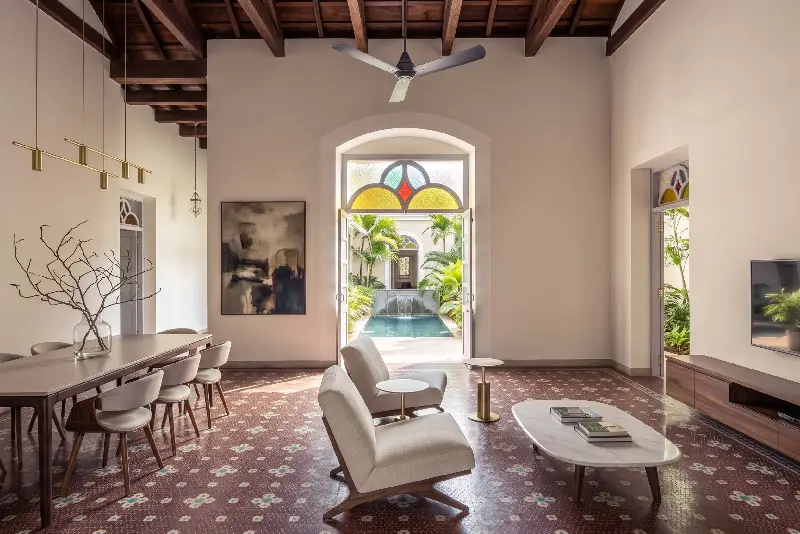
Creating a luxury villa calls for meticulous planning. Even though appearance is a key factor, the home must be able to satisfy all other needs as well.
Here are some things you should consider before starting with your villa project.
Understand the Climate Before Choosing Materials
Tropical weather in Goa necessitates prudent material choice.
Moisture, rainfall, and the coastal area may have an effect on materials in the long run.
Keep in mind:
- Resistance to moisture
- Maintenance needs
- Durability
- Compatibility with weather
Using pretty but inappropriate materials may cause problems in the future.
The best materials are those that age beautifully while retaining their originality.
Prioritise Natural Ventilation
Naturalness is one of the main strengths of a Goa house.
Layouts that will permit:
- Ventilation from all sides
- Fresh breeze
- Plenty of natural light
- Contact with the outside world
The properly designed house lessens dependency on mechanical cooling and makes the life more healthy.
Do Not Over Design
One mistake that most homeowners make when designing their luxury homes is to include too many luxurious aspects.
Luxury should not be about including all the aspects.
The luxury aspect should involve selecting the right aspects.
Incorporation of many materials, colors, and designs will result in the loss of identity.
Respect the Existing Character During Renovation
Do not demolish everything if you decide to renovate an old building in Goa.
Some parts have a historic and sentimental importance.
By renovating:
- Ancient wooden doors
- Windows
- Stone walls
- Furniture
- Architectural pieces you can bring unique charm to your creation.
Invest in Craftsmanship
A luxury villa is determined by the details.
Execution plays a more important role than an original idea.
Craftsmanship provides accuracy and character to:
- Furniture
- Woodwork
- Stone work
- Finishes
- Custom items
Craftsmanship makes sure that the house looks beautiful for years to come.
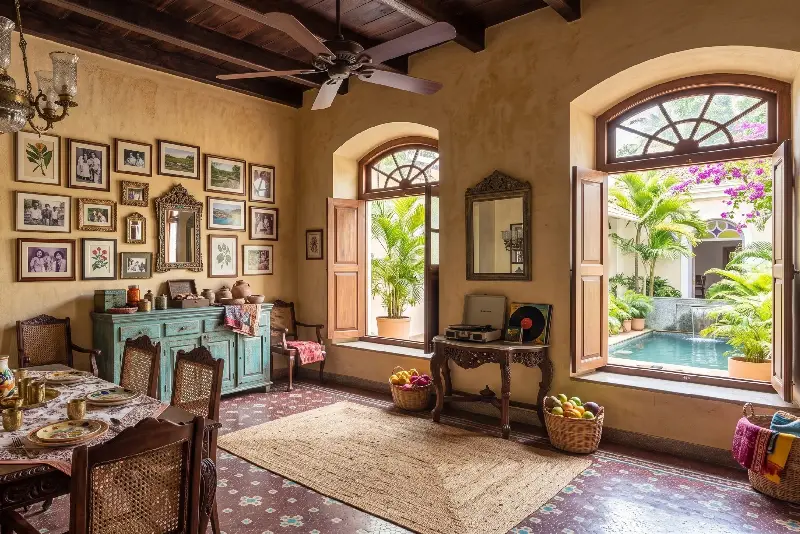
Our Vision and Our Design Philosophy
At Cee Bee Design Studio, we believe that every house needs to be in harmony with its surroundings.
The home in Goa must not be an urban home which is put near a beach. The home must connect with the rhythm, culture, climatic condition, and lifestyle of the place.
We begin with observation in our process of design.
We observe the surroundings, architecture, nature and, above all, the people who will live in the space.
Design for us does not mean following some sort of trend. Our design process means designing authentic homes.
The luxury villa must have a story to tell.
The story of its occupants, its surroundings, and everything in between.
Follow us on:
About us
Welcome to CeeBeeDesignStudio, an Indian homegrown interior design brand where every home is a canvas and every design is a story.
We’ve proudly completed over 1000 residential and 400 commercial projects across 7 cities, earning a reputation for unmatched aesthetic acumen and client satisfaction. Our studio has also been recognized with multiple national awards, a reflection of our commitment to excellence, storytelling, and design innovation.
From thoughtfully styling modern apartments to restoring heritage homes, we bring soul, sustainability, and structure into every project.


Enter Your Details