
Designing Homes for Goa’s Coastal Climate: Where Architecture Meets Nature
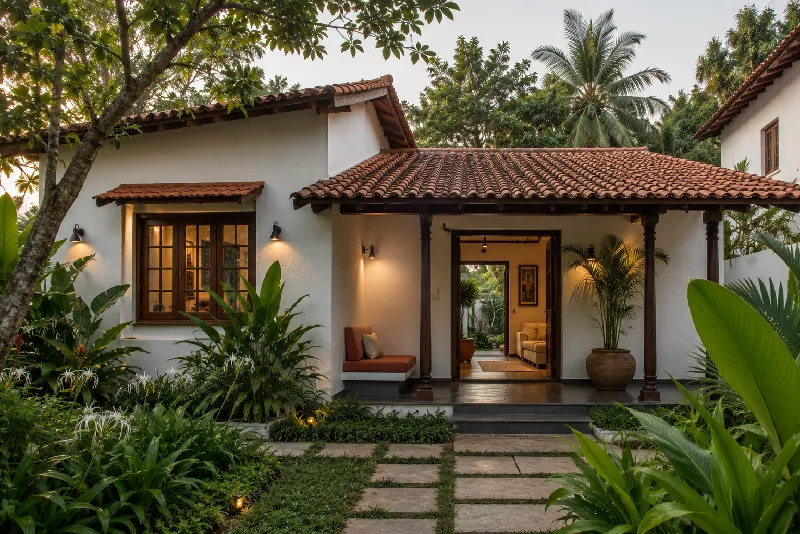
Table of Contents
ToggleIntroduction: Understanding the Soul of Goan Homes
A home in Goa is not just the amalgamation of walls, furnitures, and decorations. Rather, it is defined by the land surrounding it, the flow of seasons and the interaction of people and nature.
While homes created in urban cities tend to center on maximising space, the homes in Goa have always been a different story altogether. The homes in Goa have always been known for being homes that breathe. The homes in Goa let in sunlight but keep out heat. They let in breezes while ensuring there is a smooth connection between indoors and outdoors.
The traditional homes in Goa are homes that have been created in response to a tropical coastal climate over the many centuries. Taking inspiration from the architecture of the Portuguese along with indigenous craftsmanship and building techniques, traditional Goan homes took on a character of their own with whitewashed walls, terracotta sloping roofs, wood balconies, verandahs, courtyards, arches, and gardens.
The state of Goa in India experiences a hot and humid climate all through most of the year, with hot summers, heavy rains during the monsoon season, and salty air from the sea. Every aspect of architecture used to design traditional houses in Goa was guided by this climate. Sloping roofs were to make it easier for water to run off during monsoons. High ceilings would make sure that the heat rises up and escapes the building. Openings would facilitate cross-ventilation. And thick walls would help regulate the indoor temperature.
The traditional Goa houses were never built to battle the elements of nature. They were rather designed to live in harmony with it.
In the modern times, with an increasing number of people wanting to live in peace and build holiday homes and permanent homes in Goa, the task for the designer is to keep this harmony with nature intact while adding some modern comforts.
The philosophy of Cee Bee Design Studio is that the best homes are not those that are visually pleasing. The best homes are those that belong to their environment and complement the environment.
Beyond Beauty: How Goa’s Climate Shapes Interior Design
Creating an ideal design for your house in Goa starts with knowing about the surroundings.
Since this is a coastal area, it presents special features and difficulties for designers. The availability of light, green plants, and views offers designers to use this information to create fresh and open spaces. Nevertheless, such aspects as humidity, moisture, salt air, and bright sunlight need to be considered while creating interiors.
Material suitable for a flat in the city cannot necessarily work in this environment.
One of the most popular materials used in Goan houses is wood. It is due to its naturalness and beauty. Nevertheless, choosing improper types of wood and not treating it correctly can result in problems caused by moisture. The same can be said about fabrics, metals, paint, and finishings.
An ideal Goa home combines beauty and functionality.
Designing for Humidity
Humidity is one of the major factors when building a home near the coast. The interior requires sufficient ventilation to avoid moisture buildup and maintain freshness.
Rather than construct compact and extensively compartmentalized interiors, Goa homes require:
- Open planning for air circulation
- Big windows with shade
- Courtyards and transitional spaces
- Ventilating materials
- Moisture-proof finish
What is required is not just a visually pleasing home, but an all-season comfort home.
Designing for Monsoons
Goa enjoys some of the heaviest rainfall in the country. While monsoon showers beautify the surroundings, they pose certain difficulties for dwellings.
Waterproofing becomes critical in such conditions, especially in the following areas:
- External walls
- Bathrooms
- Balconies
- Roofing
- Junctions between floors
The designer has to take into account drainage facilities and other concerns during the planning phase itself.
Designing for Coastal Air
The salty environment close to beaches may have an effect on metals and their finishes.
It is important to choose appropriate materials.
Rather than focusing solely on aesthetics, it is important to ask:
How will this material age?
How will it hold its beauty after being exposed for many years?
Will it need too much maintenance?
The luxury of homes on the coast is not in making something perfect on the very first day. It is in making something that ages beautifully.
What Makes a Home Truly Belong to Goa?
A house in Goa cannot be defined through a certain color scheme or decoration style. A house in Goa can be defined by a certain feeling.
The feeling of awakening with the natural sunlight streaming into your room.
The feeling of sitting under the shade of the verandah while listening to rain falling outside.
The feeling of opening the doors and incorporating the garden into the living spaces.
1. Indoor-Outdoor Living
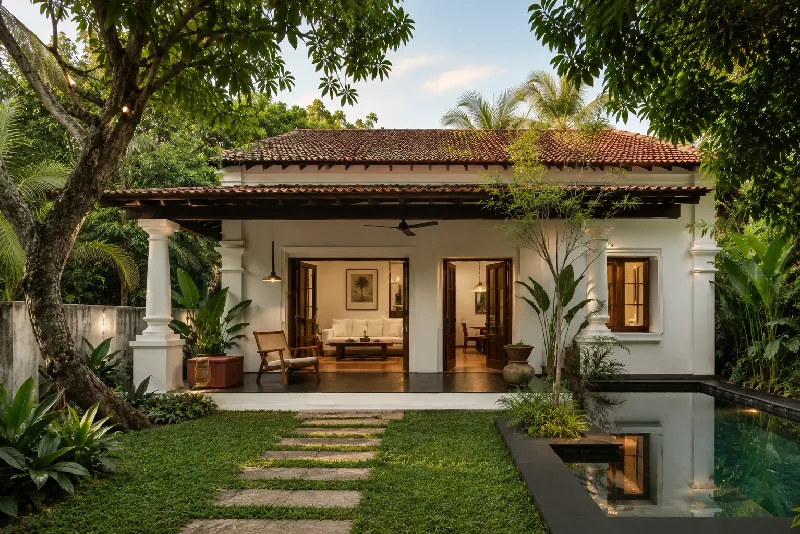
The most defining feature of Goan houses is the absence of a clear demarcation line between indoors and outdoors.
The living rooms have doors opening out to a garden, pool, courtyard, or a terrace. Glass doors, verandahs with awnings, and outdoor sitting areas make the residents feel the presence of nature through the day.
This creates a whole new way of experiencing one’s house.
Not only does the garden exist as something seen from the windows; it extends the living room.
Not only does the balcony offer practicality; it provides a place for coffee in the mornings and rainy days.
2. Natural Materials
The architecture of Goa has always made the use of materials close to nature.
Traditional houses utilized materials such as:
- Laterite stones
- Terracotta tiles
- Wooden beams
- Bamboo and cane
- Lime plastering
- Handmade tiles
Such materials help provide warmth and also adapt themselves to the environment.
In today’s time, designers have found ways of adapting these materials through innovative designs. A modern house can use natural stone flooring, wooden ceilings, handmade tiles, and handcrafted furniture.
3. Light and Ventilation
Light is considered an essential element in the design of any Goa house.
There is a tropical sun in Goa that can provide beautiful lighting but it has to be controlled carefully.
Some of the ways to control it in a Goa house include:
- Sheer curtains
- Wooden screens
- Deep overhangs
- Skylights
- Landscape shading
4. Colours Inspired by Nature
The interior decoration designs of Goan rooms usually take cues from their immediate environment.
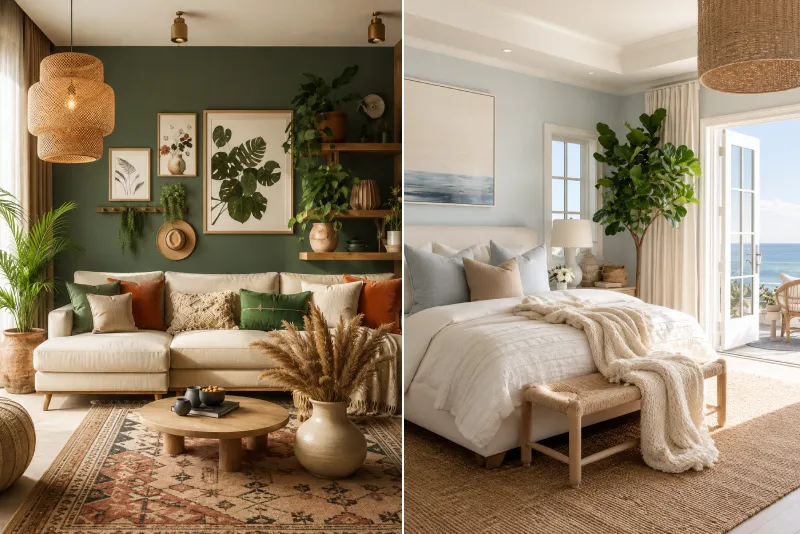
White, beige, brown, blue, green, and terracotta are some colors that form a natural part of the decor. These colors don’t try to beat nature. Instead, nature becomes the hero.
What It Takes for an Interior Designer to Craft a Home That Matches Goa’s Weather
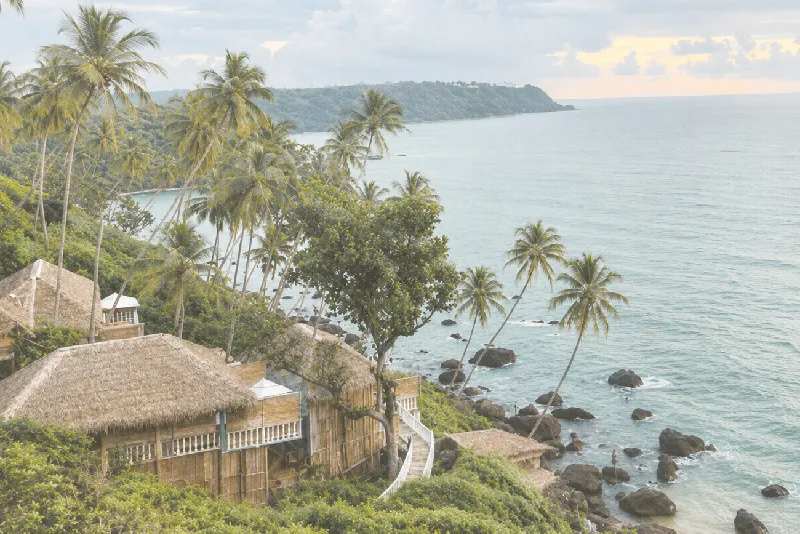
Designing homes in Goa needs a different approach than designing in a city environment. Although aesthetics play an important role, aesthetics cannot be considered without the climatic factors. The home that looks beautiful at the outset but doesn’t respond to the surroundings would soon become hard to maintain.
As an interior designer, you need to think about other things before you choose furniture or decide color palettes.
All projects in Goa start with more fundamental questions.
How does sunlight pass through your home?
What places in the house are directly heated?
From where does the monsoon wind enter?
How does humidity affect the materials?
How can the house remain naturally comfortable throughout the year?
It forms the basis of climate-responsive design.
Our team at Cee Bee Design Studio believes that design starts with observation. Prior to developing a visual language for a home, we understand its architecture, location, and the lifestyle of the family. Your Goa home must never feel like a city apartment near the coast; it should belong there.
It is the job of an interior designer to strike the right balance between beauty and functionality.
A good coastal home needs
Understanding the Site
Each site in Goa has its own distinctiveness. A villa set in nature needs an entirely different strategy from a house that is close to the beach. Factors such as the level of sun exposure, direction of winds, landscape, and architecture around affect every design aspect.
The house by the sea may need better protection from the saline winds while a site in nature will need good ventilation.
Choosing Materials That Can Handle the Climate
Materials are not chosen only for their beauty.
The materials should also behave beautifully.
For instance, natural wood will provide warmth and elegance, but it requires protection from water. Fabrics have to breathe and be simple to clean. Metals have to have an anti-corrosive finish.
The designer has the duty of knowing the behavior of all the materials before bringing them to the space.
Creating Comfortable Flow
Traditional houses in Goa were designed to be naturally moving structures.
One space opened up into another. Outside spaces blended into inside spaces. There was a natural flow between rooms.
This is something that modern interiors can take note of.
Through open planning, zoning, and connectivity, the house becomes large, cool, and connected.
Balancing Modern Luxury With Local Wisdom
The current generation of home buyers desires contemporary kitchens, lavish bathrooms, technologically advanced fittings, and luxurious finishes.
However, the soul of Goa is simple, natural, and craft-based.
The problem is to build a house that can merge modern convenience with local culture.
Contemporary villa can include a modular kitchen, but with a natural wood finish.
Modern living rooms can have designer furniture, but with hand-crafted touches.
Luxury bedrooms can have lavish materials but must be tranquil and connected with nature.
Some of the best examples of Goan houses are those that combine traditional values with modern lifestyle.
Interior Design Elements That Match Goa’s Weather and Protect the Home
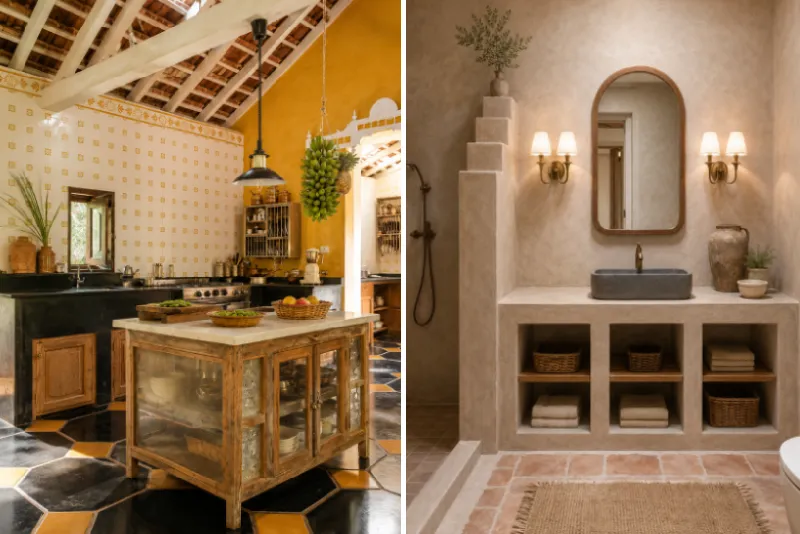
It is not only about having a space that looks tropical. Instead, it is also about having a house that is designed smartly to suit the coastal environment.
The following aspects will help accomplish both.
1. Natural Ventilation: Designing Homes That Breathe
One of the main benefits of living in houses in Goa is being able to use natural air flow.
In place of relying solely on artificial means of cooling the house, proper planning makes use of natural flow of air.
Such aspects include:
- large windows
- open corridors
- courtyards
- vented partitions
- high ceilings
among others that help make interiors of the house comfortable.
Houses in olden times knew how to use this feature very well. Modern houses can make use of it by way of modern architecture.
2. Natural Materials That Age Gracefully
The material used in the coastal home should not only be attractive on installation. They should become even more beautiful with time.
Natural materials fit in perfectly since they develop beauty with time.
These are some of the preferred materials:
Wood
Wood adds warmth to contrast the open spaces of the coastal homes.
Choice of teak wood, treated hardwood, or engineered wood is possible if used wisely.
Wooden ceilings, shutters, furniture, and panelling add timeless elegance of nature.
Stone
Natural stone works exceptionally well in Goa because it adds texture and durability.
Stone flooring, feature walls, and outdoor areas create a grounded aesthetic.
Cane and Rattan
These materials add softness and tropical elegance.
Cane furniture, lamps, and partitions create a relaxed coastal feeling without appearing overly themed.
3. Colour Palettes Inspired by the Coast
The colours of Goa naturally influence interior design.
A coastal home does not need bright beach inspired colours everywhere. Instead, subtle tones create a more timeless atmosphere.
Popular choices include:
Soft Whites
They create freshness and allow natural light to reflect beautifully.
Earthy Neutrals
Beige, sand, taupe, and warm browns create a connection with nature.
Ocean-Inspired Blues
Used thoughtfully, blues add calmness and reflect Goa’s coastal identity.
Tropical Greens
Greens bring the outdoors inside and create a refreshing atmosphere.
Terracotta Tones
They will provide warmth and relate to the classic Goan style.
Balance is the most important aspect.
The colours chosen must not copy the environment but complement it.
4. Furniture Designed for Coastal Living
Furniture becomes an integral part of Goan architecture.
Furniture which becomes an obstruction to movement tends to make a space close and restrictive. Rather, it is beneficial for coastal architecture to use lightweight and airy furniture.
Materials like:
- wood
- cane
- linen upholstery
- natural fabrics
ensure comfort and also provide lightness visually.
The furniture needs to be relaxing in nature.
A comfortable sofa seating towards the garden.
A wooden dining table seating arrangement.
A chair for reading by the window.
These are not only furniture arrangements but experiences.
5. Lighting That Works With Nature
Goan homes require proper lighting to highlight the beauty of the space.
During the day time, light will be the basic feature used in designing.
In the evenings, lighting should add comfort and coziness to the space.
The following layered lighting system is suitable:
- Ambient lighting to add warmth
- Accent lighting to highlight the architecture
- Lamps to add comfort and relaxation
- Outdoor lighting to highlight the garden area and walkways.
Natural lighting can work very well with wooden and stony materials.
How a Goa Coastal Home Looks From Inside
A Goa home should feel like a retreat, but it should still support everyday living.
Every room should have a relationship with the climate, landscape, and lifestyle.
The Living Room: A Space That Opens Towards Nature
Living room is the center of all activities in Goan houses.
Contrary to the living rooms of city houses which are always closed rooms, the Goan living room is mostly an open concept space.
Windows, doors, and outside access make the room open.
An ideal living room of a Goa house should have all the elements of comfort along with the presence of nature.
Such elements include:
- Soft upholstery
- Wooden furniture
- Stone floors
- Indoor plants
- Craftsmanship
- Good lighting
Good design of the living room helps the residents feel the different phases of nature.
Sunlight during the morning hours,
Breezy afternoons,
Rainy monsoons,
Everything becomes a part of the experience.
The Bedroom: Creating Calm Coastal Retreats
Bedrooms in the Goa style house are designed for relaxation.
The goal is to create an area which will be calming after the exhausting day.
Natural materials, soft colors, wood furniture and minimum decoration will contribute to creating such an atmosphere.
Large windows and balconies help keep in touch with nature.
Elements of the coastal style bedroom will be:
- Linen bed sheets
- Cane furniture
- Wooden wardrobes
- Soft light
- Neutral colors
- Indoor plants
The bedroom should be a personal sanctuary.
Not luxurious in an excessive way but luxurious enough to disconnect from everyday life.
The Kitchen: Functional Beauty Against Coastal Challenges
A kitchen in Goa requires careful consideration when it comes to functionality, durability, and coziness.
High humidity levels mean that choosing materials becomes critical.
Effective air circulation, durable finishes, and smart design are required.
Contemporary kitchens in Goa may include:
- Wood cabinets
- Granite countertops
- Shelves
- Textured surfaces
- Storage
However, a Goa kitchen should facilitate social interaction as well.
The process of cooking in Goa is often associated with family gatherings, feasts, and conversations.
This is why kitchens with open spaces and breakfast bars are ideal for Goa homes.
The Washroom: Designing for Moisture and Longevity
Coastal climatic conditions require unique consideration for the bathrooms.
Since the moisture content is very high, the choice of materials has to be considered properly.
Some of the elements that can be used in the bathroom inspired from Goa include:
- Stone
- Textured tiles
- Wood
- Plants
- Proper lighting
The intention here is to create a spa kind of atmosphere and make sure that it lasts long.
Proper waterproofing and ventilation are crucial.
Renovating a Goa-Themed House: Transforming Existing Spaces Into Coastal Homes
A renovation in Goa is not only about refreshing your home.
It is also about knowing the nature of the house that you have and improving it to make it liveable in today’s times.
There are a lot of properties in Goa that already have certain qualities that are hard to replicate.
These include traditional proportions, handmade features, old wood features, stone walls, and architecture that could hold a lot of stories and heritage.
The task of renovating such houses is not about doing away with their heritage.
It is more about retaining, refining and re-interpreting it.
This is how at Cee Bee Design Studio, we work on every home renovation project – first studying what is there and what can be transformed into something different.
And this is what makes a good home renovation in Goa.
Step 1: Understanding the Existing Architecture
Observation is the first step in the process of renovation.
There is a story behind each piece of land. There are houses where there is a need for restoration of traditional architecture, and other houses which require full transformation for better utility.
During the initial evaluation, we look at:
- Current structure
- Patterns of natural light
- Opportunities for ventilation
- Problems with moisture
- Conditions of materials used
- Utilization of space
This assists us in determining which components to preserve and which parts to re-design.
For instance, an old wooden door may not be changed simply because it is out-of-date. It may be renovated and incorporated into modern interiors.
Step 2: Creating a Climate Responsive Layout
This renovation project presents us with an opportunity to enhance the responsiveness of the house to the weather in Goa.
In fact, many older houses have been designed using climate principles. However, contemporary lifestyles might need an enhanced design.
Some of our key focuses include:
- Enhancing circulation among spaces
- Creating strong indoor-outdoor relationships
- Enhancing lighting
- Cutting out unnecessary partitions
- Creating zones
The idea behind the project is to create a more open and effortless house.
For instance, a closed living room can be re-designed to face the garden.
A poorly lit corridor can be designed to take advantage of natural lighting.
An isolated balcony can be made part of the living space.
Step 3: Waterproofing and Structural Protection
In Goa, renovation is never complete without taking into account the climate conditions.
Preparation for monsoon is the most crucial part of renovation.
Before moving towards interiors, it is important to renovate the structural base of the house.
This involves:
- Waterproofing of the walls and terraces
- Fixing of drainage system
- Treatment of moisture-affected areas
- Protection of wooden components
- Proper Ventilation
An attractive interior becomes meaningless if the structure underneath it is not protected.
Climate-responsive renovation always starts with durability.
Step 4: Selecting Materials According to Coastal Conditions
Material selection is one of the most crucial aspects in designing Goan homes.
Good materials add beauty, comfort, and durability to the home.
Rather than picking material based on fashion alone, we ask ourselves:
How does this material age?
How will it behave in humid conditions?
What kind of maintenance does it need?
Will it be relevant even years from now?
Great materials are those that keep getting better with age.
Step 5: Designing the Interior Experience
After the plan for its structure and material is set, the emphasis moves on to making it emotionally appealing.
This involves:
- The choice of furniture
- Design of lighting
- Color scheme
- Art pieces
- Texture
- Decor items
In other words, the aim is to make the spaces look cozy, warm and reflective of the nature of Goa.
A Goa home should not look like a theme resort.
It should rather be a well-designed home.
Materials We Use for Goa Coastal Homes
Materials are the language through which a home expresses its identity.
In Goa, materials need to balance beauty with resilience.
Here are some materials that work exceptionally well for coastal interiors.
Natural Wood: Bringing Warmth Into Coastal Spaces
Wood has always been an integral aspect of Indian houses.
It forms a bond between interior and exterior in Goa.
The uses of wood are:
- Furniture
- Details on ceiling
- Doors & shutters
- Wall panelling
- Cupboards
Teak and other treated woods are used since they provide long-lasting solutions with timeless charm.
Wood helps to soften modern architecture, which is mostly made of stone and concrete.
Laterite Stone: A Material Connected to Goa
Laterite stone has an intimate relationship with architecture in Goa.
The earthy color and natural appearance contribute to a sense of locality.
Some of the uses for this material include:
- Outer walls
- Landscaping
- Feature walls
- Walkways
Moreover, laterite offers more than just a beautiful appearance.
Through the use of local materials, houses become rooted within the surroundings.
Natural Stone
Durability and elegance come with stone.
Examples of stones that can be used include:
- Floors
- Kitchen tops
- Bathrooms
- Outside surfaces
Every stone has its own pattern, thus making every surface unique.
Cane and Rattan
Cane and rattan bring softness into coastal homes.
They work beautifully for:
- Chairs
- Lamps
- Partitions
- Storage baskets
- Decorative elements
Their lightweight appearance creates a relaxed tropical atmosphere.
Terracotta
Terracotta adds warmth and handcrafted character.
It can be used through:
- Flooring
- Tiles
- Decorative pieces
- Accessories
Its earthy appearance connects interiors with traditional Indian craftsmanship.
Lime Plaster and Handmade Finishes
Natural finishes create depth that painted surfaces often cannot achieve.
Lime plaster offers:
- Breathability
- Natural texture
- Climate adaptability
Handmade finishes also bring uniqueness because slight variations create character.
Brass and Metal Details
Tiny details usually make up luxury.
Brass door handles, light fixtures, and décor contribute to elegance.
When used alongside natural elements, metal brings harmony between classic and contemporary style.
Case Study 1: A Contemporary Tropical Retreat
One of the main issues in the design of a tropical house is finding a balance between luxury and the connection to nature.
For the creation of this Goa inspired house, the approach was based on the idea of the relationship between interior and exterior of the building.
The problem was to create such an environment which would feel spacious, light, and at the same time would have enough privacy.
The design elements used for this aim included:
- Large openings
- Natural materials
- Wooden accents
- Neutral colors
- Comfortable furniture
In order to provide the feeling of relaxation and social life, the living spaces were created not as formal places.
Nature played a great role in the design of the interior.
Wood, stone, fabrics, handmade décor created multiple layers of interior decoration without making the interior too busy.
The bedroom spaces were created in order to create a comfortable environment for sleeping.
They have light colors, comfortable furniture, and calm environment.
The result is a Goan inspired villa, which feels relaxed and luxurious.
This villa does not try to mimic any architecture.
It rather understands the principles behind it.
Case Study 2: A Modern Goan Home With Traditional Influences
It was intended to create a modern house that incorporated traditional Goan elements.
The client requested to design a house which should be modern yet warm and stylish.
The initial phase of the design involved getting to know the way of life of the family and what the family wished for their house.
While designing the house, traditional elements were not used just as decorative elements but were incorporated intelligently.
Wooden elements provided warmth.
The natural materials were used to provide comfort.
Hand-made elements gave the house character.
The colour scheme of the house was elegant and simple which allowed the materials and architecture to stand out.
The difficult task was to strike a balance between modern luxuriousness and traditionalism of the region.
Too many traditional elements would make the house old-fashioned while too much modernity would make it disconnected from its surroundings.
In conclusion, the right balance was reached.
Why Cee Bee Design Studio Approaches Goa Homes Differently
In Cee Bee Design Studio, we know that there is a distinct design vocabulary for each place.
The house in Goa is not just about creating another house in Goa.
It has to evoke feelings of being in Goa.
This is because we are aware of the connection between architecture, environment, materials, and people.
Our design process always starts with asking questions.
Whose house is it?
How will it be used?
What are the feelings that the house must evoke?
How do we make the surroundings an integral part of it?
Our interior designs are never about mere decoration.
They are about telling stories.
Our Design Philosophy: Creating Homes That Belong to Their Place
A meaningful home must be contextually aware, it needs to be a product of where it belongs. A Goa home needs to embrace the coastline, a mountain home must pay respect to the landscape, and a city home should relate to urban life and rhythms. Contextual sensitivity gives power to design.
Luxury design does not mean making homes that appear impressive at the point of inception. Luxury is about creating a home that will be meaningful years from now on. Luxury is about the naturalness of materials used, the elegance of craftsmanship involved, and the efficiency of the layout. It is about designing a place one will always love to be in.
Designing homes for the Goan coastal environment means creating harmony in architecture and the natural environment and in culture and modernity. Homes that are truly luxurious should not be meant to be admired only; they need to be experienced.
Follow us on:
About us
Welcome to CeeBeeDesignStudio, an Indian homegrown interior design brand where every home is a canvas and every design is a story.
We’ve proudly completed over 1000 residential and 400 commercial projects across 7 cities, earning a reputation for unmatched aesthetic acumen and client satisfaction. Our studio has also been recognized with multiple national awards, a reflection of our commitment to excellence, storytelling, and design innovation.
From thoughtfully styling modern apartments to restoring heritage homes, we bring soul, sustainability, and structure into every project.



Enter Your Details