Table of Contents
ToggleMid-century modern interior design is a design movement that goes beyond temporary trends, embracing principles that remain relevant across generations. It is not just an aesthetic style but a philosophy that has changed the perception of housing, furniture, and life.
Emerging between the 1940s and 1960s, mid-century modern design developed in response to the significant changes that happened socially, technologically, and culturally. After the Second World War, people started looking for a way of life that would be more practical and comfortable. Designers have started moving from the decoration of the rooms and have paid more attention to the simplicity, practicality, and availability of everything.
The following movement became focused on clean shapes, the honest use of materials, and careful craftsmanship. The designers have stopped making the rooms just to display them, but rather for use at home.
This form of design continues to influence architects and interior designers even today, for it remains relevant in terms of its basic concepts. Present day home owners prefer to have interiors that are spacious, functional, warm, and personalized. The use of natural materials, timeless furniture, and good composition makes it relevant to modern living.
What I love about Mid-Century Modern is its restraint. It does not try to impress through excess. Born in the 1940s-60s, the style brought together clean lines, honest materials, functional planning, handcrafted furniture and a closer relationship with nature. Decades later, those ideas still hold because they were never dependent on a particular fashion.
In our work, I prefer to take those principles rather than reproduce the style. Sometimes that means a complete Mid-Century home with teak, cane, leather and sculptural lighting; sometimes just a few carefully chosen elements within a contemporary home; and sometimes bringing Mid-Century thinking together with Indian craftsmanship, materials and art. The constant is thoughtful planning, effortless movement, natural textures and furniture made to last. For me, that is where good design begins, not in recreating a look, but in making it belong to the people and the place.
The emergence of Mid-Century Modern design may be dated back to the early to mid-twentieth century, when the focus of designers shifted towards questioning existing architectural and interior design practices. Before this time, houses featured ornamental styles, which emphasized decoration, craftwork, and conspicuousness.
Sociocultural changes required the existence of a new approach to design. The process of urbanization was growing rapidly, living spaces became smaller and people needed efficient and comfortable environment.
Designers began an investigation into the idea that beauty might lie in simplicity. It is no longer about adding decorations for decorative purposes; instead, designers paid attention to the creation of objects and interiors, where form follows function.
This basic concept contributed to the emergence of functional furniture. Chairs, tables, cabinets, and lighting fixtures had to be created not only to serve their functions, but to remain beautiful as well, through proportions and craftwork.
In other words, the movement did not represent less design, but a shift to more meaningful design. Everything, from each curve to material choices was carefully considered by designers.
The style of mid-century modern was greatly influenced by advancements in technology and manufacturing processes. New techniques made it possible for designers to explore materials such as plywood, moldable plastics, steel, glass, and textile innovations.
It allowed them to create furniture designs with organic shapes and ergonomics which were not available before.
Similarly, architecture became an important part of this design movement. Designers worked on creating homes with open floor plans, large windows, and more integration between interior and exterior spaces. The use of light, air, and nature in house design became crucial.
The old idea of completely separate rooms became outdated. The dining room, living room, and kitchen started to integrate, creating more communicative and versatile spaces.
This idea is still relevant today, especially in cities where space utilization and openness of the home design are important.
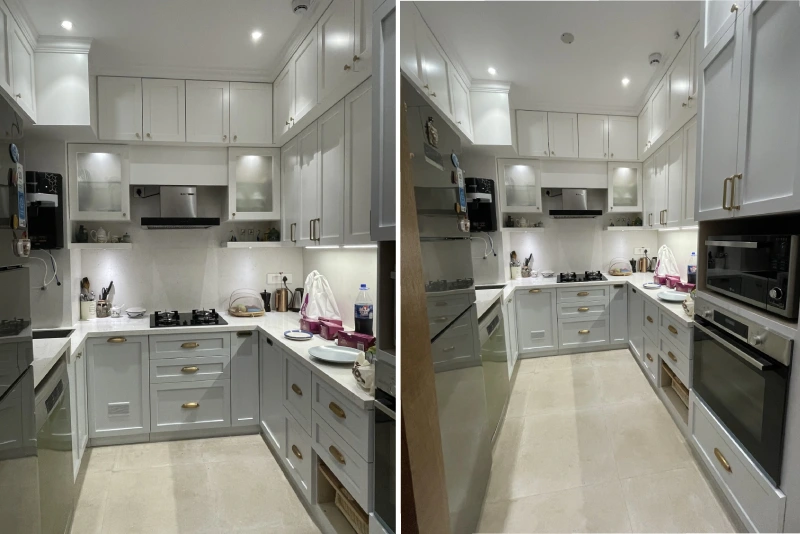
The basic idea behind Mid Century Modern interior design is the idea that the house has to be designed according to its occupants. The movement de-emphasizes the role of decoration in favor of practicality and creates harmony between aesthetics and practicality.
A Mid-Century Modern home does not necessarily have to be decorated with lots of ornamental pieces; what matters is how much each piece brings to the overall design.
The furniture has to be comfortable and usable, the materials have to be durable and beautiful in their naturalness, spaces are supposed to facilitate movement and communication among the people.
It is assumed that simplicity is capable of creating elegance. In this respect, a well-designed wooden chair, an intelligently placed art piece, or an eye-catching light can become design features exactly because they can attract attention in a certain setting.
The idea is to create interiors that look easy but are the result of careful thinking.
One of the essential characteristics of Mid Century Modern design is the move away from ornamentation. Decorative details were not used, but focus was put on the natural qualities of materials, proportions, and workmanship.
The natural grain of wooden materials, the accuracy of metal constructions, and the importance of furniture came from its design and construction, rather than from unnecessary ornaments. This approach helped create authentic interiors that reflected daily life.
However, it would be misleading to believe that simplicity is equal to a lack of character. Artistic components, striking outlines of furniture, and properly selected color palette were often used in Mid Century Modern interiors. The difference is in the balanced application of each element.
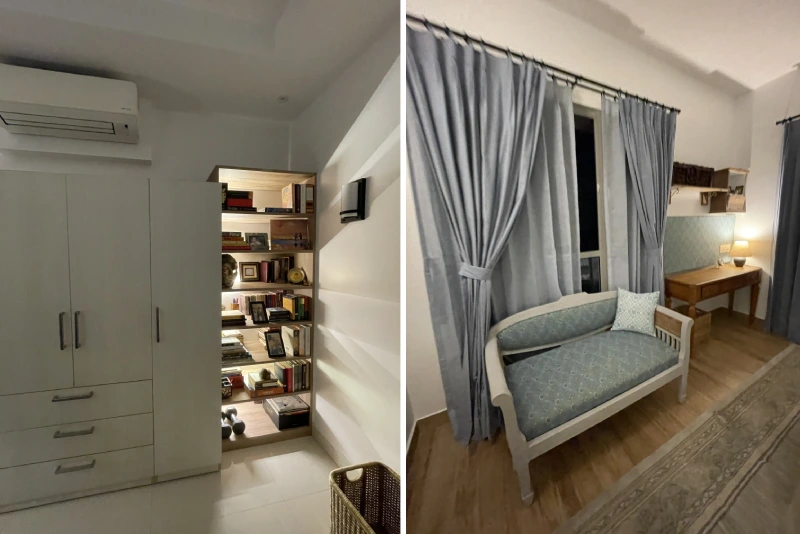
Clean lines mark a defining characteristic of mid-century modern interiors, where furniture, architecture, and decoration feature linear arrangements with streamlined silhouettes, producing an impression of harmony and balance. In distinction to interiors that include a lot of decoration, the style focuses on proportion and silhouette. Sofas are usually made in geometric patterns; tables have slim legs, and wardrobes have a neat appearance. It creates an illusion of visual weightlessness and orderliness.
In spite of the seeming simplicity of the design, the style does not lack coziness. Natural wooden finish, fabrics, and carefully chosen color combinations add charm to the design. It allows the style to embody both sophistication and coziness.
The idea of open planning represents a key aspect of the Mid Century Modern architectural style and design. Instead of separating rooms, architects focused on designing open spaces that connect easily with each other.
Living room, dining room, and kitchen were often merged into one large space for the purposes of ensuring better communication between family members. It is a manifestation of changing way of life where houses become venues for both personal leisure time and social interaction.
Open design allows for better illumination of the house and makes it appear larger and more spacious. Today, when Indian families value functionality and practicality of their homes, it is an important concept in Indian interior design.
Shapes are one of the important elements of the visual language of the Mid-Century Modern style. Balance in this style is achieved through a combination of strict geometric shapes along with soft organic curves. Straight-line architecture is often combined with curved furniture, seating, lighting, and decorative items.
The combination of various shapes creates dynamic yet harmonious interior spaces.
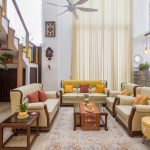
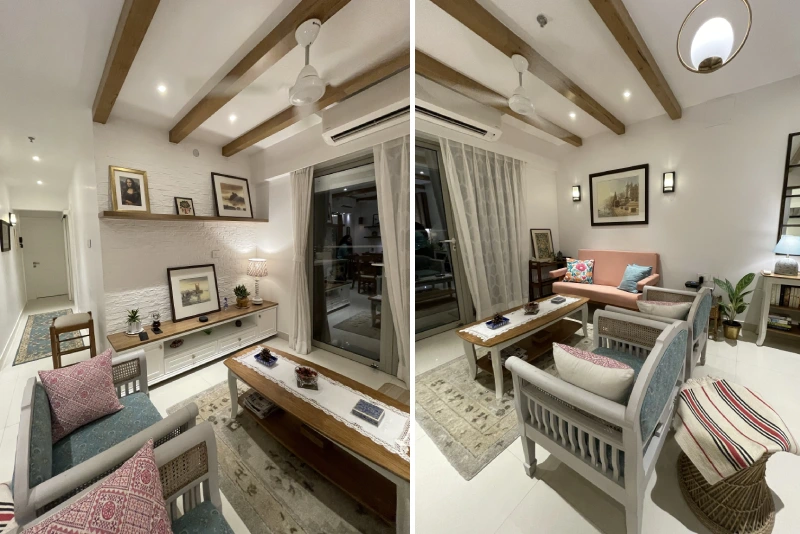
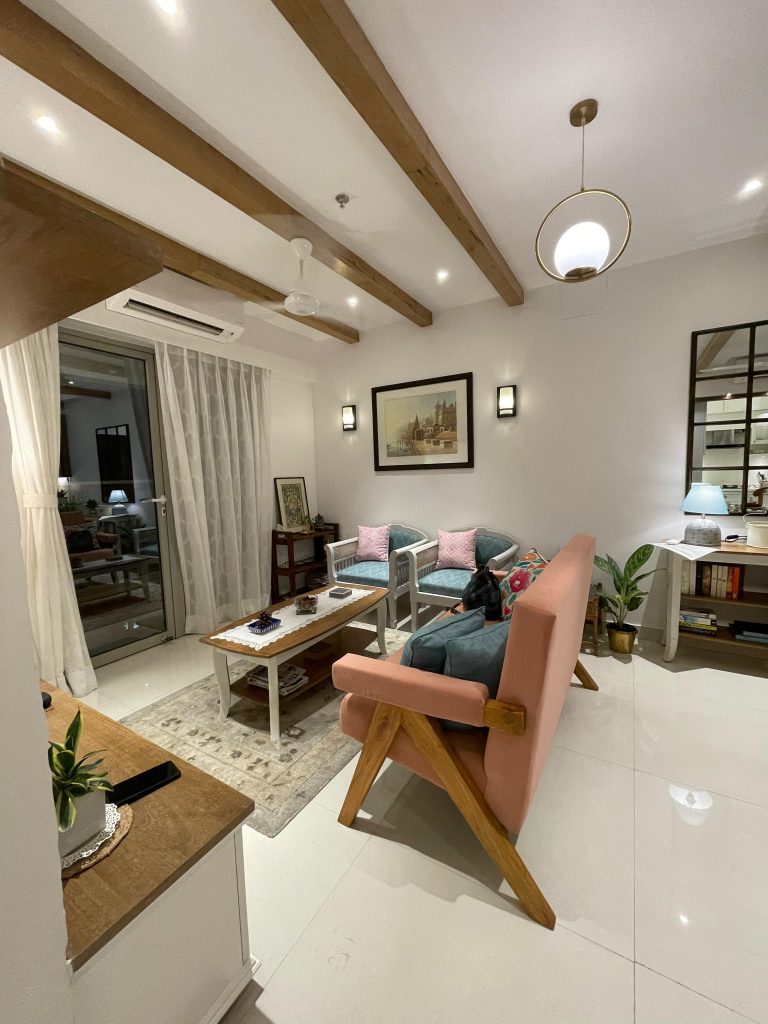
The living room is the most expressive space in Mid Century Modern interior design, where architectural forms, furniture, materials, and other personal touches are combined to create an overall effect.
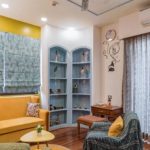
The key point here is to create an interior that provides a comfortable environment where all elements have their specific functions. A small sofa, sculptural lounge chair, wooden coffee table, and thoughtfully chosen art pieces create a balance in the composition without making the room seem cramped. Warm materials play their part in creating the warm atmosphere of the room. Wooden surfaces, fabrics, leather details, and natural colors create a friendly feeling.
Lighting creates an important mood for the space and helps to enhance its atmosphere. Bold pendants, floor lights, and lighting layers add character to the room but serve as interior pieces at the same time.
For Indian homes, the living room serves many different purposes – from hosting a family to formal parties. The planning principles of Mid Century Modern design can provide flexibility in this case. A thoughtfully planned mid-century modern home benefits from expert guidance, and a premium interior design consultancy in India can help bring together aesthetics, functionality, and individual lifestyle preferences
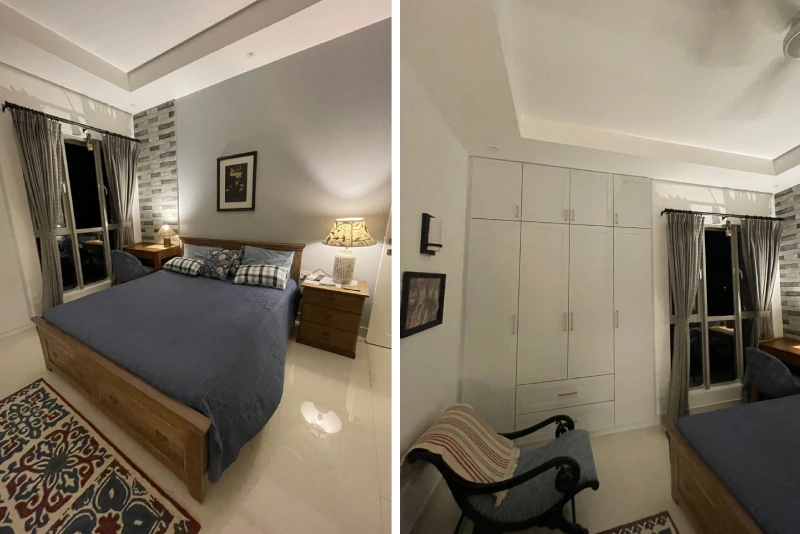
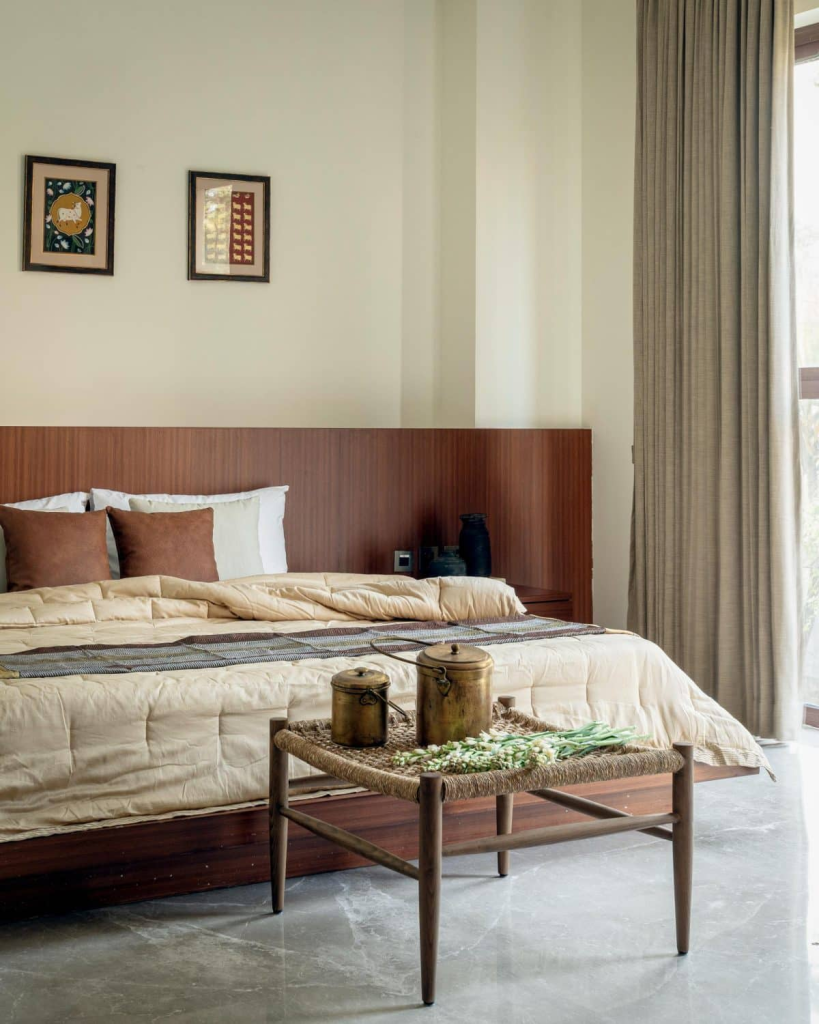
The focus of mid-century modern bedrooms lies in comfort, minimalism, and balance. The goal is to create a relaxing setting where the materials, light, and furniture work in harmony in order to achieve tranquility. These bedrooms often feature wooden beds, headboards, nightstands, and warm light sources. Instead of adding superfluous decorations, the design focuses on achieving a few well-designed moments. Natural fabrics, neutral colors, and texture layering help create a cozy space. Careful planning of storage options helps keep the clutter at bay and maintain a clean visual appearance through built-ins, hidden storage options, and well-planned furniture placement. A good mid-century modern bedroom does not feel empty; instead, it appears carefully arranged, allowing the occupants to relax in a space that feels personal and timeless.
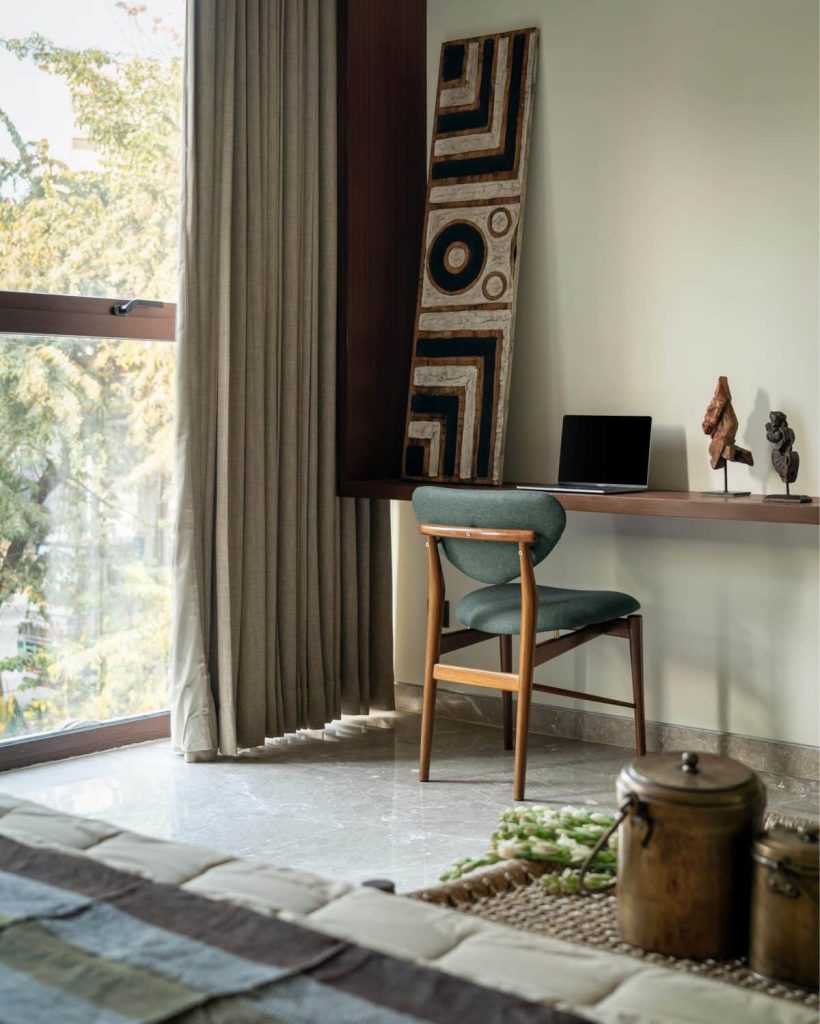
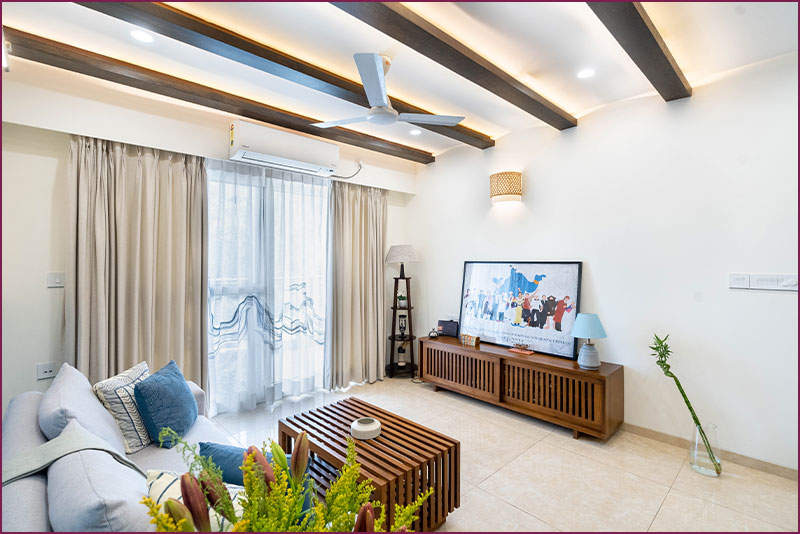
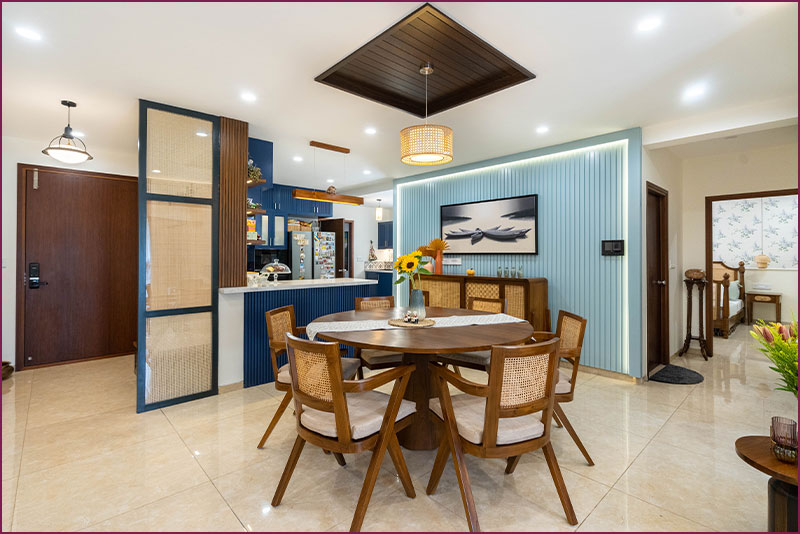
Color is an extremely important aspect of setting the ambiance of Mid Century Modern interiors. While in other styles high-contrast and heavy color combinations prevail, this style uses a well-balanced color scheme reminiscent of natural processes. Tonal ranges of neutral colors – white with shades of cream, beige, soft grey, taupe, etc. – form the basis of the interior. They create a serene background for furniture, artworks, materials and architectural details.
As opposed to cold and distant minimalistic interiors, Mid Century Modern spaces use neutral tones with added warmth. Natural materials like wood, textures, fabric and organic items add layers and depth to the space while overcoming any feeling of spatial flatness. Colors also serve as a distinctive feature of this style. Thanks to its neutral base, home owners have an opportunity to change small details without changing the whole look of the room.
In contemporary Indian interiors, earthy neutrals work perfectly well because they go well with traditional materials – wood, brass, stones and handmade textiles.
Neutral colors form the background basis for this particular design style, whereas accent colors make the Mid Century Modern interior stand out. Accent colors are not chosen randomly; they are thought out in order to create the effect of visual interest as well as highlight certain aspects in the space. Olive green, mustard yellow, burnt orange, dark blue, rust, and teal colors are typical for this design approach and may appear in various decor items such as furniture upholstery, art pieces, carpets, pillows, and ornaments. Accent colors are meant to bring emphasis to particular aspects of a room but not to clutter it with color. It takes only one piece of mustard-colored furniture, a picture of earthy colors, or a green pillow to change the overall atmosphere of a neutral space.
The effectiveness of a Mid Century Modern color scheme comes down to restraint. While the inclusion of color into the design paradigm is recognized, the use of color does not create visual competition between different components. The effective design story needs to consider the interaction between walls, floors, furniture, materials, and décor. Every color needs to serve the role of improving the entire design. For example, wooden furniture in warm tones can be complemented by soft beige wall colors, and an interesting piece of art can bring in some color without disrupting the harmony of space. At Cee Bee Design Studio, the choice of colors is viewed as part of the bigger design story.
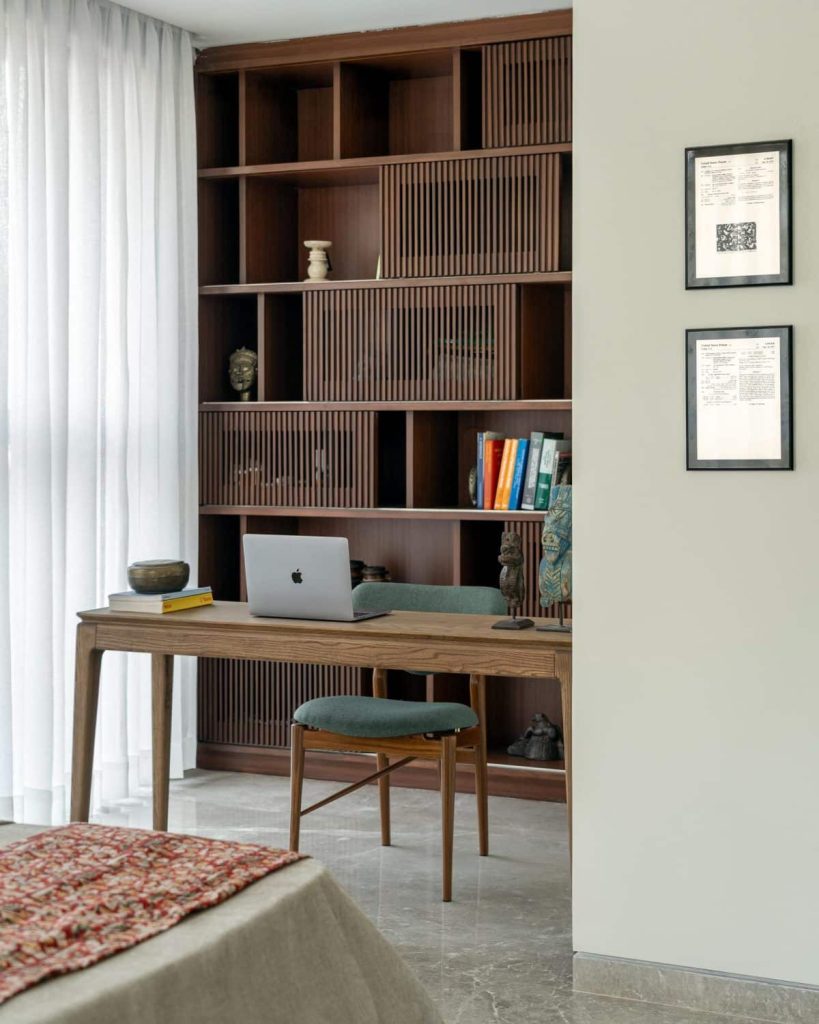
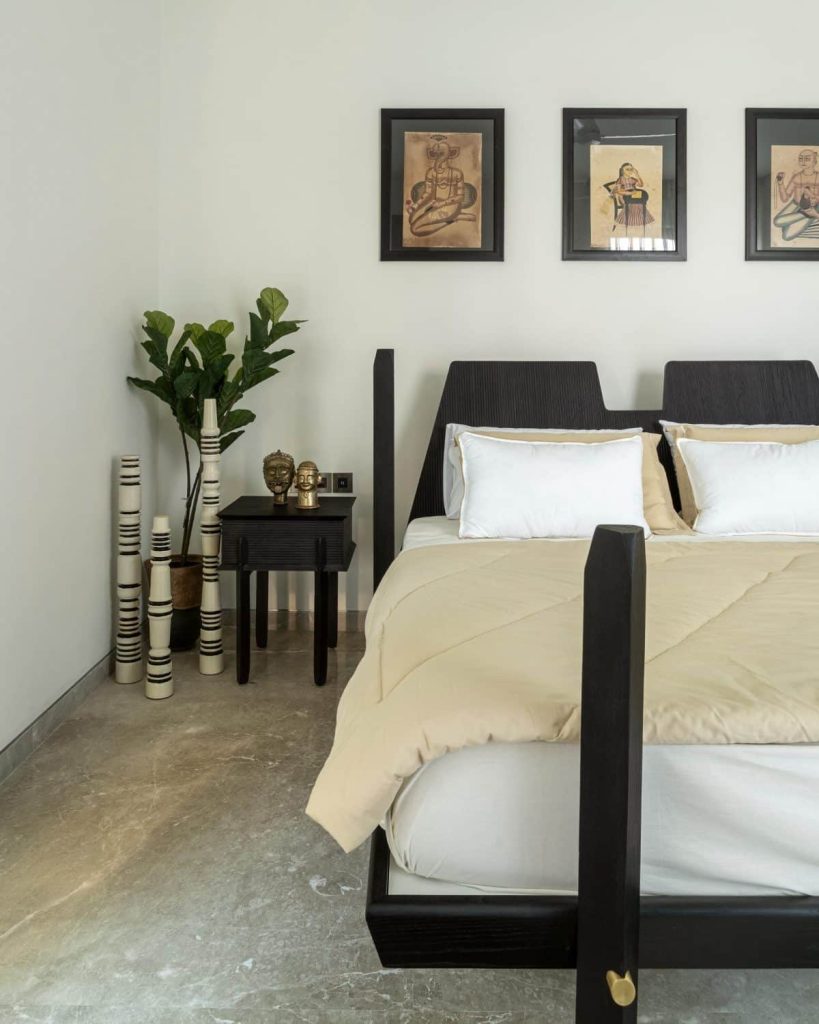
The furniture is one of the major features of the Mid Century Modern architectural style. Contrary to the decorative designs which are meant to look impressive, the furniture in Mid Century Modern architectural style is intended to be comfortable, practical, and elegantly proportioned.
Major features of Mid Century Modern furniture include tapered legs, curves, low height, and sleek form. This geometry gives an impression of weightlessness and makes these objects look less bulky.
Examples of such furniture are lounge chairs, wooden sideboards, curvy sofas, and elegant dining chairs. Such pieces of furniture appeal due to their ability to blend functionality and artistic design together. In other words, the chair becomes not only a piece of furniture but also a part of design.
The adaptation of Mid Century Modern designs is explored in relation to contemporary customization. As far as the Mid Century Modern design is concerned, it still retains its signature elements of furniture. However, the current version of the design involves custom modifications which help adapt the concepts of the style in accordance with the way of life and needs of the homeowners.
Custom furniture helps achieve harmonious proportions, improves functionality and establishes a strong connection between people and the surroundings. Custom wooden console, custom-made storage cabinet or custom designed seating area can become an important element of the house.
At the Cee Bee Design Studio, craftsmanship is very important in creating interior spaces. It is believed by the studio that furniture needs to serve not only decorative purposes but also to participate in the story of the house. The union of thoughtful design and good execution makes furniture more than just furniture.
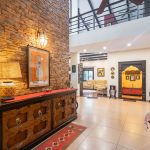
Storage is an integral part of modern-day households, and Mid Century Modern interior design takes into account this issue through principles of simplicity and efficiency. In-built cabinets, wooden credenzas, suspended shelves, and hidden storage are some of the ways used to keep the look clear and functional at the same time.
As opposed to looking at storage as a secondary aspect in design, storage in Mid Century Modern interior design is integrated within the whole architectural structure. For instance, a good wooden cabinet could be a piece that forms the center point of focus. With open shelves, one can put on display their books, art work and other collectibles.
This balance between function and form becomes particularly important for Indian households.
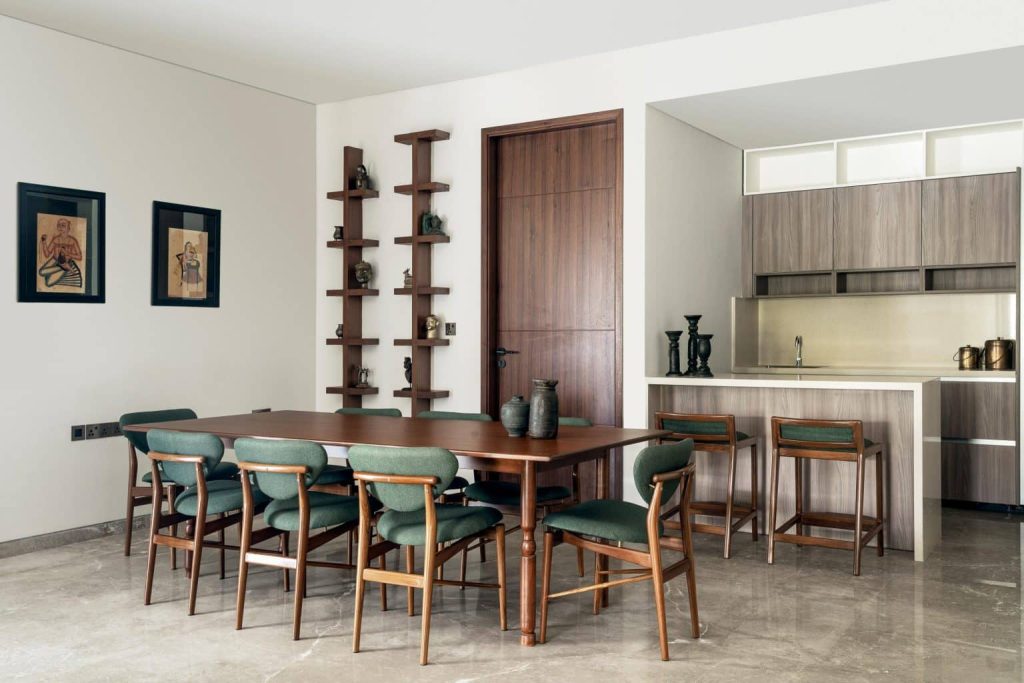
One of the basic elements of architecture in Mid-Century Modern architecture style is the interconnection of interior and exterior spaces. The introduction of large windows, glass walls, and wide lines of sight aimed at enhancing natural light and connecting buildings with nature was the idea behind that. It turned dwellings into structures that would interact with their environment. Natural light became one of the most important elements of design as it helped shape the atmosphere of the interior environment. These features can be implemented in modern residential spaces through the use of large openings, window coverings, indoor plants, and materials inspired by nature.
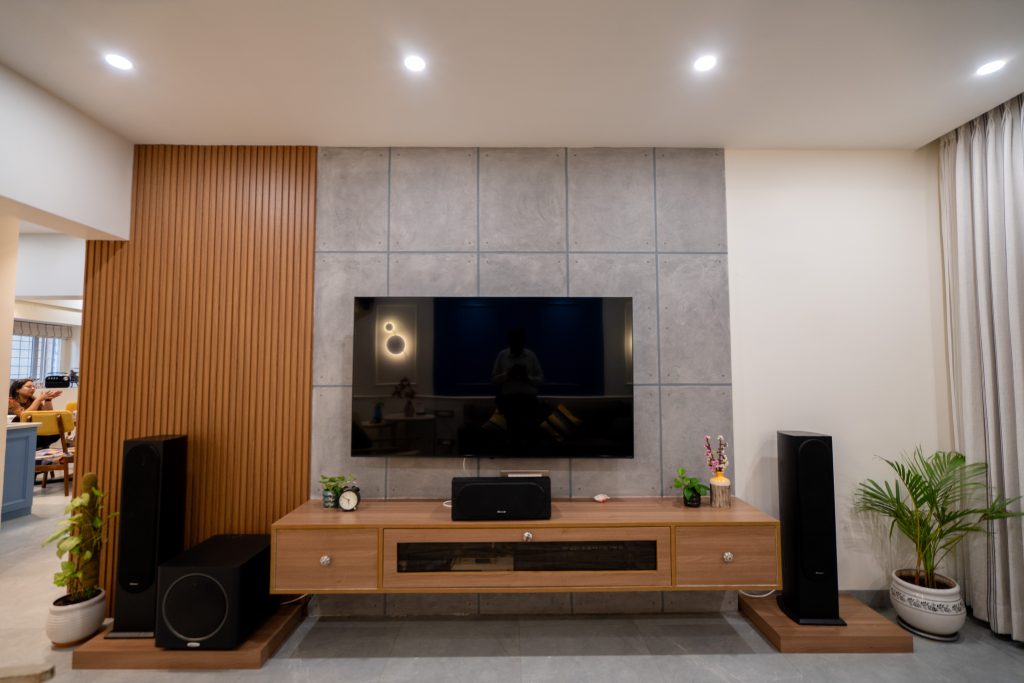
Wood not only finds its place in interior spaces of Mid Century Modern homes as furniture, but often becomes part of the architecture in the form of panels on walls, ceilings, cabinets and other architectural pieces. Wood brings warmth to spaces and creates a sense of unity in the interior. In contrast to decorative pieces, architectural wooden elements become part of the architecture itself.
In Mid-Century Modern architecture, there is great emphasis on ensuring that there are smooth transitions between different parts of the home interior. There is an absence of strict divisions in favor of interactions, facilitated by open designs and continuity of vision. The use of furniture, floor material, lights, and colors helps define the different spaces.
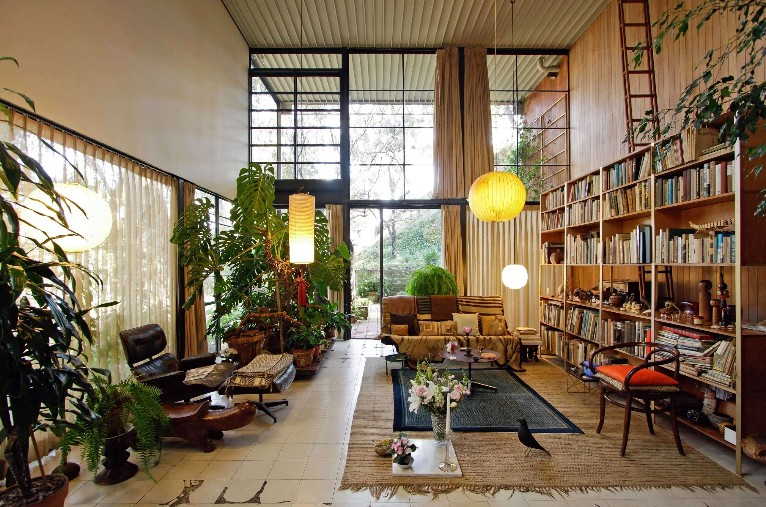
In the interiors of Mid-Century Modern style, lighting not only fulfills its practical role but is also an element of artistry. Pendant lamps, floor lamps, chandeliers, and sculptural light fixtures are often used as the main focal point of the interior. The form of the lamp itself is part of the interior aesthetics through the use of organic forms, geometrical shapes, and unique materials.
Lighting design success lies in the utilization of various lights for flexibility purposes. Ambient lighting provides general lighting, while task lighting provides support for specific functions, and accent lighting draws attention to artwork and other features. Warm lighting plays a major role in Mid-Century Modern interior designs due to its ability to highlight natural materials and create a relaxing environment. At Cee Bee Design Studio, lighting design takes place as part of the design process and not as an addition.
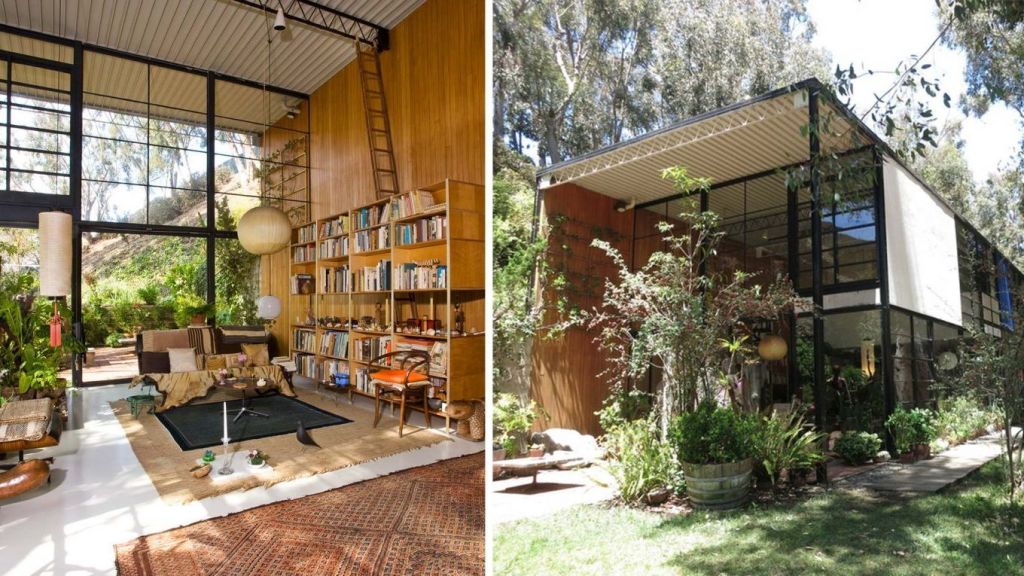
Understanding The Difference Between Inspiration And Replication
One of the common mistakes when designing an interior in the style of Mid Century Modern is the idea that such an interior requires the presence of only retro elements and old-fashioned furniture in a house. Despite the fact that the movement itself started developing in the middle of the twentieth century, a successful application in the modern world doesn’t mean the reproduction of a particular era, but the understanding of what makes it timeless.
Mid Century Modern is all about balance. This is about finding a combination of eternal design laws and modern comfort needs. An elegant modern sofa with simple lines, an elegant handmade wooden console table, and a stylish sculptural chandelier may become Mid Century Modern design features without making the entire house look outdated.
Materials from nature form a vital element of Mid Century Modern style design; but excessive use of such materials may make interiors look oppressively heavy. Furniture, paneling, flooring, and decor accents made of wood bring warmth to spaces, but their effect is achieved when they are consciously used in contrast to other materials like glass, metals, stones, fabrics, and finishes. In rooms where all surfaces are covered with the same type of wood, the intricate layers that form the complex look of the interior designed in Mid Century Modern style may be lacking.
The main idea is to achieve harmony between various materials. An example of that is how a walnut console can be balanced with upholstered furniture. The same applies to wooden ceilings and neutral-colored walls, timber accent walls, and contemporary artworks. In Cee Bee Design Studio, we believe that materials must work together in order to form the environment.
Form and function are the key elements of Mid Century Modern design. One mistake that people make when choosing furniture is focusing exclusively on the stylistic fit of furniture without taking into account its convenience and utility.
A chair that is beautiful but uncomfortable will be far from being completely suitable for a house. Likewise, a beautiful couch that does not facilitate day-to-day activities will be unpractical.
The basic concept of Mid Century Modern design involves improvement of the quality of life through careful design. Comfort, ergonomic and functionality have to be considered equally important as aesthetics.
When making decisions in interior design, one has to take into account the proportion of furniture, space for movement, requirements for storage and current lifestyle trends.
A good interior must not only look beautiful on the photo but also facilitate life of its residents.
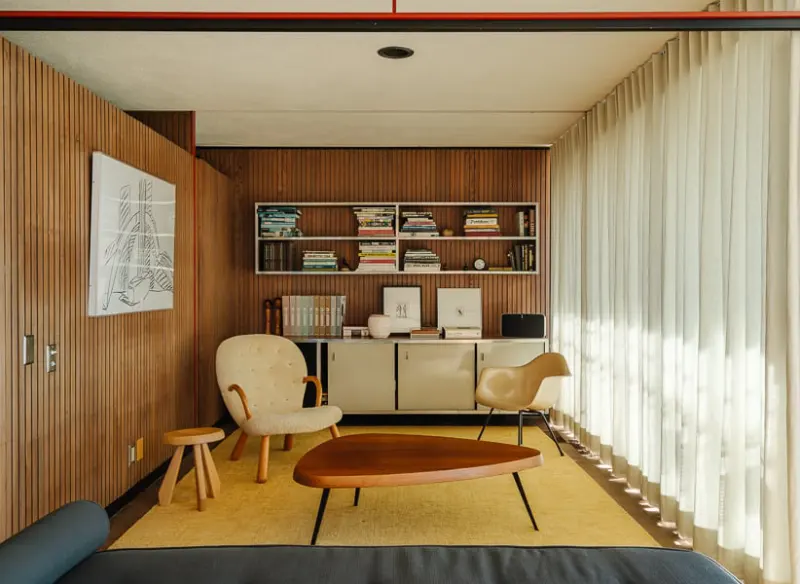
One of the biggest errors when it comes to the Mid Century Modern interior is the idea that the style should be defined by its pieces of furniture which people can recognize. It is not enough just to put some tapered legs, walnut, statement chairs and vintage colors. Real Mid Century Modern interior design is based on the proportions, functionality, simplicity of form and interrelation of the furniture with the open space. There may be too many iconic features of the style in one interior making simplicity lose its place.
It is also difficult to combine the authentic qualities of the style with the requirements of the contemporary life. Too much wood, vintage colors and furniture pieces of the same silhouette may make the interior look too dated. Also, it is necessary to take into account lighting, storage spaces, modern technologies, and everyday convenience. The best interpretation of the style does not consist in creation of the room typical of the 1950s or 1960s. It consists in the adaptation of the principles of that time through the means of modern materials and layout.
At Cee Bee Design Studio, it is proposed that design should depend on those who live in the interior space. It is not possible to make interiors in the style of mid-century modern only by choosing certain pieces of furniture or colors. They will be created based on knowledge about the lifestyle, character, and ambitions of the homeowner.
The starting point of the methodology includes the analysis of how people use their houses. The usage of their houses, gatherings, work, rest, showing off the collections, and interaction with the surroundings form the basis of the design.
Though the basic rules of mid-century modern design create a good basis for the creation of the interior space, it should always look personal. A house should not look like a catalog promoting a certain style but should have personal authenticity.
Using appropriate planning, custom furniture, chosen materials, and details, spaces combining design and personal touch are created.
In this study, the ability of Mid Century Modern design to incorporate a range of cultural elements will be studied, with an emphasis on India as a cultural source for domestic spaces. In Cee Bee Design Studio, the hypothesis is that Indian domestic settings have the potential to adopt the philosophy of Mid Century Modernism while keeping connections with traditions and crafts.
In Indian design philosophy, natural materials, handicrafts, artistry, and attention to detail have always been essential aspects. All of those aspects are well compatible with the philosophy of Mid Century Modernism. Contemporary wooden furniture can be combined with traditional works of art; minimalistic settings can be enhanced with handicrafts; contemporary architectural elements can become more organic through Indian crafts.
These interiors can therefore be described as cosmopolitan in the scope of global culture, but at the same time as very local due to the cultural context in which they emerge.
Architects: Anshuk Punmia & Prachi D Jain, House of Lines
Size: ~3,500 sq. ft
Location: Boat Club Road, Chennai
Design Style: Mid-Century Modern
What Does It Cost to Design a Mid-Century Home?
Mid-century modern interiors are known for their clean lines, functional layouts, and timeless furniture. While the design appears simple, achieving that seamless, clutter-free look requires precision, custom detailing, and high-quality materials.
The cost largely depends on:
₹14L – ₹22L+
(Typically for compact 2BHK homes)
Best for:
What’s included:
What’s not included:
This is a simplified version of the style functional and neat, but not deeply expressive.
₹22L – ₹45L+
Best for:
What’s included:
This is where the style truly feels warm, elegant, and timeless.
₹50L – ₹90L+
Best for:
What’s included:
This is mid-century at its most refined minimal in look, but rich in detailing.
Mid-century interiors often cost more than expected because:
What looks simple is actually highly detailed.
Our mid-century modern interior projects typically begin at ₹14L, with most design-led homes ranging between ₹22L and ₹45L depending on the level of customization and material finishes.
Mid-century modern design is about timeless simplicity done right.
It doesn’t rely on excess it relies on proportion, material and detail.
As a premium interior design consultancy in India, CeeBeeDesignStudio makes your mid-century modern interior design journey seamless:
Be it a one room or a full home, we manage everything from concept to completion with meticulous attention to detail. Homeowners planning their dream home can explore he expertise of CeeBeeDesignStudio as luxury interior designers in Kolkata.
Q: Is mid-century modern suitable for small apartments?
A: Absolutely! Its clean lines, multifunctional furniture, and open layouts are ideal for compact spaces.
Q: Can you combine this style with an Indian decor?
A: Yes! Woodwork, brass accents, woven textures, and Indian art pair beautifully with mid-century elements.
Q: What’s the cost for a mid-century interior project?
A: Costs vary depending on scope, materials, and finishes.. However, we offer tailored packages to suit a broad range of budgets.
Q: Do you offer custom furniture?
A: Yes, all our mid-century-inspired furniture pieces are custom-crafted to suit your space, lifestyle, and taste.
Q: Can I mix mid-century with modern or traditional styles?
A: Definitely. Mid-century modern works wonderfully with both contemporary and traditional Indian styles through thoughtful layering.
Book a consultation with Cee Bee Design Studio!
Let us help you bring timeless design and modern living together in perfect harmony
The criterion of successful interior design goes beyond mere beauty at the outset and includes long-lasting practical value for its residents. The mid-century modern style of design remains in fashion because of the focus on timeless values and not on fleeting styles. Such qualities as clean lines, quality materials, thoughtful planning of space, and functional furniture continue to be important despite changes in tastes. At the Cee Bee Design Studio, every design project is created with the objective of creating spaces that will suit the growing needs of its inhabitants. An ideally planned home will need to change along with the changes in lifestyle and needs and even create new memories.
This is why Mid-Century Modern interior design continues to be popular because of the significance it implies, aside from its aesthetic quality. It is a way of building houses that are thoughtfully created, functional, and part of people’s daily lives. Its incorporation of natural materials, carefully chosen pieces of furniture, well-arranged space, and timeless design allows this interior design style to be used even today. When applied in a modern flat, in a luxurious house, or even in a family home, this design style continues to create warm and relevant environments.
The value of Mid-Century Modern interior design is found in its ability to bridge the gap between opposites such as simplicity and uniqueness, function and elegance, and modern and warm. This interior design philosophy is based on the idea that great interiors are not created by just adding up some elements but rather by knowing the essentials of life. Timeless interiors are not created by copying styles but by telling a story.
Welcome to CeeBeeDesignStudio, an Indian homegrown interior design brand where every home is a canvas and every design is a story.
We’ve proudly completed over 1000 residential and 400 commercial projects across 7 cities, earning a reputation for unmatched aesthetic acumen and client satisfaction. Our studio has also been recognized with multiple national awards, a reflection of our commitment to excellence, storytelling, and design innovation.
From thoughtfully styling modern apartments to restoring heritage homes, we bring soul, sustainability, and structure into every project.