- Home Owner Bangalore -
- Home Owner Kolkata -
- Other Enquiry -
Interior Decoration of A Jewellery Shop
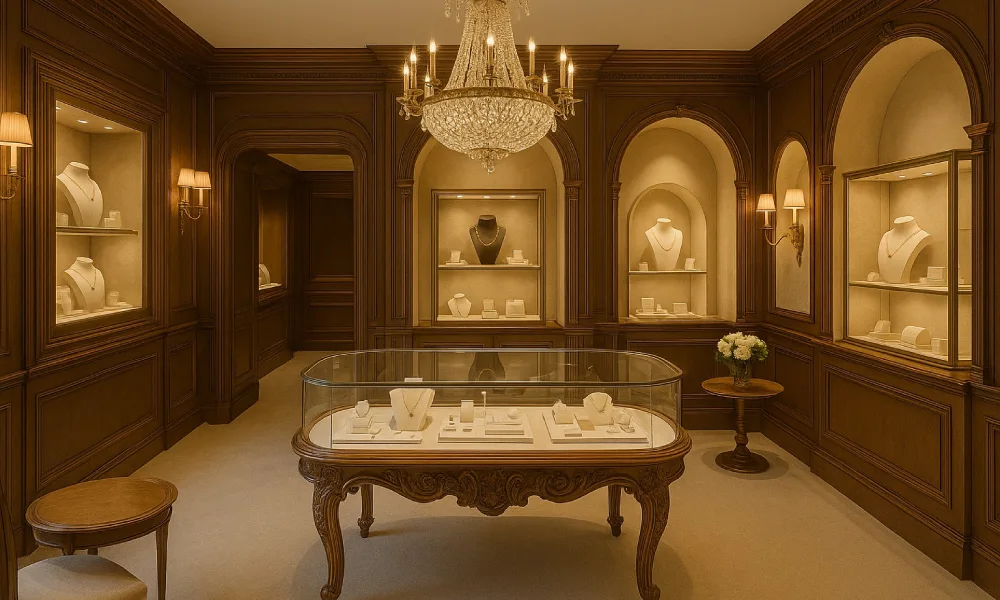
Table of Contents
ToggleEntering a jewellery store must be like stepping into an era of refinement. The illumination must cause gemstones to glitter. The environment must feel safe but inviting. Presentation is more important than most in the jewellery retail business. In an average shop, you sell products. But in a jewellery showroom, you merchandise trust, tradition, craftsmanship and aspirations.
That’s why jewellery interior design is not like other retail environments. You need a high-end presentation, perfect light for gemstones, rigorous security features, and temperature and humidity control to protect metal and stones. Display cases may need anti-tarnish solutions. Hidden CCTV cameras, panic buttons, and inconspicuous alarms become design components rather than an afterthought.
Acoustic design is also important. When one spends lakhs of rupees, they need privacy and peace of mind. The correct room design can enhance brand image, improve the customer experience, and increase sales. When the lighting, the materials, and the flow all align, customers shop more confidently. Simply put, a nicely designed interior isn’t an expense. It’s an investment.
Understanding Your Audience: Luxury vs. Affordable Jewellery Stores
All customers are not the same. Your design should mirror the audience you’re addressing.
Luxury Audience
For the premium customer, the design has to live up to their image. Consider lavish textures such as marble, brass, and velvet-lined chairs. Appointment-based areas, private consultation rooms, lounge seating with soothing music and warm lighting. The configuration is experiential. It’s ceremonial. The ambience is everything. The client anticipates service, comfort, and exclusivity.
Affordable/Compact Stores
For less expensive or smaller gold stores, space economy is crucial. Light, inviting design. Clean product displays. Walk-in convenient. You need an open plan, colourful signage, effective layout that facilitates browsing and purchasing easily. Value needs to be displayed visibly. Friendly, approachable tone.
Interior design strategies differ according to demographics. A luxury buyer anticipates tranquillity, slow browsing. A walk-in client anticipates simplicity, rapidity, and convenience of selection.
Designing for both requires zoning your space. It should be a rapid-browse area for one, a personalised consultation area for the other. If you’re going for luxury or for value, small jewellery shop interior design in Indian style and small gold shop interior design themes must be respectful of brand, scale and target.
Why Jewellery Shop Interiors Are Not Like Any Other Retail Space
Clothing or electronics retail is not the same. It presents its own challenges.
Product-Specific Needs
Every gemstone should gleam. Lighting needs to bring out colour, clarity and cut. Displays need to safeguard metal alloys from tarnish. Some gems are damaged by UV light or heat. You need climate control for temperature and humidity.
Security and Visibility
The showroom needs to look luxurious but secure. CCTV needs to be fully integrated. Panic buttons and secure locking mechanisms need to be hidden. Transparent display cases need to balance visibility and protection. You need to provide visibility so customers trust you but still protect assets at all times.
Material Protection
Gold, silver, and platinum each reacts differently to light, air, and moisture. Anti-tarnish display cabinets have become necessary. UV filters on lighting can be required for some colour stones. Ordinary retail doesn’t always require such safeguarding.
Psychological Factors
When purchasing jewellery, shoppers must trust you. They evaluate brand image, atmosphere, lighting, and employees’ attitude. Design affects perception and willingness to buy high-ticket items. The area should be sophisticated yet approachable.
It should be safe yet not threatening. It should be high-end yet practical. Getting that balance right is the signature of great modern jewellery shop interior design and intentional jewellery store interior design.
How Interiors Affect Business and Sales
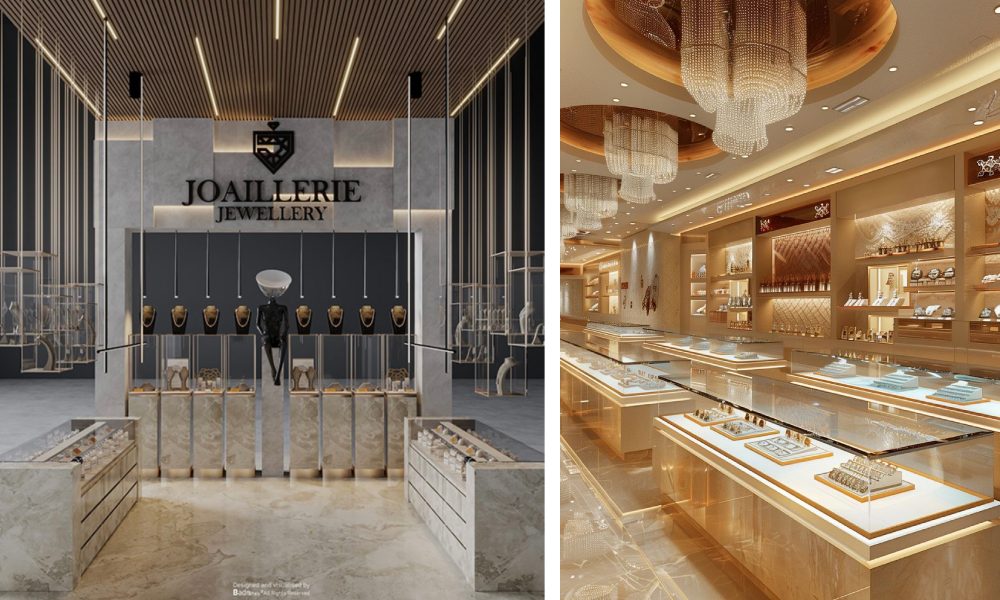
A well–designed showroom has a direct effect on performance.
Comfort
When customers are comfortable, they linger longer. Longer dwell time tends to equal higher-value purchases. Research indicates an unmistakable correlation between ambience and conversion when jewellery glimmers under ideal lighting in a well-designed space, customers are more likely to purchase.
Layout
Layout strategies make a difference. Smart layout yields improved flow, walking them by highlighted collections and high-margin items. You can locate high-value product displays in high-footfall areas, position mid-range products prominently, and design an impulse-buy zone at the checkout.
Placement & Pricing
Product placement and psychological pricing make a difference (₹ 99,999 versus ₹ 1,00,000). Aspirational display drives upselling a quality necklace displayed under a spotlight stimulates fantasy. When décor tells a brand story, you get great brand recall and customer loyalty.
Investment in the best jewellery shop interior design rewards. ROI manifests as a higher mean transaction value, higher repeat purchase, and higher word-of-mouth. Indeed, several retailers document conversion boosts after interior renovations. Ultimately, beauty, structure and design become functional tools to drive business, not mere decoration.
Lighting Design: The Most Important Element
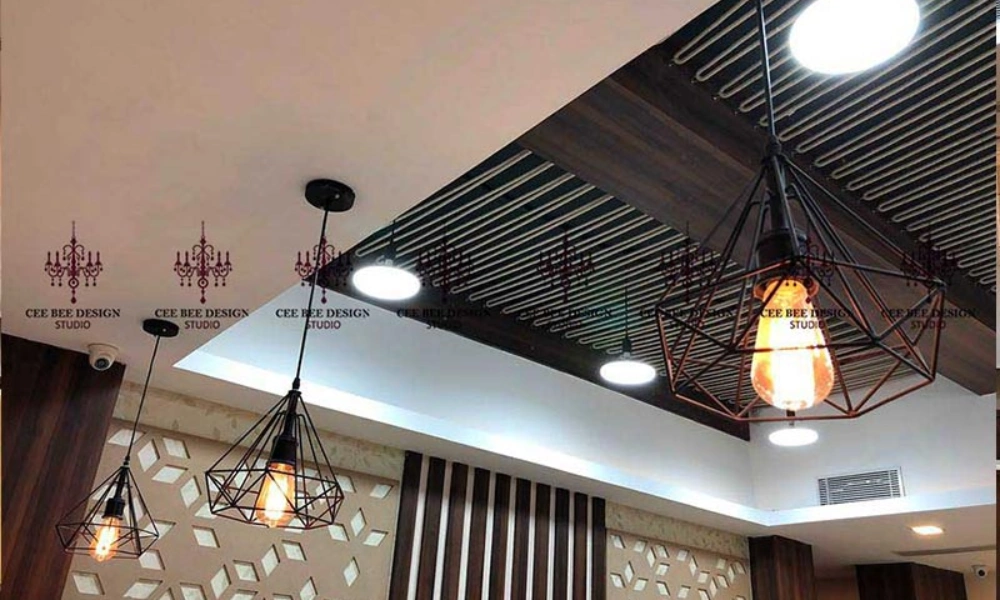
If diamonds and gold are stars, lighting is their director. Proper light makes jewellery causes it to shimmer, brings out detail, and guarantees quality.
Why lighting should be given special consideration
- Gemstones appear dull when the light is low or improper.
- Perception of colour changes. Customers start questioning purity.
- Appropriate lighting offers the customers reassurance and adds lift.
Colour Temperature Explanations
- For the Gold Category: Warm colour considerations are essential. Use 3000K-4000K to accentuate Gold’s richness and warmth.
- For Platinum/Diamonds Category: Use 5000K+, for clarity and sparkle.
- CRI (Colour Rendering Index) is 90+, so what you see is the actual colour of the product.
Layered Lighting Plan
- Use ambient lighting for general illumination.
- Use accent lighting to create highlights for high-end pieces (display cases, feature walls, etc.)
- Use task lighting for consultation areas, counters and staff areas.
Technical Considerations
- Preventing UV Damage: Some gems will darken over time through exposure to UV light.
- Spotlight Angles: Ideally, at 30-45 degrees, this will reduce glare and reflection, allowing customers to feel more comfortable.
- Glare-free Solutions: Horrible reflections can annoy customers, as they diminish the visibility of the product.
- Saving Energy: Use LED solutions to save both energy and heat emissions while helping to protect any potentially fragile goods, and additionally save you money.
Lighting is central to a strong modern jewellery shop interior design and great jewellery interior design.
Best Working Materials and Furnishings
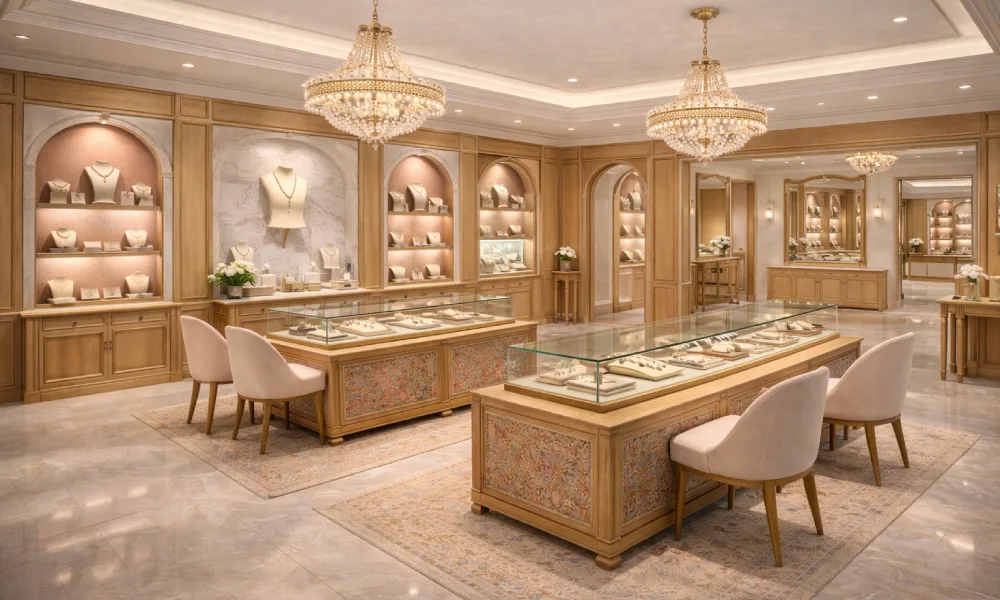
The materials you choose communicate a great deal about your brand and determine the longevity and maintenance.
Quality Materials
- Warmth and heritage come from wood finishes (teak, walnut, oak)
- Glass (anti-fingerprint, low-iron) is used to create walls or display cases.
- A luxurious feel can be accomplished using marble and granite counters.
- Brass and metals fulfil the desire for traditional Indian looks.
- Reflective surfaces give a sense of space. Safety-compliant, fire-rated materials provide legitimacy.
- Sustainable materials find appeal with increasingly aware buyers.
Furniture & Fixtures
- Securely locked custom display cases.
- Modular shelving for adaptable placement.
- Ergonomic staff counters for streamlining operations.
- High-end customers get lounge seating soft chairs for ease of consultation.
Hidden storage systems that maintain a safe and quiet environment. Furniture has to blend beauty with functional operations. Example: velvet seats in a high-end lounge section versus bright stools in a value walk-in section. These decisions count in jewellery interior design as well as gold shop interior design ideas.
Zone-Wise Design Concepts
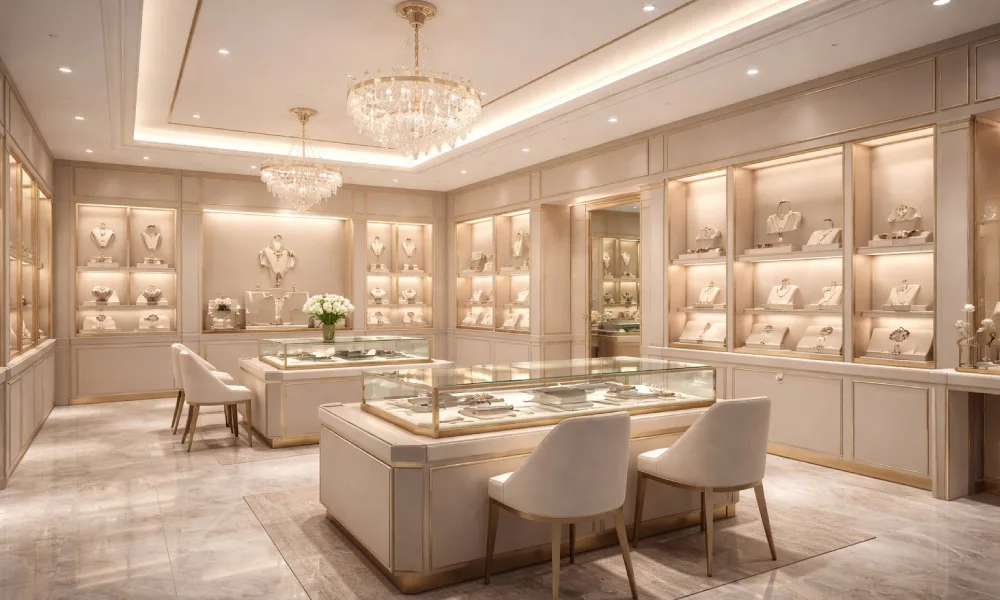
Every zone in a showroom is important.
Entrance & Reception
This is the first impression. A solid brand statement. Security checks need to be unobtrusive. The area needs to feel warm, not cold. Highlight the brand logo, high-end material finishes, and an entrance into the main space.
Display Zones
Special displays for high-ticket products employ prime locations, highlighting, and protection. Relaxed browse areas for middle-range merchandise. Impulse-buy areas in front of billing counters. Employ open lines of sight and customer flow paths so they naturally see highlighted merchandise.
Consultation Areas
Privatised rooms for high-ticket sales. Comfortable chairs, warm lighting, acoustic seclusion. Utilise digital catalogues or tablets to display extensive collections.
Billing & Transaction Counters
Secure but friendly. POS systems are installed invisibly. Counters positioned with Vastu consideration (north/east) if necessary. Materials should be wear-and-tear resistant.
Storage & Back-End
Hidden from the public eye. Secure safes, locker rooms in the southwest corner (if Vastu is considered). Staff areas are concealed but accessible. Quick inventory access and hidden cabling and wiring. These concepts are suitable for interior designers for jewellery showroom and contemporary showroom planning.
Gold and Silver Jewellery Display Zones
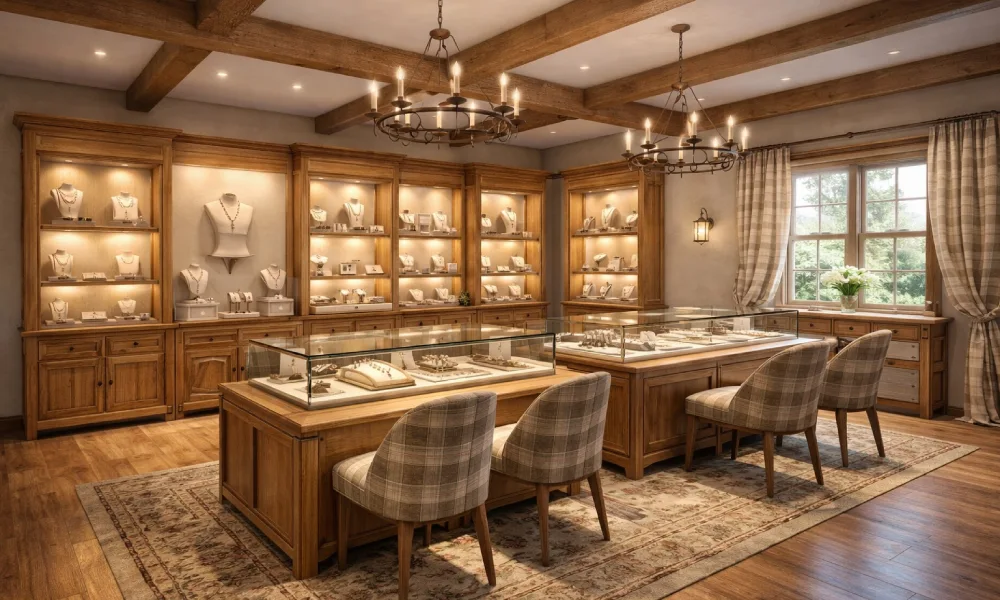
The display zones of both gold and silver need to be different. Let us elaborate:
Gold Jewellery: Luxurious, Layered, and Glowing
Shelf & Display Design
Gold needs a sense of richness and depth. The shelves need to be luxurious but secure — the enticing touch, but shielding the piece.
Material:
- Dark wood tones (such as walnut or teak) with gold-trimmed glass shelves.
- The warmth of the wood balances the glow of gold, and the glass provides lightness.
Display Backdrop:
- Softer velvet or suede panels in maroon, beige, or deep green.
- These hues cause gold to glimmer stunningly and provide a regal depth.
Shelf Lighting:
- Every shelf should have recessed LED strips with warm white hues (approximately 3000K).
- Shun spotlights that create glare use soft diffusion instead for a flat golden radiance.
Arrangement:
- Best wall displays for high-end bridal or antique items.
- Tiered wall shelves with framed niches create the look of a gallery.
- Glass-topped counters for everyday or lighter gold pieces, so they can view from above.
- Pedestal units for statement necklaces or temple jewellery, illuminated from top and bottom.
- The whole space has to feel like entering a jewellery treasure chest.
Space Planning & Flow
- The gold area needs to provide time and privacy, as purchasing gold is ceremonial and emotional.
- Wide aisles so families can comfortably browse.
- Private consultation alcoves with comfortable, cushy chairs and soft lighting for bridal sets or investment pieces.
- Mirror arrangements big and beautiful mirrors positioned near counters provide a vantage point for customers to view the full jewellery context.
- Security design Encased lockable glass with panic buttons considered within a discreet area of the counter.
The goal: To create an experience where every shelf is akin to a stage fit for royalty and every customer feels royal.
Silver Jewellery: Minimal, Clean and Airy
Shelf & Display Design
Silver, unlike gold, exhibits its best qualities when minimal and cooler environments surround it. Silver’s charm is in its purity, contrast and modernity.
Material:
- Matte white or grey lacquered shelves with thin chrome or brushed steel edges.
- Steer clear of dense wooden hues they can muffle the silver’s natural lustre.
Display Backdrop:
- Employ pastel or textured neutral backgrounds light grey, ice blue, or even white linen.
- The backgrounds are also instrumental in the cool reflective quality of silver objects.
Shelf Lighting:
- For silvery objects, an accurate reflective colour source includes neutral white LEDs (4000K–5000K) with a high CRI > 90.
- Directional track lights also highlight materials like stone and texture in silver jewellery.
Arrangement:
- Floating wall shelves are slim and minimal to allow for the modern design style.
- Asymmetric wall grids for designer or bespoke silver collections.
- Glass display islands for premium limited-edition designs.
- Vertical displays featuring suspended hooks or rods to support long chains or statement emblem earrings.
- The look should be bright, fresh, and trendy to embrace the young fashion-conscious buyers using silver.
Space Planning & Flow
- Silver jewellery showrooms are where fashion-conscious, young people go to walk around, click pictures, and shop around.
- Therefore, the space must feel welcoming and free-flowing.
- Small, cosy seating areas stools or low-profile benches rather than lumbering chairs.
- Mirror walls to make the space look bigger and catch the sparkle of silver.
- Accent zones small areas with thematic embellishments like bohemian art, geometric mirrors, or thin pendant lighting.
- Interactive counters open counters that allow customers to interact and try on the items.
- The security is unobtrusive and substantial, with locking mechanisms concealed in drawers also displayed.
The goal: To create a shopping journey that is light, easy, and intimate as if you were putting on silver.
Mixed-Metal Display Zones
If a showroom has both gold and silver lines, you can create dual zones demarcated by light and texture:
- A warm zone with wood textures and soft gold lighting for heritage buyers.
- A cool zone with contemporary finishes and neutral lighting for modern buyers.
- A transitional area in rose gold or blended jewellery to blur the look of each.
This enables customers to emotionally transition between two worlds one of tradition, another of modernity.
Technology Integration in Contemporary Jewellery Stores
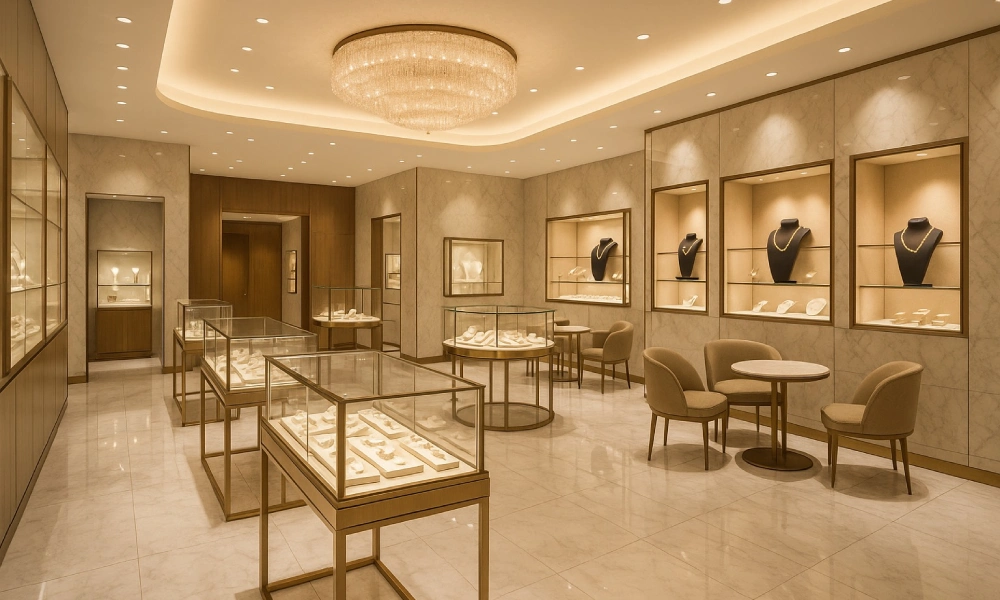
Technology should complement luxury and not conflict with it.
Virtual try-on booths, AR mirrors, virtual catalogues on tablets, and interactive product information screens. POS integration with concealed wiring. Customer comforts such as charging points, Wi-Fi. Security technology: CCTV is incorporated within the ceiling design, and panic buttons are concealed.
Smart lighting systems are dimmable for day and night. Future-proof design equates to flexible spaces and concealed conduits so new technology can be incorporated. These are among the latest jewellery shop interior design and modern jewellery shop interior design trends.
Vastu Conformity for Jewellery Stores (Essential for Indian Market)
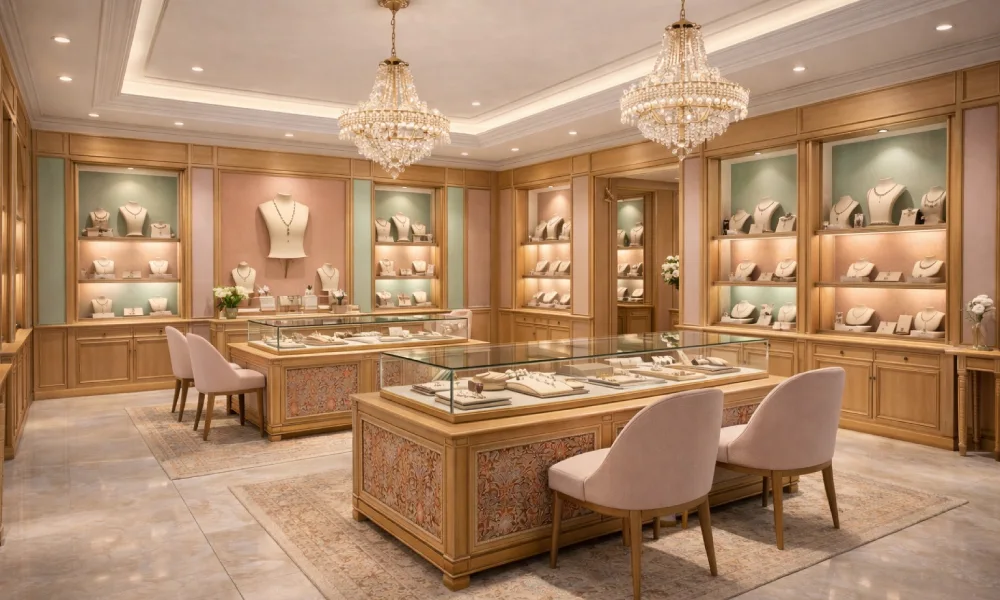
In India, religion plays a role. Customer comfort and trust in the brand can be affected by Vastu conformity.
Put cash counters in the North or East direction for good prosperity. The main door direction should ideally be East or North. Do not put mirrors facing the entrance. Put a safe/locker at the Southwest corner for safety.
Colour Psychology: Light yellows, gold, and cream give wealth and positive vibrations. Don’t overuse black or dark colours. Traditional shops can have a deity placed near the counter for blessings. A nice design incorporates modern looks with a small jewellery shop interior design in Indian style Vastu rules.
Branding Through Interior Design
Design is the wordless language of the brand.
- Adopt colour palettes that speak of you.
- Textures and materials speak of you heritage, modern luxury, artisanal.
- Décor pieces, motifs, and even seating communicate who you are.
- Heritage brands may employ temple-inspired motifs, carvings, and band rasswork.
- Modern brands may adopt minimalism with bold statements and linear profiles.
Develop a single, distinctive photography and social media focal point. Signature details keep you remembered. Provide sensory branding subtle scent of sandalwood, soothing music, the touch of velvet. These tactics connect to jewellery interior design and the best jewellery shop interior design by creating environments more than a store an experience.
Renovation & Customisation Tips
Time to renovate? Here’s how:
- When renovating existing stores, retain the brand essence but freshen up aesthetics.
- Implement a phased renovation strategy to maintain business operations while transforming.
- Inexpensive Changes: Change out lighting, add an accent wall, and replace countertops.
- Custom-made Solutions: Custom display units based on your product collection. Custom furniture to use up space in smaller boutiques. Speciality lighting for speciality stones.
Combine both traditional and modern styles. For smaller spaces, use vertical displays, large mirrors, light coloured walls, and so on.
For big showrooms, eliminate vacancy employ areas, feature walls, dramatic lighting. Engage existing architecture: columns, ceiling heights, daylight. All these methods embody jewellery interior design, latest jewellery shop interior design, and small gold shop interior design.
How CeeBeeDesignStudio Can Help
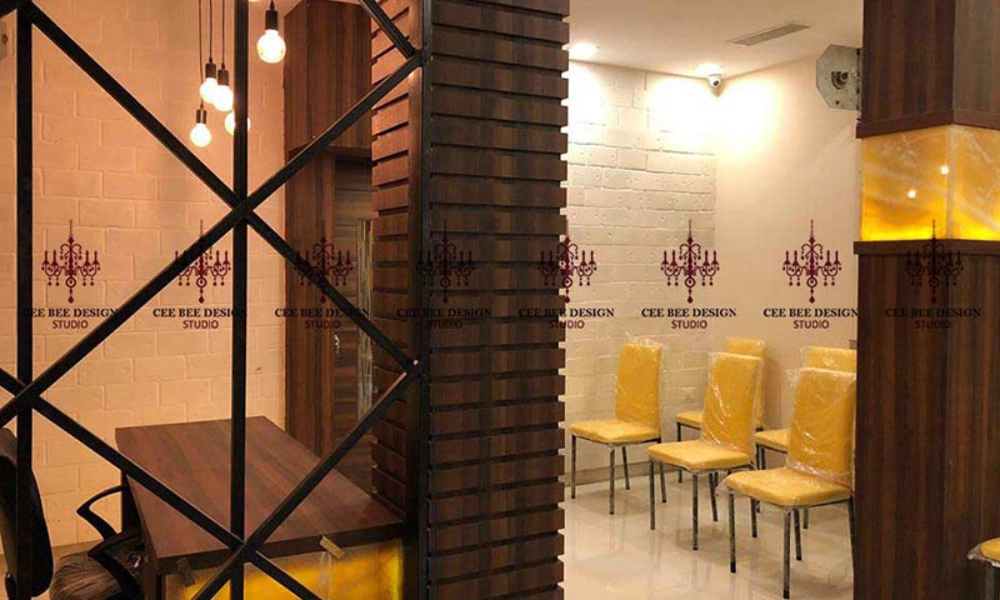
At CeeBeeDesignStudio, we specialise in luxury as well as small jewellery shops all over India. We know Indian consumer psychology and tastes in depth.
Our Services:
- First consultation and audience analysis.
- Concept development and 3D visualisation.
- Material procurement, vendor coordination.
- Full execution, turnkey project management.
- Support and maintenance after installation.
We integrate aesthetics, functionality, security and profitability. Our methodology is customer-centric. We work with you, keep open timelines, and stick to the budget.
Case Studies
Let us explore a few case studies.
Case Study 1: “Timeless Grandeur — The Vintage Jewellery Experience”
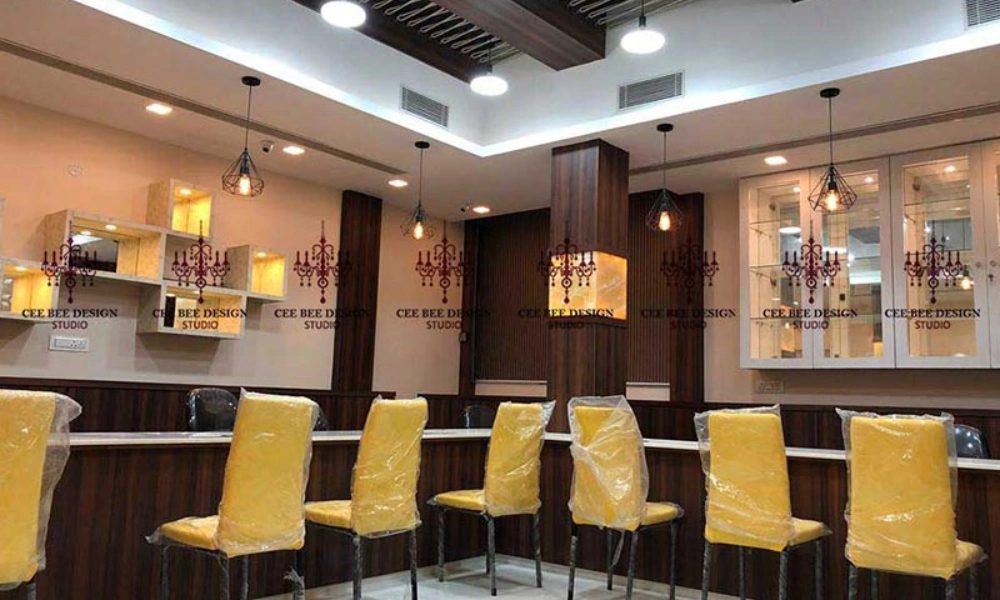
Overview of the Project
A boutique showroom of fine jewellery was conceived with a sense of luxury and tradition in mind. The intention was to create an experience for the shopper that felt comparable to entering a royal salon.
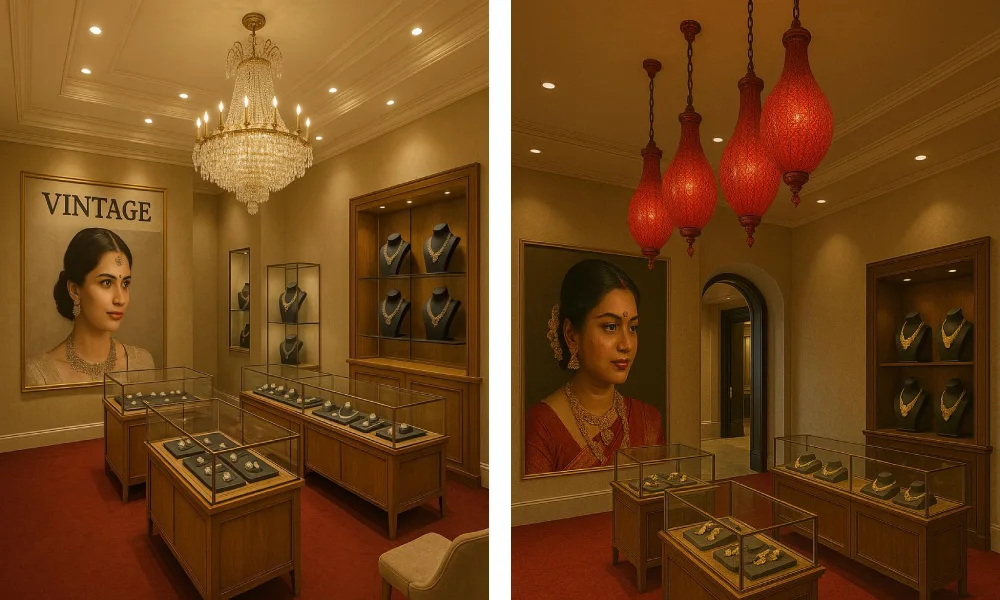
It had to be a space that melds the history of jewellery with a contemporary setting. Every moment in the space was designed to create a design of beauty that lasts forever: the warm and rich glow of the chandelier high above, to the deep red carpet that graciously welcomed each step.
They weren’t just a shop with jewellery on display. It was an emotional experience whereby each person who set foot in the store felt the charm and elegance of traditional Indian jewellery.
Challenges
Balance was the most difficult task. We began strategising how to convey a sense of royalty without being overbearing. The space needed to be functional, comfortable, and easy to navigate while still exuding an air of vintage luxury.
We also needed to ensure that the lighting brought out the best in the jewellery’s shine without creating glare or harsh reflections.
Our Design Process
We began with the theme of “Vintage” at the core of the entire process, and every aspect of this design is meant to evoke warm feelings of nostalgia while at the same time reminding us of modern sophistication.
- Palette: We have used rich beiges and deep reds that overall give a royal, warm feeling. These tones also made gold jewellery sparkle naturally.
- Illumination: Soft chandeliers adorned the ceiling, with our team layering warm spotlights over the display cases and accent lights to shine onto elaborate designs. The illumination felt warm, as if it existed naturally and not artificially.
- Presentation Elements: Each display case was designed and built to specification in teak wood. The glass tops would offer customers a clear view of the jewellery while the dark wood frames provided a warm, old-world feel.
- Visual Branding: The word “VINTAGE” was prominently displayed on a portrait wall, giving the boutique its own signature identity.
- Zoning Between Gold and Silver: We used a colour scheme in the gold area that was warmer and richer, with amber spotlights, golden-beige walls, and wide, soft carpeting that made the colours of each ornament stand out.
In contrast, the silver area adopted a cooler, softer approach, pale ivory tones, neutral lighting, and mirrored accents that increased the sparkle of each piece.
Decorative dividers and subtle floor transitions ensured the two areas could flow into one another while allowing the two collections to keep their independent identities.
This thoughtful zoning allowed guests to enjoy their own atmosphere in either collection, while remaining accessible for sales staff to help consumers in the area they had chosen to shop. We worked closely with the client to ensure every corner reflected the philosophy of their brand: heritage with heart.
Design Outcome
It felt like stepping into a storybook when we were finished. The atmosphere had a calm sophistication about it with soft golden tones, the polished wood scent and the sparkle of gold all in lieu. Every client who walked through the door was pleased to linger and simply enjoy the atmosphere as much as the jewellery.
The “Vintage Jewellery Experience” became something much more than a shop-it was a place of emotion, luxury, and memory.
Case Study 2: “The Heritage Chamber — Redefining Luxury Through Architecture”
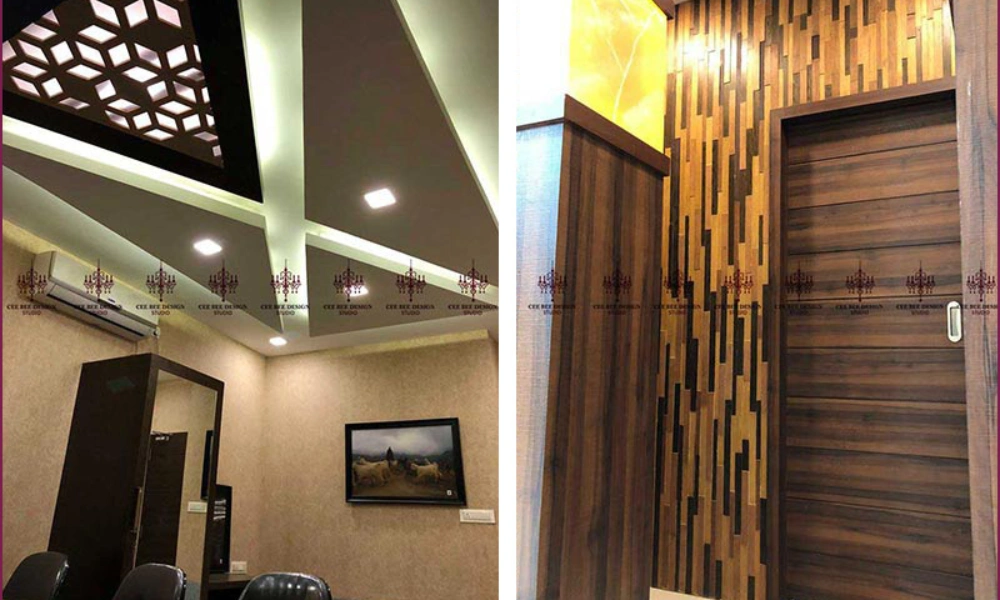
- Overview of the Project
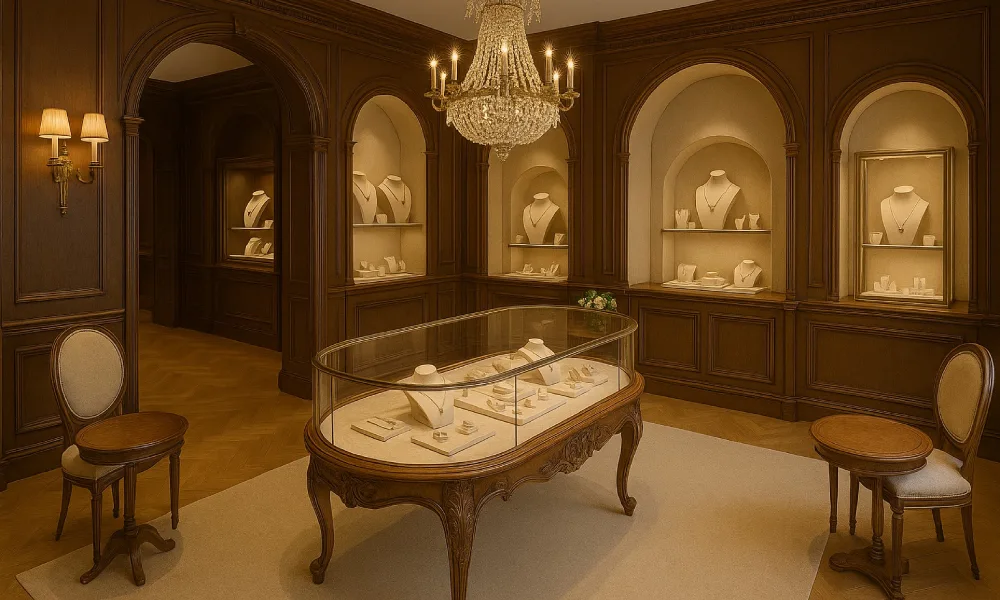
A project that reinvented jewellery retail as an architectural journey might have looked like this: a showroom conceptualised as a Heritage Chamber, a timeless space, much like the jewellery it houses. It married the grace of European architecture with the rich warmth of Indian artistry.
At CeeBeeDesignStudio, we wanted to create an opulent yet cosy space where each element from furniture to arches spoke to the elegance of fine craftsmanship.
Challenges
The space had to feel royal, yet not be out of reach. We wanted our clients to experience the luxury of heritage, not feel intimidated by it. Maintaining symmetry, proportion, and flow on a small footprint was another major challenge. We also had to ensure that the architecture complemented the jewellery, not overshadowed it.
Our Design Process
Our design team took inspiration from the style of the Renaissance: classical elegance meets modern functionality.
- Architectural Detailing: Arched niches and carved cornices gave the showroom its majestic character. Each wall was treated like a frame, celebrating both the architecture and the ornaments.
- Central Focus Table: We placed an ornate oval table with beautifully carved legs right at the centre of the space. It served not just as a display point but as a storytelling centrepiece where customers can interact with signature pieces up close.
- Lighting Strategy: We played with layers of light-a warm ambient glow embracing the room, and precise spotlights giving each jewel its moment of brilliance.
- Material Palette: Walnut wood panelling against marble floors and delicate brass details created a sumptuous look that is timeless.
- Gold & Silver Sections: To enhance design and functionality, separate sections were created for gold and silver pieces. The gold section shone in warm and gold gold-toned lighting with rich walnut accents and soft beige walls, enhancing the richness of any piece.
It was hoped that the two sections would successfully maintain their own atmospheres, each allowing the distinct beauty of metal to shine while creating a smooth sense of coherence throughout the complete showroom.
During the process, we worked together closely with our client to make sure the design said what they intended: a rebirth of heritage with elegance.
Design Outcome
This last space was like a royal chamber come to life. Customers, upon entering the showroom, just slowed down; the atmosphere made them explore, admire, and connect with every piece of jewellery as if it were a piece of art.
Soft light danced across marble floors, the scent of polished wood filled the air, and every display glowed with understated luxury. The Heritage Chamber was a sanctuary of design, a place where tradition met modern sophistication and each purchase felt like part of a legacy.
Each jewellery showroom we design at CeeBeeDesignStudio tells a different story-one of emotion, craftsmanship, and trust. Each project reflects the personality of this brand and our passion to create spaces that don’t just display jewellery but celebrate it.
A Final Thought
Both of these stories tell us something more profound great interior design isn’t merely about walls, lighting, and furniture. It’s about emotions. It’s about producing moments where a woman puts on a necklace and sees herself sparkle, or where a bride and groom select wedding rings surrounded by light and warmth.
CeeBeeDesignStudio designs from the heart. Every showroom we design, combines emotion with skills, tradition with innovation, and beauty with purpose.
When you walk into one of our designs, you won’t just see jewellery. You will feel its story.
Conclusion
As you plan your showroom, remember: it’s all about the details. Whether it’s the shine of a diamond, the warmth of gold, or the comfort of the surroundings, they all come together. Intentional design turns your store into a destination.
Book a complimentary 30-minute consultation to learn how strategic interior design can boost your jewellery sales by 30-40%. Redesign your jewellery store into a high-end, customer-centric showroom with CeeBeeDesignStudio. Limited consultation appointments this month.
With CeeBeeDesignStudio, your jewellery store will not only sell pieces it will sell luxury, trust and narrative. Select a design that mirrors your brand. Select spaces that encourage every customer to believe what they see and purchase what they feel.
FAQs
Q1: What is the positive role of interior design on jewellery sales?
Answer: It influences customer dwell time, it builds trust and guides the process of shopping with effective product display.
Q2: What is the best size of carpet for a small jewellery boutique?
Answer: Minimums vary, but thinking about efficient layout and vertical fixtures can help 250-400 sq. ft. be very usable.
Q3: What are suitable materials for jewellery shop interiors?
Answer: Hardwearing, clean, luxurious materials marble, high-end wood, low-iron glass, brass highlights give the look and staying power.
Q4: Do small jewellery boutiques have to miss out on luxury design touches on budget?
Answer: Yes – a small investment can equate a lot of gain (for example, a lighting upgrade, an accent wall, or reshape your showcase).
Q5: How long does it take for a jewellery shop to be overhauled?
Answer: Typically, 4–8 weeks is average, with the size of the project modifying time; you can also limit your downtime (and intervals) by having it done in phases.
Q6: Are modern and traditional Indian styles combinable for jewellery stores?
Answer: Absolutely. A fused approach can combine temple motifs, or jaalis, with a more modern look to appeal to an Indian-luxury aesthetic.
Q7: What are some compliances or certifications related to jewellery shop interiors?
Answer: You will need to meet fire safety requirements or compliance, as well as the structural load of those fixtures, electric, CCTV, and any building approvals in your local area.
Q8: How to design for walk-ins and also for appointment clients?
Answer: Employ zoning design open browse spaces for walk-ins, and personal consultation rooms for appointments. Both are in the same showroom.
Q9: How do I future-proof my jewellery shop interior design?
Answer: Employ modular systems, concealed conduits for technological updates, flexible lighting systems, and flexible display units that change with product lines.
Q10: What’s the average ROI timeframe for jewellery store interior investment?
Answer: A properly designed interior tends to recover cost within 12–18 months through larger ticket sizes, quicker service, and improved customer loyalty.
Make Your Store Look Premium, Elegant, and Customer-Ready.
Follow us on:
About us
Welcome to CeeBeeDesignStudio, an Indian homegrown interior design brand where every home is a canvas and every design is a story.
We’ve proudly completed over 1000 residential and 400 commercial projects across 7 cities, earning a reputation for unmatched aesthetic acumen and client satisfaction. Our studio has also been recognized with multiple national awards, a reflection of our commitment to excellence, storytelling, and design innovation.
From thoughtfully styling modern apartments to restoring heritage homes, we bring soul, sustainability, and structure into every project.