
- Home Owner Bangalore -
- Home Owner Kolkata -
- Other Enquiry -
Luxury Salon Interior Design: Where Beauty Meets Experience
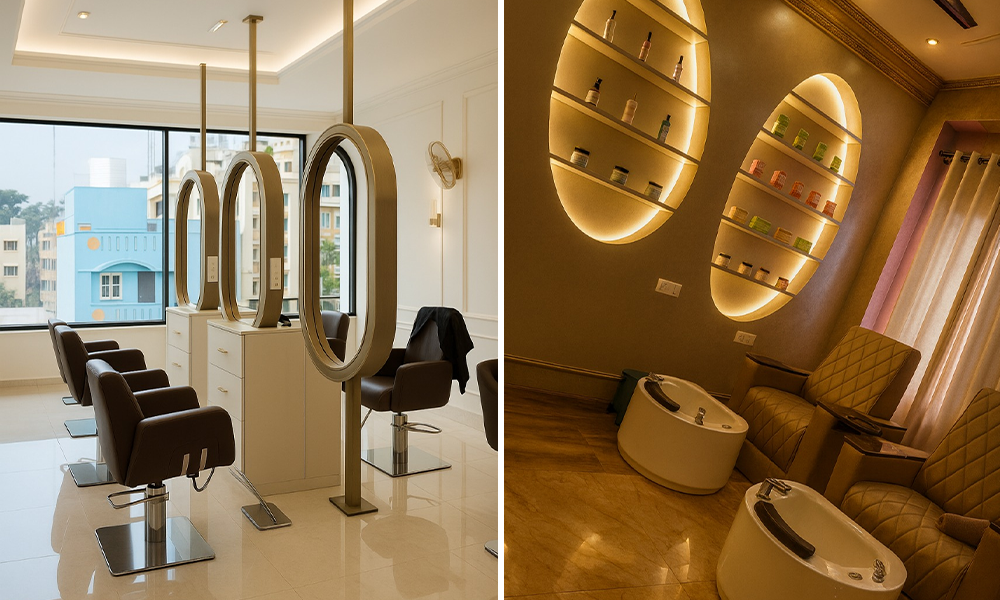
Table of Contents
ToggleA salon isn’t just a place to get your hair styled or nails done — it’s a sanctuary. It’s where people go to escape the rush of daily life, to indulge in care, and to rediscover confidence. The best salons don’t just provide services — they offer an experience.
Design plays the central role in this transformation. Every surface, color, sound, and scent in a salon communicates something — and when they come together with intention, they create a space that feels both elegant and emotional.
In today’s luxury landscape, it’s no longer about how a salon looks — it’s about how it makes people feel.
Why Does One Go to a Salon?
A salon visit is rarely only about grooming. Clients come seeking three things — to feel beautiful, pampered, and seen.
A luxury salon takes this a step further. It slows down the pace. It turns an appointment into a ritual — where time, texture, and tone are carefully orchestrated to make the client feel indulged.
The lighting is softer. The seating hugs the body. The air smells calm. Every interaction, from the receptionist’s greeting to the stylist’s touch, contributes to an atmosphere of care.
Luxury isn’t about speed; it’s about sensation. It’s a feeling that lingers long after the appointment ends.
Designing for Emotion: The Vibe of a Luxury Salon
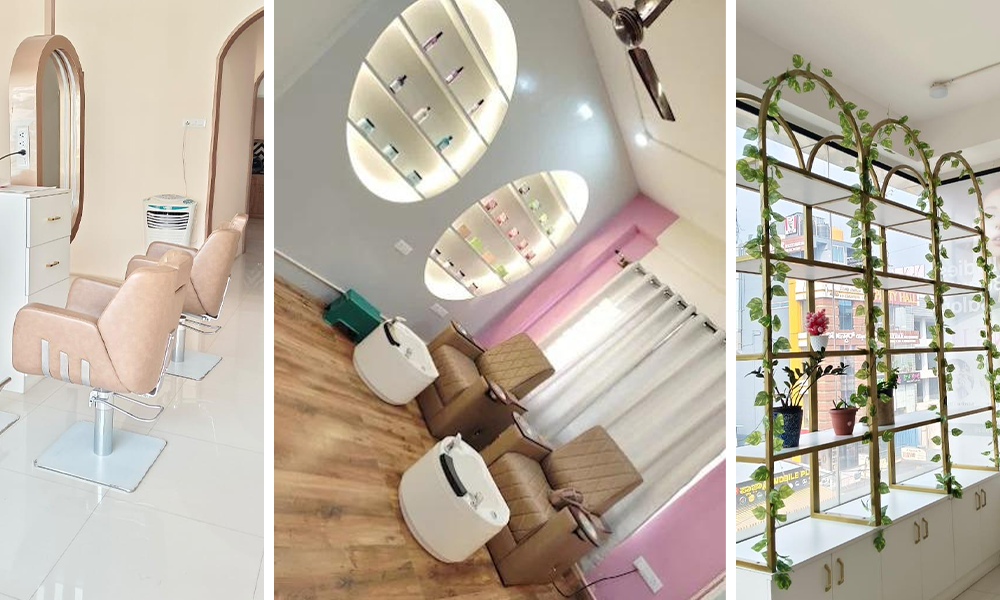
Luxury is not defined by materials — it’s defined by emotion. The first few seconds after a client enters the salon are crucial. Warm light, welcoming tones, and soothing music should immediately dissolve the noise of the outside world.
Every corner should evoke one of three feelings:
- Welcome: through light and color that ease the senses.
- Indulgence: through plush textures and personalized comfort.
- Uplift: through balance, symmetry, and spatial clarity.
Luxury salon interiors succeed when they balance refinement with relaxation — when the environment makes clients feel important, not intimidated.
This emotional connection is what keeps clients returning. They aren’t just buying a haircut; they’re buying how the space makes them feel.
The Science of Sensory Design
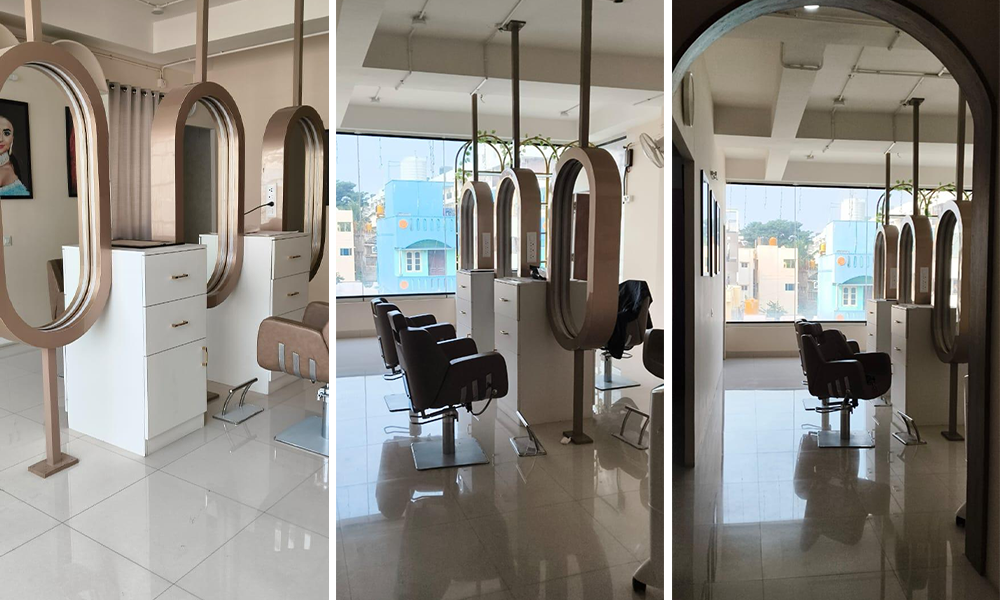
The most memorable salons don’t just look beautiful — they feel beautiful. They stimulate all five senses to create harmony between body and mind.
Color Therapy
Colors deeply influence emotion. Soft neutrals like beige, blush, and champagne calm the mind and make skin tones appear radiant. Warm metallics like gold or brass add an understated sense of sophistication.
Gentle greens and pastels suggest freshness and renewal. On the other hand, stark whites or overly bright tones can feel clinical — great for hospitals, but not for sanctuaries of self-care.
A truly luxurious palette flatters the client and the design equally. It makes mirrors kinder and moments softer.
Music & Scent
Sound and scent define atmosphere as much as visuals do. Playlists that blend ambient, lo-fi, or light acoustic sounds regulate the salon’s rhythm. They help clients unwind, marking the salon as a place where the world slows down.
Scent completes the sensory experience. Diffusers with lavender, sandalwood, or subtle citrus notes instantly set the tone. Many high-end salons now craft their own signature scent — a soft olfactory identity that clients recognize instantly.
This combination of sound and scent turns a service visit into an experience of mindfulness.
Functional Foundations of Luxury

Behind every glamorous salon interior lies meticulous technical planning. Beauty cannot exist without strong functionality.
Plumbing & Electrical Layout
Wash stations, pedicure tubs, and shampoo units require pre-planned plumbing and drainage. Concealed systems keep the space visually seamless, while maintenance access points ensure long-term practicality.
Dedicated electrical circuits for dryers, straighteners, and accent lighting ensure that style never compromises safety. A well-planned salon functions smoothly even at its busiest hours.
Lighting Design
Lighting is one of the most underestimated elements in salon design.
Every lighting layer serves a purpose:
- Task lighting ensures clarity at styling stations.
- Ambient lighting creates a calm, even glow throughout.
- Accent lighting adds focus and drama to key areas.
Mirror lights should have a neutral tone (around 4000K) to show true hair and skin colors. In contrast, waiting and spa areas can feature warmer light to encourage relaxation.
The ideal lighting plan flatters both the client and the craft.
Space Planning
A well-designed salon feels spacious even in compact layouts. Smart zoning separates the energy of different activities:
- Reception: for welcome and brand impression.
- Styling area: dynamic yet uncluttered.
- Wash and spa zones: quiet, dimly lit, cocoon-like.
- Makeup and nail lounge: elegant and playful.
- Staff and storage areas: hidden yet efficient.
Smooth transitions between these zones create an invisible choreography — making every client movement intuitive and comfortable.
Privacy and the Luxury Feel
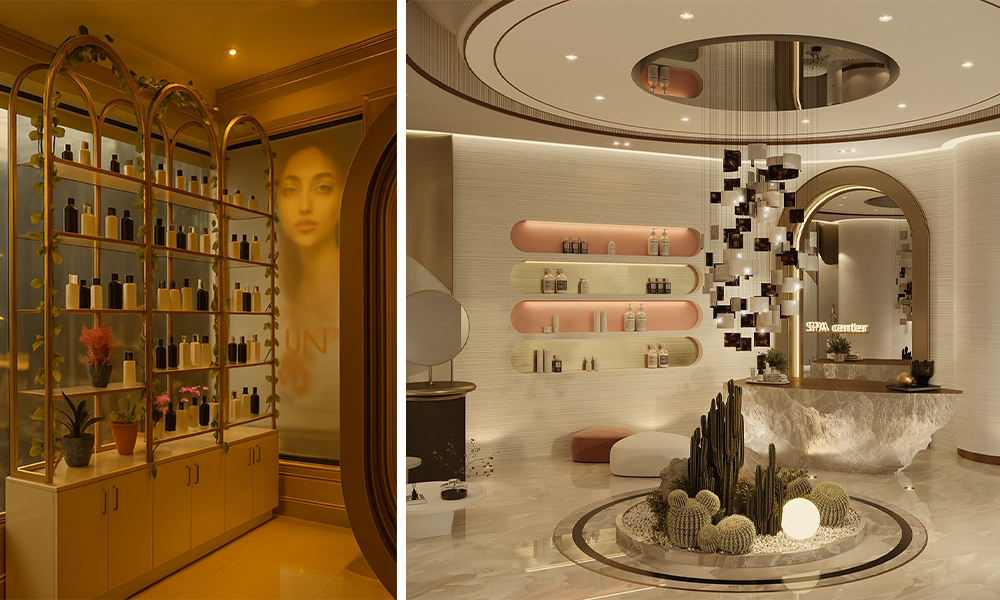
The modern luxury client values discretion. Comfort doesn’t just come from a soft chair — it comes from knowing you have personal space.
Design strategies like half partitions, frosted glass dividers, and sheer drapes provide intimacy without isolation. VIP cabins can cater to clients seeking exclusivity for long treatments.
Even spacing between chairs matters — visual breathing room translates directly into perceived luxury. In design, space equals sophistication.
Product Display & Branding
Luxury salons integrate product retail as part of the experience, not an afterthought.
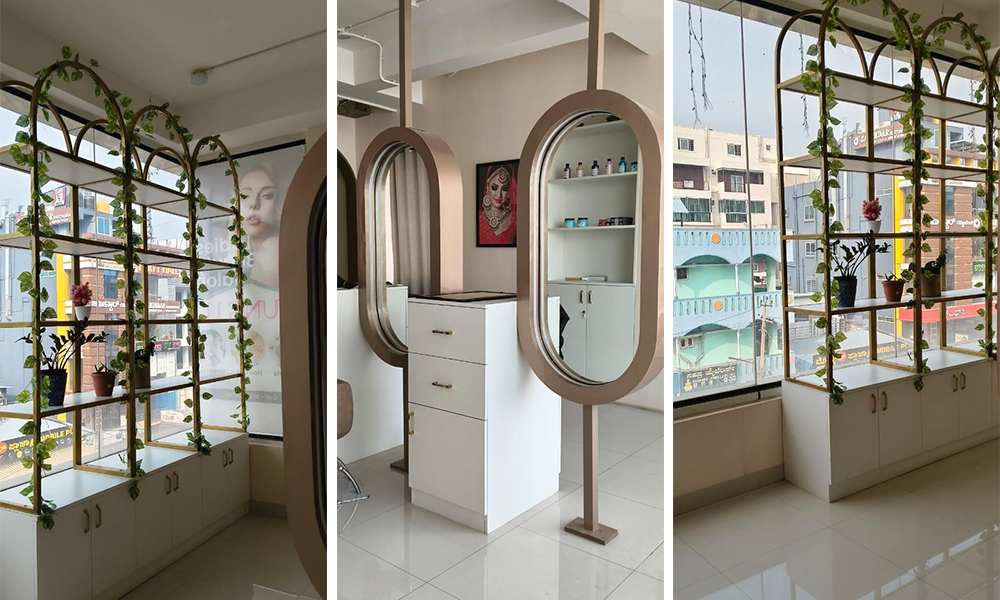
Floating shelves, backlit niches, or recessed cabinetry can showcase products like Kerastase, L’Oréal Professionnel, or Dyson elegantly — never cluttered or overwhelming.
Displays should look curated, not commercial. The goal is storytelling — showing quality through restraint.
The reception zone is where the brand’s identity comes alive. The signage, color palette, and material finish — whether marble, stone, or wood — should all reflect the brand’s tone. This is where first impressions become loyalty.
Global Inspirations: Salons that Set the Standard
Across the world, a few salons have become icons of design and experience.
Rossano Ferretti Hair Spa (Paris & Milan): Known for its soft lighting, sculptural forms, and muted elegance. Every element feels deliberate yet effortless — privacy is its core luxury.
John Frieda (London): Minimalist yet immaculate. Its clean lines and balanced lighting show how discipline can be beautiful.
Nine Zero One (Los Angeles): Beloved by celebrities, this salon exudes “relaxed luxury.” Warm tones, greenery, and art pieces make it feel like a social club rather than a salon.
Aveda Lifestyle Salons (Worldwide): Champions of eco-luxury, they use natural materials, gentle fragrances, and biophilic elements to connect beauty with wellness.
The lesson these global icons share: True luxury is not about excess — it’s about experience.
Wellness and Air Quality: The New Luxury
Modern luxury now includes wellness as a design principle.
Air purifiers maintain freshness in chemical-heavy environments. Acoustic panels soften background noise, creating a sense of calm focus. Biophilic touches — indoor plants, natural light, organic textures — reconnect clients with nature, subtly reducing stress.
Sustainable materials like bamboo, rattan, or recycled wood add authenticity while reducing environmental impact.
Luxury that feels good must also do good — for both people and planet.
When Branding Meets Design
Design is the silent language of a brand. In luxury salons, every element — from interiors to uniforms — should express the brand’s personality.
- A glamorous brand might use metallic accents, marble, and bold geometry.
- An earthy brand might favor linen textures, muted tones, and natural light.
- A tech-forward brand could integrate smart mirrors, automated systems, and sleek surfaces.
The goal is coherence. When the interiors echo the brand tone, clients feel a sense of belonging — a visual and emotional alignment that builds trust.
The design doesn’t just sell services; it tells the brand’s story.
The Future of Luxury Salons in India
In India, salon design is undergoing a fascinating evolution.
Cities like Mumbai, Delhi, and Bangalore are redefining luxury — blending aesthetics with experience design. Salons are becoming lifestyle destinations that fuse beauty, technology, and culture.
Emerging trends include:
- Smart Systems: Automated lighting, scent diffusers, and music that adapt to the time of day or service type.
- Private Pods: Personalized spaces with immersive client experiences.
- Hybrid Spaces: Salons that double as art galleries or wellness lounges.
- Sustainability: Eco-conscious materials, natural light, and plant-based ambiance.
Indian luxury now celebrates duality — global sophistication with local warmth. This balance of modern minimalism and cultural authenticity is shaping the next generation of design-led salons.
Designing for Wellness, Emotion, and Identity
A luxury salon is ultimately about care — not just for beauty, but for wellbeing. It’s where functionality meets feeling.
Every choice — from the flooring to the playlist — contributes to a larger purpose: making the client feel renewed.
When design is guided by empathy, it transcends aesthetics. It becomes emotional architecture — a space that uplifts and heals.
Frequently Asked Questions (FAQ)
1. What defines a luxury salon interior?
A luxury salon interior prioritizes experience over excess. It focuses on emotional comfort, seamless functionality, premium materials, and a sensory-rich environment — not just expensive finishes.
2. How much does a luxury salon interior cost in India?
Depending on scale and finishes, luxury salon interiors in India typically range from ₹3,500 to ₹7,000 per sq. ft. including design, materials, lighting, and furniture. Bespoke designs and imported fittings can elevate the cost further.
3. What colors work best for a luxury salon?
Soft neutrals like beige, ivory, blush, and champagne create calm sophistication. Accents of gold, brass, or muted green add richness and rejuvenation.
4. How important is lighting in salon design?
Extremely. Lighting influences how clients perceive themselves and your work. Use task lighting near mirrors, ambient lighting for warmth, and accent lighting for luxury highlights.
5. How can small salons still look luxurious?
Even compact salons can exude luxury through:
- Minimal clutter and smart storage
- Layered textures (linen, wood, matte metal)
- Warm lighting and curated décor
- Soft background music and signature scents
Conclusion: The Art of Designing Emotion
A luxury salon is not defined by mirrors or marble. It’s defined by emotion — how the space makes you breathe easier, sit longer, and smile brighter.
It’s an environment that anticipates comfort before you ask for it — a design that understands that beauty begins with how we feel.
“The best salons don’t just make you look beautiful — they make you feel renewed.”
If you’re planning your own luxury salon or beauty studio, our design experts can help you craft a space that blends style, soul, and strategy — from spatial planning to brand storytelling. Because true luxury isn’t built overnight; it’s designed to be felt.
Book Your Luxury Experience
Follow us on:
About us
Welcome to CeeBeeDesignStudio, an Indian homegrown interior design brand where every home is a canvas and every design is a story.
We’ve proudly completed over 1000 residential and 400 commercial projects across 7 cities, earning a reputation for unmatched aesthetic acumen and client satisfaction. Our studio has also been recognized with multiple national awards, a reflection of our commitment to excellence, storytelling, and design innovation.
From thoughtfully styling modern apartments to restoring heritage homes, we bring soul, sustainability, and structure into every project.


Enter Your Details
About Us
CeeBeeDesignStudio is one of the fastest growing interior execution companies. Currently we have very strong presence in Bangalore, Goa, and Kolkata. Our motto is to keep the clients requirement and budget in mind and give a qualitative result on time.
Quick Link
Contact Info
- Door No-18, 3rd B Cross, Domlur II Stage, Bangalore 560071
- +91 8697306015
- chitralekha@ceebeedesignstudio.com
Contact Info
- 3045 Rajdanga main road, Kolkata, West Bengal 700107
- +91 8697306015
- chitralekha@ceebeedesignstudio.com
- Copyrigt © 2025 CeeBeeDesignStudio Pvt. Ltd