
The Latest Pooja Room Design Trends
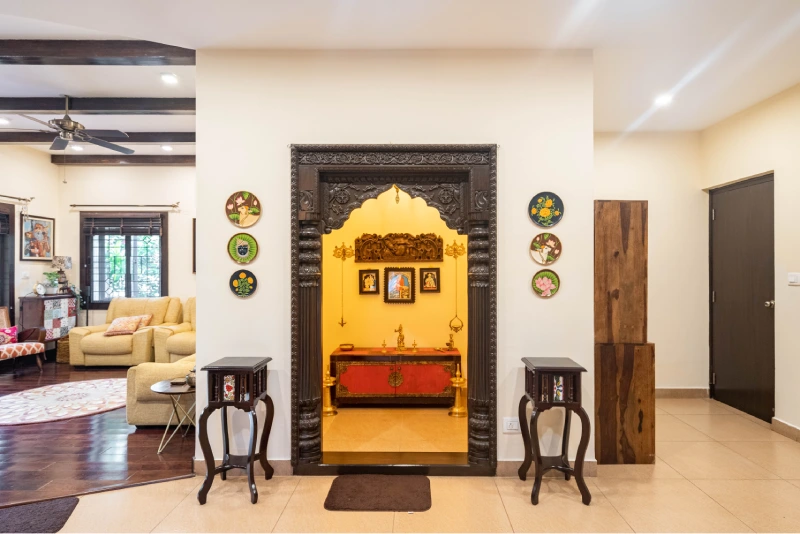
A pooja room is never just a corner of the home.
- It is where the morning begins with a diya.
- It is where silence feels comforting.
- It is where families pause, pray, remember, and reconnect.
For years, many Indian homes treated the pooja space as an afterthought. A small mandir in a corner. A shelf in the living room. A wooden unit was placed wherever space allowed.
Things have changed since then. From now on, homeowners will want their pooja room to be both sacred and personal, while still maintaining its connection to other parts of the house. They want a mandir that does not look separate from their lifestyle.
At Cee Bee Design Studio, we understand this emotion deeply. Every home carries a different story. Every family follows rituals in its own way. So every pooja room deserves its own language.
Whether you live in a modern apartment in Bangalore, a heritage home in Kolkata, or a villa in Goa, your pooja space should feel like it belongs to you.
These are some of the pooja room design trends for homes.
1. Integrated Pooja Units Are Taking Centre Stage
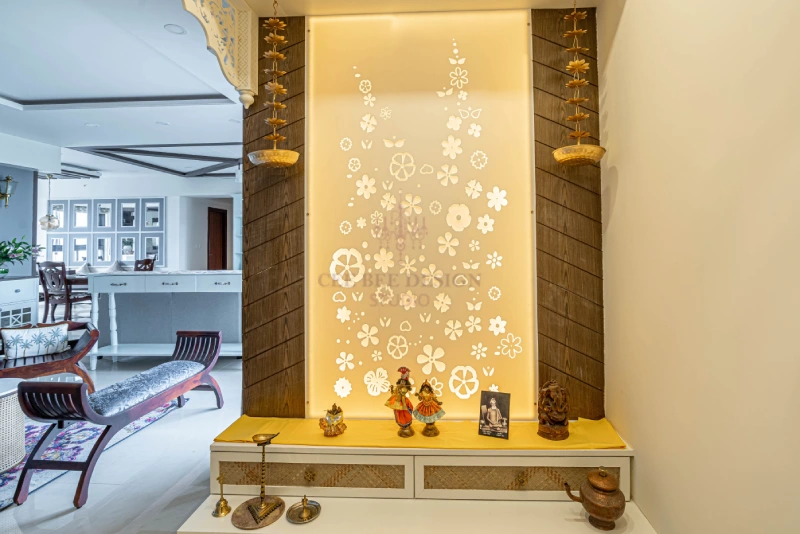
The old freestanding wooden mandir is no longer the only option. Today, homeowners prefer built-in pooja units that blend beautifully with the living room, dining space, or passage wall. These units become part of the architecture of the home.
- They do not look added later.
- They look planned.
- They look intentional.
A pooja unit can now sit within a TV wall, a display cabinet, or a panelled feature wall. It becomes a calm visual anchor instead of a separate object.
Smart storage also makes a big difference. Drawers below the altar can hold incense sticks, flowers, matchboxes, bells, and other puja items. MDF shutters carved, jali doors, frosted glass, or wooden shutters can be used to make the space closed.
This works beautifully for modern families. A joint family in Kolkata may need a larger mandir with room for daily rituals. A young NRI couple may prefer a clean, minimal unit that still keeps them close to their roots.
- Both homes need different designs.
- Both emotions are equally sacred.
2. Minimalism With Meaning
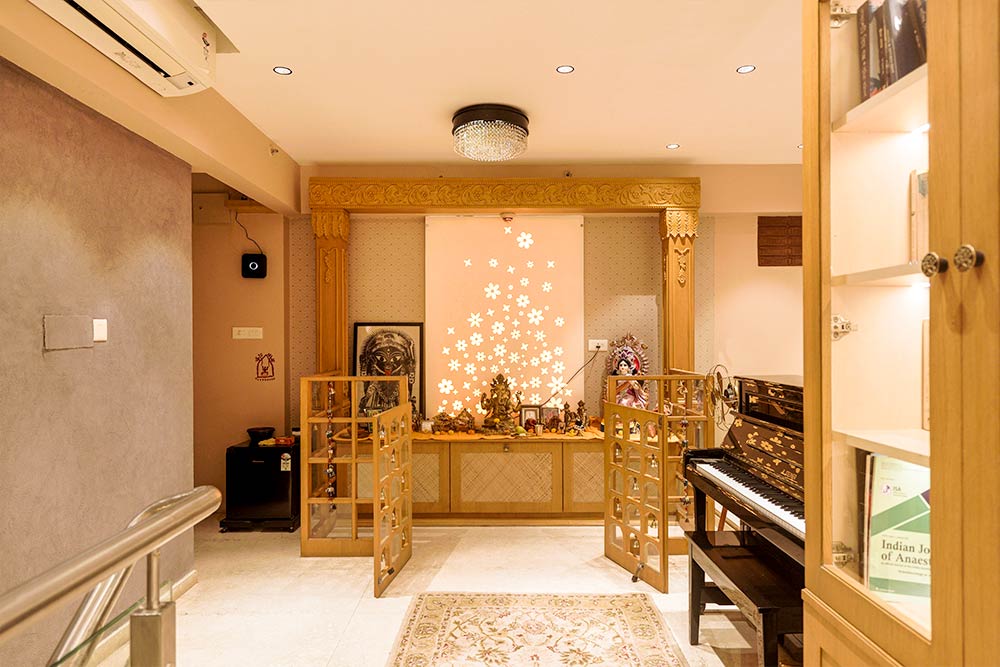
Minimalism is becoming one of the biggest pooja room trends in 2026. However, this does not imply that the room should be devoid of anything.
There can be a minimum pooja room, which is emotionally laden. It can still have bells, diyas, idols, flowers, and sacred symbols. The difference lies in how everything is arranged.
- Clean lines.
- Soft colours.
- Simple shelves.
- Gentle lighting.
- A sense of calm.
White, beige, ivory, pastel, and warm neutral tones are replacing heavy, dark finishes in many homes. These colours make the pooja space feel peaceful and open.
The mandir does not need to shout for attention. It can quietly hold the room together.
This is where minimalism becomes powerful. It allows faith to breathe. It creates a sacred corner that feels calm, not crowded.
At Cee Bee Design Studio, we often say that a good home does not need too much noise. It needs feeling. A minimal pooja room can carry history, memory, and devotion without feeling heavy.
3. Lighting is No Longer an Afterthought
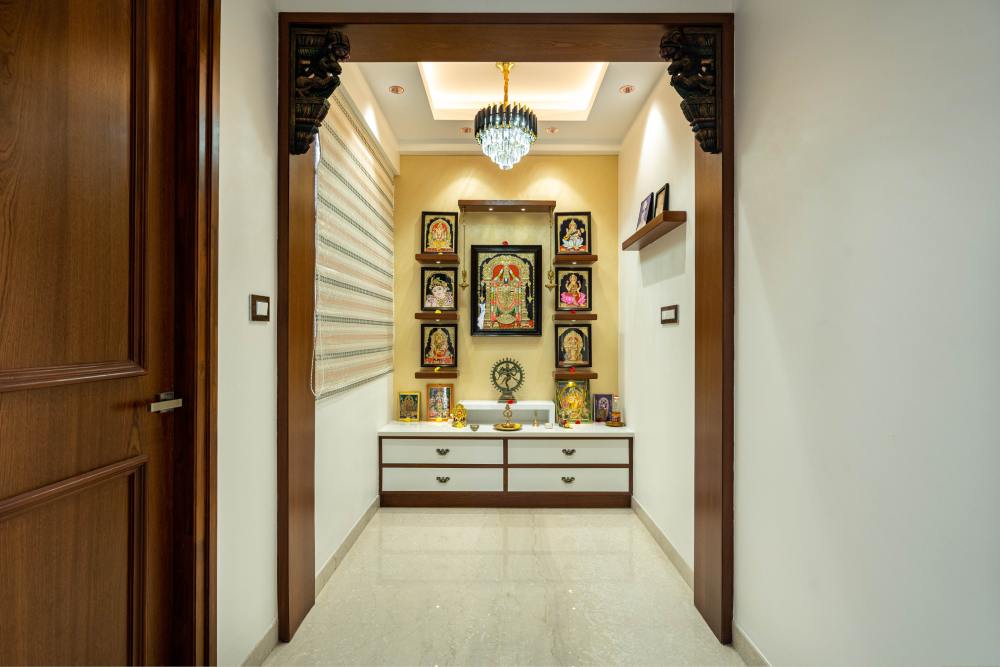
Lighting can completely change how a pooja room feels.
The same marble platform can look plain under harsh light. But with warm and layered lighting, it can be divine.
In the year 2026, the homeowners became more aware of the problems associated with pooja room lighting. Lighting has to evoke emotions, not just provide visibility.
Some of the lighting options being considered are:
- LED backlighting of the idol
- Warm spotlighting of the sacred items
- Cove lighting of the unit
- Soft lighting inside the shelves
- Brass hanging lamps for an authentic look
All that needs to be done is to ensure that the space glows subtly
Smart lighting is also becoming popular. Some homeowners now use voice control to set different moods for morning prayers and evening aarti. Others prefer automated lighting that becomes warmer at dusk.
This is not about showing off technology. It is about making rituals feel smoother and more meaningful.
At Cee Bee Design Studio, we treat lighting as part of the design structure. A well-lit pooja room not only looks beautiful. It feels more sacred. And that feeling matters.
4. Materials That Respect Both Tradition and Texture
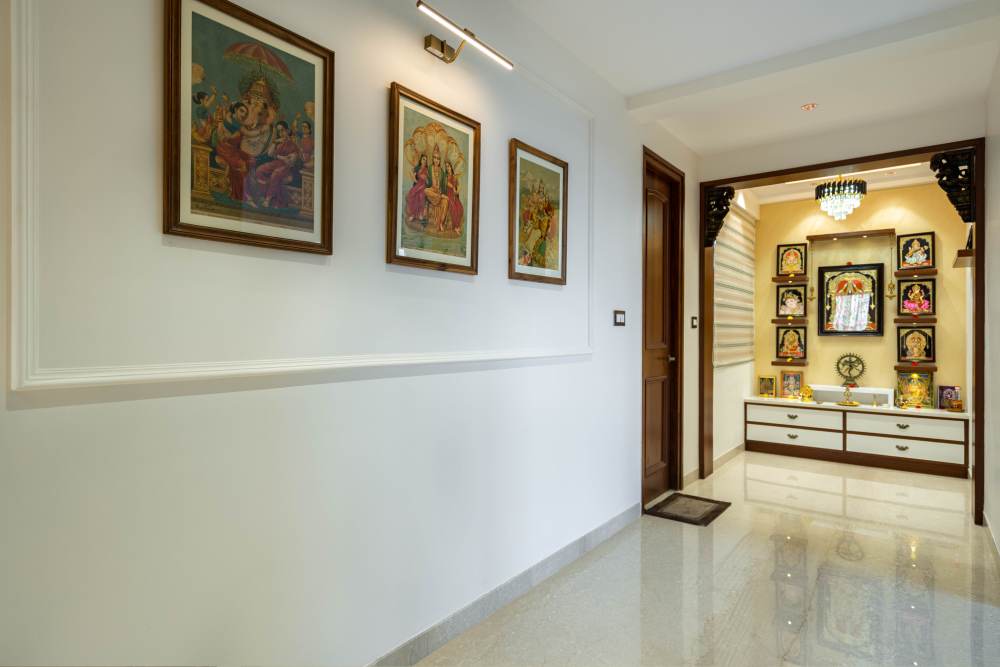
Materials carry emotion. A pooja room made with the right materials feels rooted. It feels honest. It feels like it will age with grace. In 2026, homeowners are mixing traditional and modern materials in very refined ways.
Marble continues to be a favourite. White marble, Kishangarh marble, and Carrara marble will add purity and serenity to the space. Either a marble back panel or an idol platform made out of it can create elegance without being too extravagant.
Granite is another option which looks lavish and is easy to maintain for day-to-day activities.
The use of wood remains prevalent in Indian pooja rooms. The use of teak and sheesham not only adds warmth to the pooja room but also makes the space memorable as well.
Fluted panels and laminate textures have also become popular. They add depth without needing heavy carvings.
Sustainable materials are gaining attention, too. Reclaimed wood, bamboo, natural stone composites, and non-toxic finishes are now part of conscious home design.
This balance feels very close to Cee Bee Design Studio’s philosophy. We love working with Indian craft, local artisans, handmade details, and materials that carry character.
A pooja room should not feel like a product from a catalogue. It should feel touched by human hands.
5. Jaali, Glass, and Beautiful Doors
A pooja room door can say a lot. It creates the first pause before entering a sacred space. It marks the shift from the outside world to a quieter inner world.
That is why pooja room doors are becoming a major design feature in 2026.
Jaali doors are making a strong comeback. They allow air and light to pass through. They also create privacy without closing the space completely.
A carved jaali door can feel like art. It can be in the form of floral designs, temple themes, sacred symbols or even geometric forms.
Modern glass doors would do very well with this type of architecture. The etching on the glass may include verses from the Sanskrit literature, religious symbols or even patterns to create a lightweight look.
Brass and metal doors have their place in such designs, too. Such doors create an aura of timeless appeal, longevity and Indian heritage.
Pocket doors and sliding doors are perfect for tight spaces within apartments.
Homeowners may even consider CNC-carved shutters, which would help conceal the mandir when it is not being used.
The ideal door must be aesthetically pleasing and in tune with the house’s rhythm.
6. Compact Pooja Spaces for Apartment Living
Not every home has a separate pooja room. And that is completely okay.
Most urban Indian families live in apartments today. Space is limited. Every wall has a purpose. Every corner must work hard. Good design understands this reality.
A small pooja space can still feel deeply sacred. It just requires the proper scale, storage, lighting, and positioning.
Wall-mounted pooja units are perfect for smaller homes. Floating shelves, back-lit panels, small marble surfaces, and thin drawers can form an entire mandir without occupying too much space.
Sometimes, even a small corner in the living room can gain significance through proper design.
At Cee Bee Design Studio, we do not believe that the size of the pooja area makes any difference to its aura.
Even a small yet well-lit mandir may seem more energetic than a large area which seems cluttered and disconnected.
It’s all about intentions. If everything serves a purpose, then the pooja area becomes alive despite its size.
7. Vastu With Contemporary Design
For many Indian families, Vastu still matters deeply. And it should not fight with modern design.
In fact, when handled well, Vastu and contemporary interiors can work beautifully together.
The northeast corner remains one of the most preferred locations for a pooja room. Idols are usually placed so they face east. They must be eye-level or below when the individual is sitting. They must not sit on the floor.
The design will not put the mandir under a massive beam, as the space should look airy, luminous, and peaceful.
Any kind of natural illumination and ventilation will be welcome. They make the pooja room feel fresh and positive.
At Cee Bee Design Studio, we do not treat Vastu as a restriction. We treat it as a starting point. We listen to the family. We study the layout. We understand the rituals. Then we design a solution that respects both belief and beauty.
A home should feel right in the eyes. It should also feel right in the heart.
8. Personalised Pooja Rooms Are Becoming Essential
The most beautiful pooja rooms are never generic.
They feel personal.
For the year 2026, homeowners are not opting for prefabricated mandirs. Instead, they will be constructing those that resonate with their families, beliefs, and memories.
This can happen in many ways.
- A custom-carved backdrop.
- A family heirloom placed with care.
- A favourite idol.
- A special colour.
- A handmade wallpaper.
- A wall inspired by Vrindavan, Ganesha, lotus motifs, temple shikharas, or sacred geometry.
These details make the pooja room feel like it belongs to the family.
At Cee Bee Design Studio, personalisation is not a luxury. It is the foundation of good design.
Chitralekha Biswas has always believed that no two people are the same. So no two homes should look the same either.
This belief becomes even more important in a pooja room. Because this is where design meets devotion.
The space must feel exclusive. Not because it is expensive. But because it is personal.
9. Smart Technology That Supports Rituals
Technology is entering the pooja room. But it must do so quietly.
A sacred space should never feel like a gadget zone. Technology should support the ritual, not disturb it.
Smart lighting is the most common addition. Homeowners can change the mood of the space with a simple command or preset.
Air cleaners can come in handy in places where the lingering smoke from the incense becomes an issue. It cleanses the air without affecting the rituals.
Smart temperature controls would be good for long prayer sessions. Automated curtains/blinds can be used to effectively hide and reveal the mandir as well.
The best smart pooja room still feels handcrafted. The wires stay hidden. The systems work silently. The emotion remains in the centre.
Technology should disappear into the background. The atmosphere should stay sacred.
10. Restoring Heritage Pooja Rooms
Some pooja rooms do not need a new identity. They need gentle restoration.
Also, including parts to make our lives better can be of good use to old houses having a history in Kolkata or Goa, which are brimming with many memories of the pooja room.
The base of the marble can have worn out because of devotion over the years. A teak cabinet may still hold the scent of incense. A window may bring in the same morning light that a grandmother once prayed under.
These things cannot be replaced. They can only be respected.
Restoring a heritage pooja room is not about making it look brand new. That’s what it’s all about: bringing it back to life without destroying its soul.
At Cee Bee Design Studio, we approach such spaces with care. We listen to the home first. We understand what must stay. We identify what needs repair. Then we add only what the space truly needs.
Sometimes, the most powerful design decision is restraint.
A restored pooja room should feel familiar. It should feel loved. It should carry the past into the present with grace.
Case Study: Warm Earthy Tones in a Contemporary Duplex
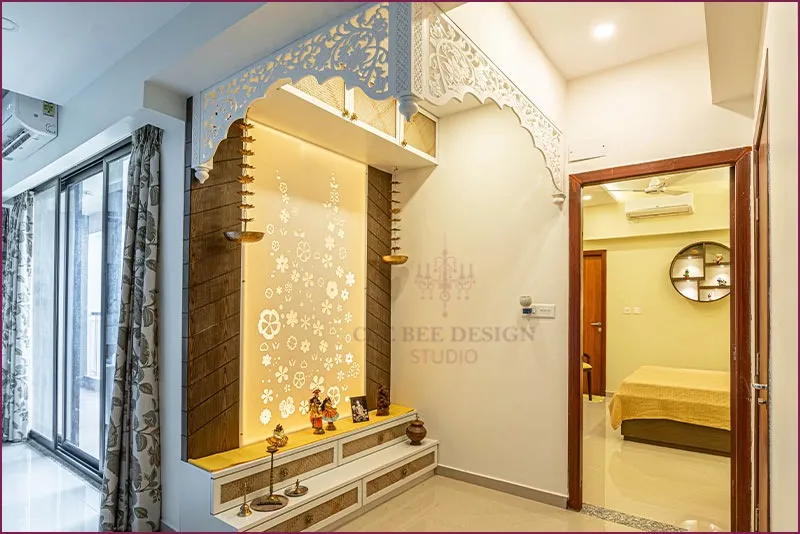
The brief for this project was specific. The family wanted a pooja space that felt genuinely sacred. Not a gesture toward the sacred. Not a decorative approximation. A space that would hold their rituals with the same seriousness as their rituals deserved.
They also needed the space to sit comfortably within the contemporary surroundings of a 3000-square-foot duplex.
The Design Challenge:
- Integrate a special area for worship that creates a real feeling of being in a temple.
- Integrate the new space seamlessly into the existing home.
It was necessary to guarantee that the sacred area did not interfere with the natural sightlines of the duplex while providing lots of space meant to be used for the placement of various items belonging to the family, such as heirloom idols, scriptures, and festive brass.
The Design Solution:
The large carved wooden frame represents the essence of the traditional temples. It creates the grandeur of an Indian temple while remaining proportionate to a residential setting. A backlit floral wall panel adds layered light throughout the day and into the evening. The open visual design keeps the space accessible from the living area so that prayer becomes part of daily life rather than a separate act.
Natural wood finishes, cream tones, and warm soft lighting bring everything together. The decoration is moderate. A small number of meaningful objects rather than a large collection of many.
Why it Works:
This design succeeds because every element is in relationship with every other element. The carved wood reads against the soft wall tone. The backlit panel changes the quality of the space as the evening light fades. The openness keeps the sacred visible and accessible.
No single element carries the room. They carry each other.
What a Pooja Room Really Means
A pooja room is more than a design feature. It is the emotional heart of a home.
- It holds prayer.
- It holds memory.
- It holds silence.
- It holds the family’s way of staying connected to something larger than everyday life.
That is why it deserves thoughtful design.
The lighting matters. The material matters. The scale matters. The storage matters. The placement matters. But more than anything, the feeling matters.
A well-designed pooja room does not just look beautiful in photographs. It gives a calm environment for the regular puja ceremonies. It adds softness to the rhythm of the house. It creates a space where the family can pause and return to itself.
Conclusion
At Cee Bee Design Studio, our goal is to design pooja rooms thoughtfully, with care and soul. Whether it is a small mandir for an apartment, a custom-made unit, or a renovation of heritage space, we always make it special and soulful.
If you want to design a new house, or to renovate an existing one or just want to redesign the existing pooja room, please do contact Cee Bee Design Studio.
FAQs
Q1. What is the ideal direction for a Pooja room?
- The traditional Vastu recommendation is the northeast corner of the house, which remains the most commonly used. Also, the wall facing east can be a good solution to creating a successful Pooja room. An experienced designer should be able to cater for these elements at the same time as creating a design that is appropriate to your space.
Q2. Which materials are best for the creation of a Pooja Mandir?
- Generally, wood is a preferred choice due to its warmth; the skill involved in creating pieces of wood has a great emotional connection to the sacredness within the Indian culture; marbles can make beautiful surfaces and flooring; the best outcome is achieved by combining materials that complement each other.
Q3. Will a Pooja room fit into a small apartment?
- Yes, you can create a Pooja room that is small in size and still be as meaningful as creating a large Pooja room. Wall-mounted Mandirs, nudged into corners, and open-concept placements within the living room layout are all good options for creating Pooja spaces within smaller homes.
Q4. What kind of lighting is best suited to Pooja rooms?
- The preferred types of lighting for Pooja rooms are warm white LED light bulbs that are within the lower end of the Kelvin temperature range; backlit spiritual panels, accented light sources directly above where idols/ images are located, and adjustable dimmable sources that change in intensity throughout the course of the day are all part of a complete and well-thought-out method of providing lighting solutions.
Q5. What will be the Pooja room trends in 2026 and beyond?
- Open design concepts, ornate wood frames for temples, back-lit spiritual wall panels, jaali walls, minimalist design with superior materials, and careful consideration for sustainability. The direction across all of these is the same: spaces designed to be lived in, not just displayed.
Q6. How do I make my pooja room feel luxurious without overdoing it?
- Choose a limited number of materials but of superior quality. Prioritise craftsmanship over quantity of decoration. Let the space have room to breathe. Luxury in a sacred space is most often felt as an absence of clutter and a presence of care.
Q7. How important is storage in the pooja room design?
- It is extremely important and consistently underestimated. Plan for everything you currently store around prayer and festival rituals, plus space to grow. Concealed storage that keeps the visual field clean while keeping everything accessible is the goal.
Q8. Should I work with an interior designer for my pooja room?
- For a standalone prefabricated mandir, perhaps not. For a pooja room that is integrated into the architecture of your home with custom joinery, lighting design, material coordination, and storage planning, working with a designer who understands both the spiritual and aesthetic dimensions of the space will save you high cost and regret in the long run.
Follow us on:
About us
Welcome to CeeBeeDesignStudio, an Indian homegrown interior design brand where every home is a canvas and every design is a story.
We’ve proudly completed over 1000 residential and 400 commercial projects across 7 cities, earning a reputation for unmatched aesthetic acumen and client satisfaction. Our studio has also been recognized with multiple national awards, a reflection of our commitment to excellence, storytelling, and design innovation.
From thoughtfully styling modern apartments to restoring heritage homes, we bring soul, sustainability, and structure into every project.



Enter Your Details